All drug use poses a risk, but injection users sharing needles, syringes, and other injecting equipment are some of the most at risk for infectious diseases and long-term health problems.
As the opioid crisis and drug addiction in the United States continue to spread, many people inject drugs such as heroin, prescription medications, and amphetamines directly into their veins for a quicker high.
Intravenous drugs (IV drugs) require tools to prepare and inject, which can be hard to get.
There are many reasons people will reuse and share needles, including availability issues, the stigma of addiction, and lack of knowledge associated with the risks needle sharing can pose.
Many people who inject drugs are unaware that sharing needles contributes to human immunodeficiency virus (HIV) and hepatitis C transmission and infection.
Learning to avoid sharing needles, care for wounds, and recognize the signs of disease are essential steps in the battle against addiction and public health threats related to IV drug use.
What Does Sharing Needles Mean?
Sharing needles means two or more people use the same syringe, often multiple times, to inject drugs intravenously.
Needles are the most commonly reused drug paraphernalia, especially among people lacking access to clean needles or education about the dangers of needle sharing.
Injection users face an increased risk of infectious diseases caused by sharing needles and syringes.
When intravenous drug users prepare drugs such as heroin or prescription opioids to inject, they mix them with sterile water in a clean container called a “cooker” for heating drugs, fresh cotton to filter the mixture through, and a sterile needle to inject themselves.
When people discuss sharing needles, it typically includes sharing other paraphernalia, which can contribute to transmitting bloodborne diseases.
Many users who use new or sterilized needles have admitted to sharing other equipment with people.
Needle Sharing Statistics
Tracking the health of intravenous drug users is an integral part of developing public health and harm reduction programs.
- The World Health Organization (WHO) estimates that 11 million people inject drugs worldwide.
- Out of 11 million intravenous drug users, approximately 40% have contracted the hepatitis C virus.
- At any given time, 1.4 million people who inject drugs live with HIV.
- Globally 10% of newly reported HIV cases are attributed to drug use injections.
- According to the Centers for Disease Control (CDC), an estimated 1.18 million people have HIV in the United States.
- Roughly 36,000 Americans will receive an HIV diagnosis each year.
- Of new HIV cases in the United States, young people between 13 to 24 years old will account for 21%.
These statistics only relate to injecting drugs intravenously; they do not account for secondary infections and viruses or sexually transmitted infections caught through other circumstances surrounding risky drug use and behavior.
Gathering data and statistics about people who inject drugs is a challenge for researchers because many people are ashamed or embarrassed about their drug usage and give inaccurate answers.
When health care professionals are unaware of a patient’s drug use, they often won’t test for infectious diseases associated with injecting drugs like HIV and hepatitis C.
Why Injection Is the Deadliest Way to Use Drugs

The numbers paint a stark picture: injecting drugs carries a death rate far exceeding any other method of use. When you inject substances directly into your bloodstream using syringes, you face mortality rates 10-14 times higher than the general population. Between 2010 and 2020, injection-involved overdose deaths surged 323%, reaching nearly 38,253 deaths annually.
The injection drug risks extend beyond overdose. You’re vulnerable to bloodborne infections, including HIV hepatitis C, which dramatically elevate your mortality. Studies show HIV-positive injectors die at nearly double the rate of uninfected users. A three-decade study found that chronic disease deaths among people who inject drugs increased continuously over time, adding another layer of long-term risk.
Understanding these dangers supports harm reduction efforts and medical interventions designed to save lives. While injection remains deadly, evidence-based approaches can help you reduce these risks immensely. Regional differences matter significantly, as states in the Northeast region experienced faster increases in injection-involved overdose death rates than the national average.
How Needle Sharing Spreads HIV and Hepatitis
When you share needles, you’re exposing yourself directly to bloodborne pathogens like HIV and hepatitis C that survive in even trace amounts of blood left in syringes. The transmission risk is significant, hepatitis C spreads in approximately 1.8% of needlestick exposures, while hepatitis B transmission rates range from 6-30%, making shared syringes extremely efficient disease vectors. Understanding these infection rates isn’t meant to frighten you, but to help you recognize why harm reduction strategies like needle exchange programs have reduced HIV incidence by 33% among participants. If you do experience a needlestick exposure, post-exposure prophylaxis (PEP) is known to be over 80% effective in preventing HIV infection when administered promptly.
Bloodborne Disease Transmission Risks
Because injection drug use involves direct blood-to-blood contact, sharing needles and syringes creates an efficient pathway for transmitting HIV, hepatitis B, and hepatitis C. When you use equipment that someone else has used, infected blood remaining on needles, syringes, cookers, or even rinse water can enter your bloodstream directly.
The transmission risks vary by pathogen. Hepatitis C carries a 1.8% risk per needlestick, while hepatitis B poses even higher danger at 6-30%. HIV transmission risk stands at 0.23% per exposure, yet needle sharing accounts for approximately 69% of HIV cases among people who inject drugs.
You don’t have to share needles directly to face these risks. Contaminated filters and water used for dissolving drugs also carry viral loads capable of transmitting bloodborne infections.
Shared Syringe Infection Rates
Understanding transmission risks becomes more concrete when you examine actual infection rates among people who share syringes. Research shows over 60% of acute hepatitis C infections from 1982, 2006 were attributable to injection drug use, while 7% of HIV diagnoses in 2018 connected to needle sharing. These statistics reveal the serious dangers of needle use beyond abscesses and vein damage.
| Infection | Attribution to Injection Drug Use |
|---|---|
| Hepatitis C | Over 60% of acute cases |
| HIV (2018) | 7% of new diagnoses |
When you access sterile syringes, sharing rates drop dramatically, from 41% to just 13%. Syringe services programs provide a protective effect, reducing your odds of receptive syringe sharing by approximately 43-77% depending on location.
HIV-Related Mortality Statistics
Although HIV prevalence remains relatively low and stable (under 5%) among people who inject drugs in areas where only 10-20% report current needle sharing, the mortality picture tells a more complex story. While overall deaths among people living with HIV declined 12% between 2011-2015, opioid overdose deaths rose 42% during the same period.
You should know that mortality rates remain highest among those who acquired HIV through injection drug use. This disparity exists partly because you’re less likely to be diagnosed, linked to care, or achieve viral suppression if you inject drugs compared to other HIV patients. HIV can also affect your CNS, compounding health challenges.
Without intervention, forecasts predict a 147% increase in opioid-related deaths from 2016-2025, with 80% involving illicit opioids.
Skin Infections and Abscesses That Start at the Needle
When you inject drugs, bacteria from your skin, contaminated needles, or saliva can enter your body and cause cellulitis, a painful, spreading skin infection that requires prompt treatment. If left untreated, these bacteria can travel deeper into your tissues and bones, leading to osteomyelitis, a serious bone infection that often demands hospitalization and long-term antibiotics. You’re also at risk for wound botulism, a rare but life-threatening condition caused by toxin-producing bacteria that thrive in injection wounds, particularly when drugs are injected under the skin or into muscle.
Cellulitis From Injection Sites
Cellulitis develops when bacteria breach the skin’s protective barrier at an injection site, triggering an aggressive inflammatory response in the dermis and deeper subcutaneous tissue. You’ll notice poorly demarcated patches of red, violet, or brown skin that feel warm and tender to touch. Unlike superficial reactions, the tenderness intensifies as the erythema expands.
If you develop cellulitis, watch for constitutional symptoms including fever above 100°F, chills, sweats, and fatigue. Swollen, painful lymph nodes often accompany these local changes.
Without treatment, cellulitis can progress to bacteremia, endocarditis, osteomyelitis, or sepsis. Necrotizing fasciitis represents the most dangerous complication, requiring emergency intervention. Infections near your eyes, neck, or perineum pose heightened risks for vision loss, airway compromise, or rapid deep tissue spread. Seeking prompt medical care prevents these serious outcomes.
Bacterial Spread Causes Osteomyelitis
How does a skin infection at your injection site reach your bones? Bacteria travel through two main pathways. First, infections can spread directly from abscesses and cellulitis at needle sites into nearby bone tissue. This local extension commonly affects bones in your extremities and pelvis. Second, bacteria enter your bloodstream during injection, seeding distant bones through haematogenous spread, most often your spine.
Staphylococcus aureus and Streptococcus pyogenes are the predominant pathogens involved. Non-sterile needles, contaminated drugs, and skin bacteria all introduce these organisms. Repeated injections compound the damage, impairing your blood and lymphatic drainage while delaying your immune response.
Groin injections carry particular risk for pubic bone infection. If you’re experiencing deep bone pain near injection sites, seek medical evaluation promptly, osteomyelitis requires urgent antibiotic treatment.
Wound Botulism Risks
You might experience muscle weakness, drooping eyelids, blurred vision, difficulty swallowing, and slurred speech. These symptoms can progress to respiratory failure requiring intubation within 24 hours. Critically, your symptoms may mimic drug intoxication and won’t respond to naloxone.
Early treatment with botulism antitoxin stops paralysis progression. Patients receiving antitoxin within 36 hours show the quickest recovery. Without prompt intervention, you’ll likely need ICU admission, and in one outbreak, median hospitalization lasted 15 days.
How Repeated Injection Damages Veins and Lungs
When you inject drugs repeatedly into the same veins, you’re causing cumulative damage that your body struggles to repair. Each injection traumatizes the vessel wall, introducing bacteria and triggering clot formation. These clots harden into scar tissue, narrowing your veins and restricting blood flow. Over time, the vein walls heal together and collapse entirely.
Heroin’s acidity, sometimes as low as pH 2.6, accelerates this deterioration. Other substances containing chalk or wax can block smaller vessels, cutting off blood supply to tissues.
When veins collapse, you may resort to injecting into legs or groin, dramatically increasing your risk of deep vein thrombosis. Clots can break free and travel to your lungs, causing potentially fatal pulmonary embolism. This vascular damage often becomes permanent, complicating future medical care.
Why People Who Inject Drugs Die 10, 15 Times Younger
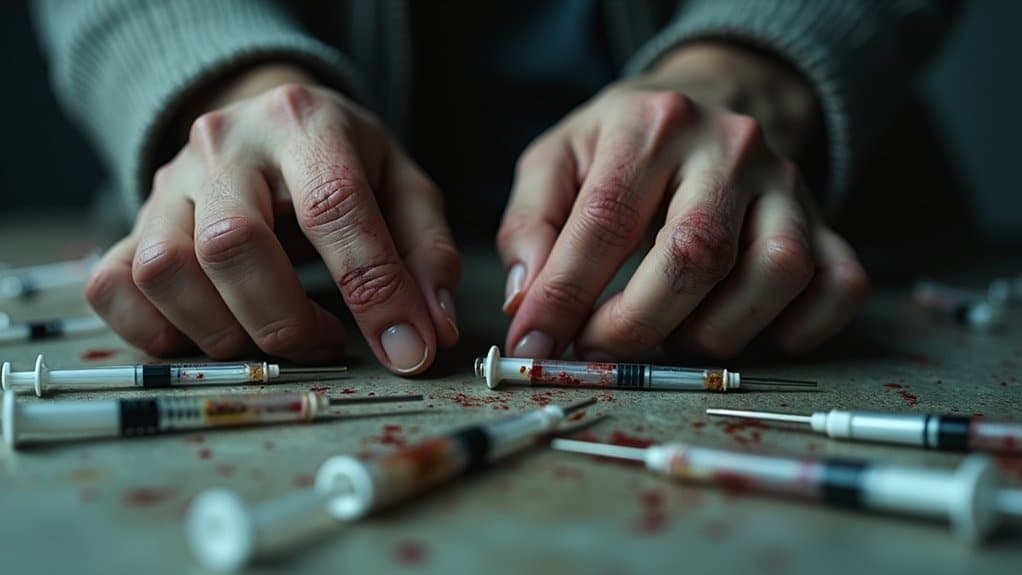
The statistics surrounding injection drug use reveal a stark reality: mortality rates among people who inject drugs run 10 to 14 times higher than the general population. If you inject drugs, your all-cause mortality rate reaches approximately 28.9 per 1,000 person-years, nearly 12 times higher than those who don’t inject.
The causes of death paint a sobering picture. Drug-related deaths account for 24.4% of fatalities, while HIV and infectious diseases contribute 30.5%. If you inject opioids specifically, your mortality rate climbs to 36.5 per 1,000 person-years.
Your HIV status dramatically affects survival. HIV-positive individuals face crude mortality rates of 37.4 per 1,000 person-years compared to 20.1 for uninfected individuals. Women who inject drugs show even more disproportionate risk, with mortality ratios 26 times higher than the general female population.
U.S. Regions With the Highest Injection Death Rates
Geographic disparities in injection-related deaths reveal troubling patterns across the United States. If you live in West Virginia, you’re facing the nation’s highest overdose death rate at 80.9 per 100,000 residents. Washington D.C. shows alarming figures too, with 9.17% of all annual deaths linked to drug overdoses.
The West region maintained the highest overall rate at 28.72 per 100,000 in October 2024, with California recording 10,952 overdose deaths in 2022. You’ll find particularly heightened rates throughout Appalachia and the South, where Tennessee, Kentucky, and Louisiana each exceed 53 deaths per 100,000 residents.
The Midwest and Northeast aren’t spared either. Ohio reports 45.6 deaths per 100,000, while Pennsylvania sees over 5,000 overdose deaths annually. Understanding your region’s risk profile can help you access appropriate harm reduction resources.
Can You Share Needles With a Clean Person?
If possible, you should never share needles, even if a person claims they are clean. You cannot take someone’s word for it. Many drug users do not know or believe they are at risk for contracting or transmitting diseases and do not regularly get tested.
The CDC states that HIV-infected blood can survive up to 42 days in a used syringe, meaning that someone could contract it after a negative test and transmit HIV unknowingly over a month later.
Sharing needles with a clean person, as in someone without HIV and hepatitis B or C, only reduces the risk of contracting a disease if none of the other drug equipment is tainted or shared.
Sharing needles and equipment still increases the risks of other bacterial infections and needle-related injuries.
Needles become dull very quickly, which leads to complications and injuries when injecting a drug; this is just one more reason to never share needles regardless of health status.
Drug Injection Side Effects
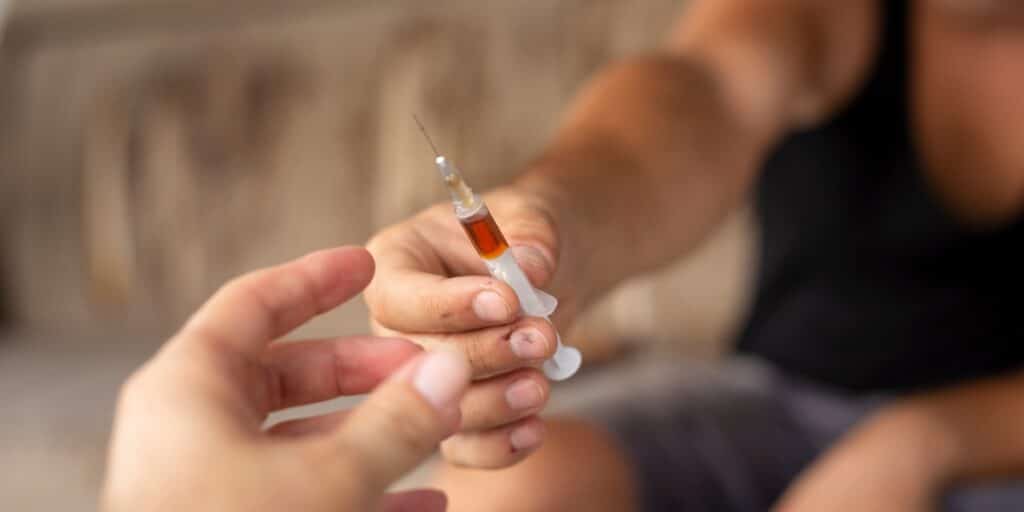
Injecting drugs intravenously or “shooting up” has additional side effects and complications besides the risks of bloodborne diseases.
After long-term or heavy injection drug use, many users cannot find a suitable vein and will start injecting directly into their muscles or under the skin.
Some of the side effects of drug injection include:
- Bruising
- Collapsed veins
- Track marks
- Skin infections
- Abscesses or swollen, puss-filled wounds
- Swelling of limbs due to lack of blood flow
- Joint pain
- Fevers
- Diseases
Some of these side effects will resolve if the user switches injection sites or stops injecting drugs altogether; however, some can lead to infections and more severe complications.
Always seek medical advice if you are concerned about a wound or side effects you haven’t experienced previously.
What Diseases Are Caused by Sharing Needles?
Injecting drugs exposes people to many infectious diseases, some curable and some that become life-long conditions. Some diseases have minimal symptoms for years, and others become life-threatening right away.
Using sterile equipment, not sharing needles or paraphernalia, practicing safe sex, and getting tested regularly are essential steps to reducing disease risk. However, recovery and abstinence are the only 100% proven ways to avoid diseases and prevent HIV and hepatitis C transmission to others.
The infections and diseases IV drug users are at risk of contracting include:
- Cotton fever – reused cotton filters breed a bacteria that can lead to flu-like symptoms; people with allergies are more susceptible
- Cellulitis – bacterial infections that cause the cells to become painful and swollen
- Necrotizing Fasciitis – the “flesh-eating disease,” can rapidly spread and lead to death
- Wound or injection botulism – affects the respiratory and nervous system leading to paralysis and death
- Gangrene – an infection that causes a loss of blood flow and tissue death, can lead to amputation or death
- Tetanus – or “lockjaw,” attacks the muscles and causes them to swell and lock up
- Infective endocarditis – bacteria gathers on the heart valves, enters the bloodstream, and leads to life-threatening complications
- Hepatitis B – an incurable liver disease that can lead to liver cancers and death; it is 5-10 times more contagious than hepatitis C
- Hepatitis C – an infection that can lead to liver failure and death; there is a cure, but many people actively using drugs cannot adhere to the strict medication schedule, which results in a chronic condition
- Human immunodeficiency virus (HIV) – attacks the body’s immune system and can lead to acquired immunodeficiency syndrome (AIDS)
- Syphilis – because many users engage in risky sexual behavior while using or to support their habit, studies have shown that syphilis is frequently co-occurring in HIV positive IV drug users
- Acquired immunodeficiency syndrome (AIDS) – the final progression of HIV results in a severely damaged and weakened immune system, allowing other illnesses to overtake the body and often resulting in death
Many of these diseases do not have a cure yet, but with early intervention and ongoing treatment, most of them can be managed and are not a death sentence.

Harm Reduction Strategies
Intravenous drug use is considered a public health crisis and many governments and communities invest in harm reduction and prevention services for IV drug users.
Harm reduction is a multipronged approach that focuses on reducing the risk of HIV and hepatitis C transmission, providing users education, resources, and information about staying safe and accessible healthcare, mental health, and addiction treatment options.
Many harm reduction centers offer multiple prevention strategies and can provide referrals for other services.
Some of the most common harm reduction strategies include:
- Syringe Service Programs, sometimes just called needle exchange or syringe programs, users can access sterile equipment and safely dispose of their used paraphernalia; information about sterilizing equipment when necessary is also available.
- Safe Injection sites, staff members teach users safe injection practices to avoid harm and trauma, provide first aid for existing wounds and infections, administer HIV testing, and screen for other infectious diseases.
- Narcan distribution and overdose prevention, users and their friends and family can receive Narcan (naloxone) and education on administering it and other ways to prevent, recognize, and treat opioid overdoses.
- Treatment program and therapy referral, for users ready to enter recovery and quit using drugs, harm reduction centers can provide information and referrals for programs to help them achieve recovery.
Naloxone, Needle Exchanges, and Other Harm Reduction Tools
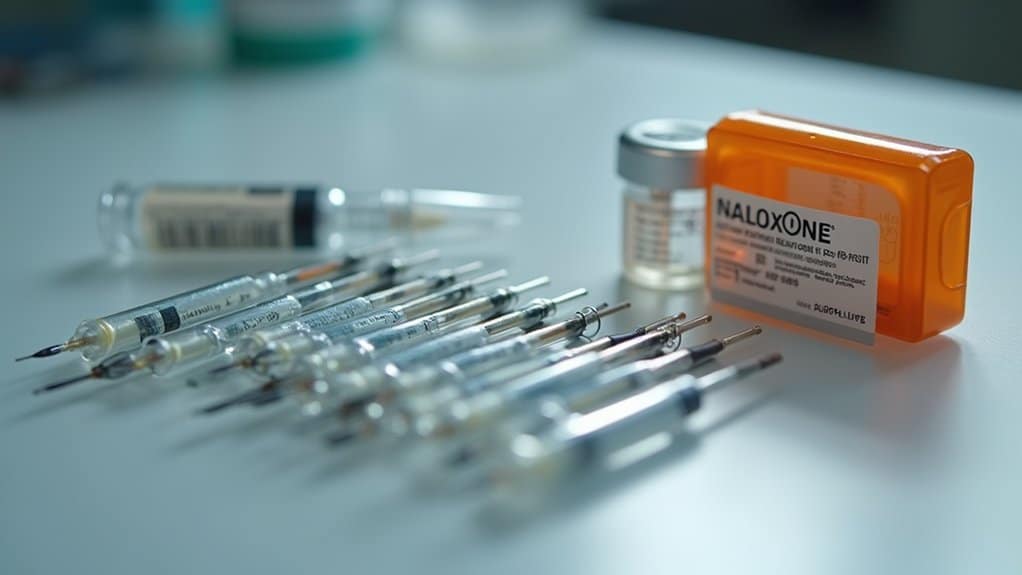
Although overdose deaths continue to rise across many regions, naloxone has emerged as a remarkably effective tool for reversing opioid overdoses when administered by everyday people. Studies show 93-98% survival rates when bystanders, including friends, family, or police, administer naloxone, with over 26,000 successful reversals reported across U.S. programs alone.
If you’re using injection drugs, connecting with harm reduction resources can save your life. Chicago’s naloxone distribution program reduced overdose deaths by 30%, while Massachusetts communities saw mortality drop by up to 46% in areas with robust programs. Needle exchange services similarly reduce your risk of HIV, hepatitis C, and dangerous infections.
You don’t have to navigate this alone. These evidence-based tools exist because your life matters, and recovery remains possible at every stage.
Tips to Inject More Safely
The Minnesota Department of Health (MDH) offers simple tips to help drug users inject more safely, including:
- Use a needle once. Don’t share needles with other people, and don’t recycle or reuse your needle. Needles tend to dull after one attempt to inject. If you miss your vein, stick again with a clean, fresh needle.
- Alternate your injection sites. Scar tissue starts to grow under a repeatedly used injection site. It’s crucial to change the location on the body and the side of the injection.
- Wash the injection site with soap and water.
- Don’t share. Don’t share needles, cookers, wipes, or tourniquets. All of these supplies run the risk of passing infectious diseases.
- Always try to use with someone. Take turns observing for signs and symptoms of an overdose.
- Prepare and make a safety plan. Stock up on syringes, cotton, sterile water, and various needle sizes.
- Keep naloxone readily available and try to carry several doses. Tell friends and family that you have naloxone if there is an emergency.
Simple safety tips and harm reduction strategies are integral to staying alive for people battling drug and alcohol dependency and substance abuse disorders. Still, it is not the same as recovery.
Drug Addiction Treatment
Intravenous drug use can make you feel like an outcast or like you have hit rock bottom, but there is always a way forward.
At Northridge Addiction Treatment Center, our passionate and expert addiction treatment specialists firmly believe that everyone can find a meaningful path to recovery. We are eager to help with an abundance of acceptance and support.
Surrounded by the serene beauty of Los Angeles’ San Fernando Valley, you have the privacy and support to begin healing and overcoming your addiction.
NATC is an empowering and comfortable residential treatment facility featuring healthy, chef-catered meals, flat-screen TVs in each room, and a relaxing pool and hot tub area.
We understand that the thought of withdrawal can be overwhelming. NATC ensures your comfort and safety with onsite medical detox, followed by evidence-based treatment programs tailored to your unique needs.
Behavioral therapies such as cognitive-behavioral therapy (CBT), dialectical behavior therapy (DBT), and support groups will equip you with the skills to regain and maintain your mental and physical well-being for a lasting, sustainable recovery.
Our admissions team looks forward to answering your questions and concerns. Reach out now to take the first steps toward your path to recovery.
Frequently Asked Questions
Can Veins Heal After Stopping Injection Drug Use?
Yes, your veins can heal after you stop injecting drugs, though recovery depends on the extent of damage. If you’ve experienced mild injuries, your veins may heal completely within 10-12 days. However, heavily scarred or collapsed veins from prolonged use likely won’t fully recover due to permanent internal scarring. Your body compensates by rerouting blood through other veins. Seeking medical support and maintaining proper wound care substantially enhances your healing outcomes.
How Long Does Hepatitis C Survive on a Used Needle?
Hepatitis C can survive on a used needle for up to 63 days in high-volume syringes with detachable needles, though survival time varies considerably. In smaller insulin syringes, the virus typically dies within 1-3 days. Colder temperatures extend survival, while warmer conditions shorten it. Because you can’t know if a needle is contaminated, you should always use a new, sterile syringe, never share or reuse injection equipment.
Are Some Drugs Safer to Inject Than Others?
No drug is truly safe to inject, but some carry higher risks than others. You face greater overdose danger with opioids like fentanyl compared to stimulants, though stimulants increase heart attack and stroke risk. The data shows you’re 8 times more likely to die as an injector than the general population. If you’re injecting, consider harm reduction services, they’ve prevented fatal overdoses and reduced infections considerably.
What Should I Do if I Find Someone Overdosing?
If you find someone overdosing, act fast. Check for signs like unresponsiveness, slow or absent breathing, and blue-tinged skin. Call 911 immediately. Administer naloxone if you’ve got it, nasal spray into one nostril or inject into the thigh. While waiting, perform rescue breathing: tilt their head back, pinch the nose, and give one breath every five seconds. Stay with them until help arrives.
Do Needle Exchange Programs Increase Drug Use in Communities?
No, needle exchange programs don’t increase drug use in communities. Research, including findings from the U.S. Surgeon General, shows no link between these programs and higher drug consumption rates. In fact, you’ll find participants are five times more likely to enter treatment and 3.5 times more likely to stop injecting altogether. These programs effectively serve as pathways to recovery while reducing HIV and hepatitis C transmission by 50%.