Inhalant abuse has severe and sometimes irreversible medical consequences; the most common is sudden sniffing death syndrome (SSDS).
Sudden sniffing death syndrome happens when inhalants lead to fatal heart failure. Even first-time users can die from SSDS after a single session of inhalant abuse.
The National Survey on Drug Abuse and Health (NSDUH) published in 2017 revealed that butane, propane, and aerosol sprays are the most likely to cause sudden sniffing death syndrome. However, a person can die of SSDS while using any dangerous inhalants.
What Is Sudden Sniffing Death Syndrome?
Sudden sniffing death syndrome (SSDS) is when the heart suddenly stops beating, resulting in death from inhaling, also called “huffing” or “sniffing” the fumes from a household substance to experience a high.
Sudden sniffing death syndrome can occur in first-time users or long-term inhalant abusers and is estimated to be responsible for almost 50% of inhalant-related deaths in the United States.
Sudden Sniffing Death Syndrome occurs when volatile chemicals, most commonly butane, which accounts for over 50% of UK solvent abuse fatalities, sensitize your heart muscle to adrenaline, triggering fatal cardiac arrest within seconds of inhalation. You don’t need a pre-existing condition; the hydrocarbons block your heart’s sodium and calcium channels while physical exertion or panic releases catecholamines your sensitized myocardium can’t tolerate. Understanding which substances carry the highest risk could help you recognize the warning signs.
Why a Single Huff Can Stop a Healthy Heart
When volatile chemicals enter your lungs, they absorb into your bloodstream and reach your heart within seconds, setting the stage for sudden cardiac arrest even during a first-time use.
Volatile chemicals reach your heart in seconds, making even first-time inhalant use potentially deadly.
These substances sensitize your myocardial cells to catecholamines, dramatically increasing inhalant cardiac risk. Halogenated hydrocarbons found in degreasers and spot removers are particularly dangerous, as are butane, propane, and aerosol propellants.
Once your heart is sensitized, any adrenaline surge, from standing quickly, experiencing fear, or physical exertion, can trigger fatal arrhythmia. Sudden sniffing death syndrome accounts for up to 50% of inhalant-related fatalities, striking healthy individuals without warning.
Simultaneously, high fume concentrations displace oxygen in your lungs, compounding cardiac stress through hypoxia. Your heart faces a dual assault: chemical sensitization and oxygen deprivation. This lethal combination explains why resuscitation attempts typically fail.
What Are Inhalant Drugs?
Inhalant drugs are chemical vapors that produce intense fumes people inhale or “huff” to get high. Hundreds of different products and chemicals are used as inhalants; many are standard household products.
Inhalants are divided into four categories: volatile solvents, aerosols, gasses, and nitrites. Below are explanations of each type of inhalant and examples of what they include:
Solvents or volatile solvents are liquids that evaporate or turn to gas at room temperature. Solvents include paint thinners and removers, lighter fluid, felt tip markers, gasoline, glues, Wite-Out, and other correction fluids.
Aerosol sprays come in pressurized containers and have a propellant gas that helps release them in a fine mist. Aerosols include spray paints, air fresheners, hair or deodorant sprays, computer cleaning products, and cooking sprays.
Gasses are fumes found in household products, commercial products, and medical settings. Gasses include butane lighters, propane tanks, whipped cream canisters (whippets), nitrous oxide (laughing gas), and chloroform.
Nitrates are a unique class of inhalants because the inhaled fumes directly affect the central nervous system and relax blood vessels and muscles. Nitrates are available in small brown bottles labeled “liquid aroma,” video head cleaner, leather cleaner, and room odorizer.
Some prescription drugs included nitrates for treating heart conditions in the past, but they are currently banned for medical use. Most inhalant users report seeking out nitrates for enhancing sexual pleasure.
Inhalant Drugs Street Names

There are many types of inhalants, and there are almost as many street names for inhalant drugs.
Some of the common street names for inhalant drugs include:
- Hippie crack
- Poor man’s pot
- Medusa
- Moon gas
- Whippets or whip-its
- Laughing gas
- Poppers
- Thrust
- Quicksilver
- Boppers
Which Inhalants Cause Sudden Sniffing Death?
You face the highest risk of sudden sniffing death from butane and propane, which demonstrate the strongest cardiac sensitization effects among commonly abused inhalants. Refrigerants and aerosol sprays containing concentrated propellants pose comparable danger, with their chemical composition capable of triggering fatal arrhythmia in a single exposure. Toluene-based solvents found in paint thinners and adhesives complete this high-risk category, as their volatile compounds rapidly sensitize your heart muscle to adrenaline surges.
Butane and Propane Dangers
Butane gas stands as the most dangerous inhalant associated with Sudden Sniffing Death Syndrome, accounting for over half of all solvent abuse deaths in the UK. When you inhale butane, it rapidly depresses your CNS while simultaneously sensitizing your heart to fatal arrhythmias. These solvents trigger ventricular tachycardia and fibrillation without warning.
Propane presents lower toxicity than butane but remains dangerous. Deaths from propane typically result from asphyxia when users combine inhalation with plastic bag methods. Autopsy findings reveal petechial hemorrhages in the epicardium and pleural spaces.
You face cardiac and neurological damage with repeated exposure to either gas. Research documents gray matter disintegration, cerebral atrophy, and basal ganglia destruction in chronic users. There’s no safe method to inhale these substances.
Refrigerants and Aerosol Risks
Refrigerants and aerosol propellants containing halogenated hydrocarbons rank among the deadliest inhalants linked to Sudden Sniffing Death Syndrome. Freon from air conditioning units and similar refrigerants directly sensitize cardiac myocytes to catecholamines. When you inhale these substances, your heart becomes vulnerable to adrenaline surges, triggering ventricular fibrillation within minutes.
Aerosols found in deodorants, fabric protectors, and household sprays carry identical risks. These products contain volatile compounds that depress your central nervous system while simultaneously destabilizing cardiac electrical activity. Data confirms that even single exposures can prove fatal.
Physical exertion or stress following inhalation dramatically increases your risk of sudden collapse. The mechanism involves rapid onset of irregular heartbeats progressing to cardiac arrest. Resuscitation attempts rarely succeed because the arrhythmia develops without warning signs.
Toluene-Based Solvent Threats
Toluene-based solvents stand out among inhalants for their complex multi-organ toxicity profile, though they’re classified as relatively weak agents for inducing Sudden Sniffing Death Syndrome compared to aerosols and refrigerants. Found in paint thinners (50-70% concentration) and adhesives (35-40%), toluene triggers ventricular tachyarrhythmias and severe bradycardia that can prove fatal.
You face risks beyond cardiac effects. Toluene damages your lungs, kidneys, nervous system, and bone marrow simultaneously. Renal tubular acidosis and acid-base imbalances compound cardiovascular instability. Pulmonary complications like hypoxemia predispose you to conduction abnormalities.
Emergency medicine professionals recognize that high toluene concentrations cause rapid progression from anesthesia to unconsciousness to cardiac failure. Genetic and environmental factors influence your susceptibility. Even single exposures during physical exertion or emotional stress can trigger fatal arrhythmias.
What Are Whippets?
Whippets are hits of nitrous oxide out of whipped cream canisters. A whippet is one hit from the canister.
Whippets are popular because they don’t have intense chemical smells like many other inhalants, making it harder to detect if someone has been doing whippets.
Whippet users claim that briefly passing out from whippets and waking up “giggly” is the desired effect. The nitrous oxide in the canisters is responsible for the lightheaded feeling and the high.
Health Risks
Whippets’ brain damage has the same symptoms as other inhalants and should be treated just as seriously.
So, how many whippets is too many? Even one whippet is too many.
Sudden death sniffing syndrome is just as likely to happen with whippets as with any other inhalant.
What Is Inhalant Abuse?
Inhalant abuse is deliberately inhaling chemicals to achieve a high and altered mental state.
“Huffing,” the street term for inhaling chemicals, has severe adverse effects such as permanent medical consequences, inhalant abuse’s most common being sudden sniffing death.
One of the dangers of using inhalants is developing a substance abuse disorder. Psychological addictions, and chronic health conditions that are sometimes irreversible, including brain and organ damage, are common in inhalant users.
Inhalant abuse is widespread because of the low price, wide availability, and how quickly the chemicals produce a high.
Studies by the Substance Abuse and Mental Health Services Administration (SAMHSA) link abusing inhalants to an increased risk of anxiety and poor mental health, delinquency, suicidal thoughts, and drug and alcohol use.
According to the National Institute on Drug Abuse (NIDA), psychological addiction to inhalants is equally as dangerous as physical addiction. Many inhalant users will seek out more toxic substances as their use progresses and their mental health deteriorates.
What Is Inhalant Abuse Referred to As?
Inhalant abuse, breathing in chemicals to get high, is referred to by different names clinically and on the street. And knowing the various terms for inhalant abuse is crucial if you suspect a loved one has a problem.
Slang terms used to refer to inhalant use include:
- Sniffing or snorting: inhaling fumes directly from the container
- Bagging: spraying the chemical into a plastic bag or paper bag to be breathed in through the nose or mouth
- Huffing: soaking a rag or cloth with chemicals to place over the face to inhale
- Whippets or whip-its: inhaling from a balloon or directly from a whip cream canister
- Dusting or spraying: spraying the chemical directly into the nose or mouth
- Glading: inhaling air fresheners
Inhalant Abuse Symptoms

Inhalant abuse can be hard to recognize at first, and sometimes the symptoms mimic the effects of drugs and alcohol, but there are some distinct symptoms and signs of huffing you can look for if you are worried a loved one is abusing inhalants.
Symptoms of inhalant abuse include:
- An unusual amount of cleaning supplies or chemicals, especially in odd places
- Strong chemical smells
- A strong, persistent odor on their breath
- Stains on their hands, skin, and clothing
- Stained rags or towels
- “Huffer’s rash,” or chemical burns and splotches around the nose and mouth
- Dry eyes
- Light sensitivity
- Chapped or cracked lips
- Coughing
- Sore throat
- Nose bleeds
- Irritability
- Disorientation
- Wheezing or breathing trouble
- Lack of appetite
- Slurred speech
- Uncontrollable laughing
- Lack of focus
How to Spot Inhalant Abuse Before It’s Fatal
Spotting inhalant abuse early can mean the difference between intervention and sudden cardiac death. You’ll observe distinct physical markers: red or runny eyes, chemical odors on breath and clothing, and “huffer’s rash” around the mouth. Paint stains on skin and fingernails provide direct evidence of solvent contact.
Behavioral indicators include slurred speech, disorientation, and erratic mood shifts. You may notice irritability, paranoia, or unusual drowsiness. Cognitively, concentration deteriorates alongside memory function.
Environmental evidence proves equally diagnostic. Look for hidden aerosol cans, chemical-soaked rags, or solvent containers in unusual locations.
Physiological decline manifests as muscle tremors, vision disturbances, and irregular heartbeat, the latter representing a critical warning sign given cardiac arrhythmia’s role in sudden death. Academic or occupational performance drops, and social withdrawal accelerates. Early detection enables life-saving intervention.
Side Effects Associated with Inhalant Abuse
The effects of inhalants are short-lived, so users will repeatedly inhale to maintain their high. Each use increases the risk of short-term and long-term side effects.
Short-term side effects associated with inhalant abuse include:
- Dizziness
- Increased heart rate
- Headache
- Nausea
- Vomiting
- Slurred or slow speech
- Hallucinations
- Hearing loss
- Numbness
- Passing out
- Sweating
- Flushing or redness in the face
Long-Term Effects
Even though the immediate effects wear off quickly, inhaled chemicals stay in the body for up to two weeks. The build-up of chemicals, especially with repeated inhalations, can lead to long-term effects, including:
- Short term memory loss
- Hearing loss
- Weight loss
- Anxiety
- Sleep disturbances
- Eczema or patchy red skin
- Muscle weakness
- Depression
- Damage to the brain
- Heart damage
- Central nervous system damage
- Lung damage
- Liver and kidney damage
- Seizures
- Coma
- Sudden sniffing death syndrome
- Death
What Causes Sudden Sniffing Death?
The most common cause of sudden sniffing death syndrome is heart failure. Inhalant use can also aggravate previously unknown medical conditions, resulting in sudden sniffing death syndrome.
Inhalants increase the heart rate and make the heart more sensitive to adrenaline, known as the fight or flight hormone, making the heartbeat faster. When an inhalant user is startled or scared while high, the heart can get overloaded and stop beating.
Suffocation, when air cannot get into the lungs, and asphyxiation, when the inhaled chemical displaces oxygen in the lungs, can also lead to sudden sniffing death.
There is no way to reverse SSDS because of how fast it happens. People die almost instantly.
What Triggers Sudden Sniffing Death During Use?
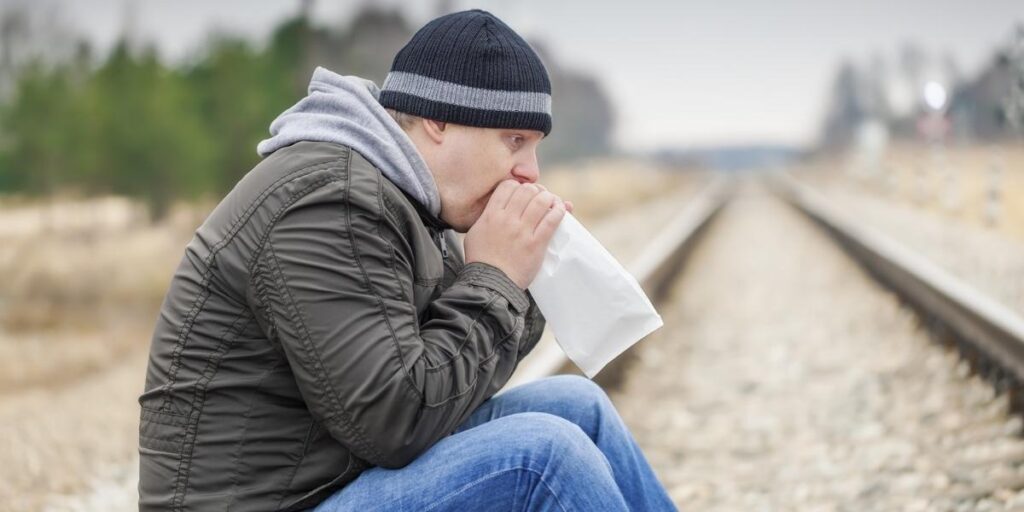
When you inhale volatile hydrocarbons, the chemicals sensitize your cardiac myocytes to catecholamines, meaning your heart can’t tolerate normal adrenaline levels during stress or exertion. Any sudden trigger, standing up quickly, unexpected startling, or fear of being caught, floods your already compromised heart with catecholamines, precipitating ventricular fibrillation within minutes. Simultaneously, oxygen deprivation from displaced air in your lungs compounds the cardiac instability, creating multiple pathways to sudden cardiac arrest.
Catecholamine Surge Triggers Arrhythmias
Understanding why sudden sniffing death occurs requires examining the catecholamine sensitization mechanism that volatile hydrocarbons trigger in cardiac tissue.
When you inhale volatile substances, they inhibit your heart’s sodium and calcium channels, reducing conduction velocity and altering refractory periods. Simultaneously, these compounds block repolarizing potassium channels (hERG and I(Ks)), creating conditions favorable for reentry arrhythmias.
Your myocardium becomes hypersensitive to endogenous catecholamines, epinephrine and norepinephrine. Physical exertion, fear, or sudden surprise triggers a catecholamine surge that your sensitized heart can’t tolerate. Even minimal sympathetic activation precipitates after-depolarizations and enhanced automaticity.
The result: ventricular fibrillation or tachycardia develops within minutes. Halogenated hydrocarbons demonstrate the highest arrhythmogenic potential. QT prolongation, particularly with toluene exposure, increases vulnerability. Your sensitized myocardium requires only a small catecholamine burst to trigger fatal dysrhythmias.
Oxygen Deprivation Causes Failure
Beyond the catecholamine sensitization pathway, oxygen deprivation represents a second critical mechanism driving sudden sniffing death. When you inhale volatile substances, they displace oxygen in your alveoli, creating immediate hypoxia. Your heart, deprived of adequate oxygen, undergoes rapid failure, often within minutes of exposure.
Butane, propane, and halogenated hydrocarbons pose the highest risk for oxygen-related cardiac arrest. These substances absorb rapidly through lung tissue, delivering toxic concentrations directly to cardiac muscle while simultaneously impairing oxygenation.
Physical triggers accelerate catastrophic outcomes. If you stand quickly or exert yourself during use, you’ll compound the hypoxic stress on your heart. Aspiration of hydrocarbons causes pneumonitis and pulmonary edema, further compromising oxygen delivery. Toluene creates severe metabolic acidosis and potassium imbalances, exacerbating cardiac vulnerability. Survival without immediate CPR remains rare.
Adrenaline Sensitizes Heart Cells
Volatile hydrocarbons don’t just deprive your heart of oxygen, they fundamentally alter how cardiac cells respond to stress hormones. When you inhale substances like butane, propane, or halogenated solvents, these compounds sensitize your cardiac myocytes to catecholamines. Your ventricles become hypersensitive to epinephrine and norepinephrine, the same hormones your body releases during fear or physical exertion.
This sensitization disrupts myocardial electrical propagation through direct effects on calcium and sodium ion channels. Your heart’s action potential refractory period shortens, creating conditions for early depolarizations. When adrenaline surges, triggered by something as simple as standing quickly or hearing a parent approach, your sensitized cardiac tissue can’t maintain stable rhythm.
The result: ventricular tachycardia progressing to fibrillation. Researchers first documented this phenomenon in chloroform-anesthetized cats during early 20th-century studies.
Why Even First-Time Huffing Can Kill
When volatile chemicals enter your lungs, they cross into the bloodstream within seconds and reach the heart almost instantaneously. This rapid absorption means cardiac sensitization occurs before you recognize any warning signs. Your heart becomes hyperreactive to catecholamines during this critical window.
First-time users face identical SSD risk as chronic abusers because:
- Hydrocarbons immediately alter cardiac ion channel function, disrupting electrical conduction
- A single exposure replaces oxygen in lung tissue, causing acute hypoxia
- Any subsequent adrenaline surge, from excitement, panic, or physical movement, triggers fatal arrhythmia
You don’t build tolerance to this mechanism. Healthy adolescents with no cardiac history have died within minutes of their first huffing session. The heart stops before emergency responders can intervene, and resuscitation attempts rarely succeed due to the rapid, irreversible nature of the arrhythmia.
Can Inhalant Abuse Cause Sudden Sniffing Death Syndrome?
Yes, inhalant abuse can cause sudden sniffing death syndrome. Death by aerosol inhalation is a direct result of SSDS.
Repeated exposure to inhalants can cause lasting damage and weaken organs.
The same chemicals in aerosols and solvents that cause a high can also lead to heart failure or suffocation, the leading cause of sudden sniffing death syndrome.
Help for Inhalant Abuse
The only way to prevent sudden sniffing death syndrome is to stop using inhalants. Although we know how difficult inhalant withdrawal can be.
Our compassionate specialists at Northridge Addiction Treatment Center use medically supervised detox to keep you comfortable and safe through the withdrawal symptoms that come with quitting inhalants.
In the comfort and privacy of our residential treatment center, our licensed and accredited team will work with you to develop a personalized and collaborative treatment plan tailored to your unique recovery.
At NATC, our goal is to provide you with the skills and tools to heal and maintain a lasting and meaningful recovery. Thus we use evidence-based therapies such as cognitive-behavioral therapy and support groups like 12 step facilitation to help shape your thinking, take back your life, and realize you are not alone.
Call us now to speak to an admissions specialist and take the first steps to reclaim your life.
Frequently Asked Questions
Can CPR Save Someone Experiencing Sudden Sniffing Death Syndrome?
Yes, CPR can save someone experiencing this cardiac emergency. If you witness a collapse and detect no breathing or pulse, you should start CPR immediately, it doubles or triples survival chances by circulating blood to essential organs. Studies show 69% survival at arrest when you combine prompt CPR with defibrillation. You’ll want to call 911 right away and use an AED if available while continuing chest compressions.
How Quickly Does Death Occur After Sudden Sniffing Death Syndrome Begins?
Death occurs within minutes once cardiac arrest begins. Your heart enters ventricular fibrillation, cutting off blood flow to your brain and organs almost instantly. You’ll collapse during or immediately after inhalation, often before anyone can intervene. The window from arrest to death spans minutes to hours, but without immediate CPR and defibrillation, survival rates drop dramatically. Unwitnessed arrests rarely allow survival to medical care.
Are There Any Warning Signs Before Sudden Sniffing Death Syndrome Occurs?
You typically won’t observe warning signs before this syndrome strikes. The cardiac arrhythmia develops rapidly and without prodromal indicators. You might notice standard intoxication symptoms, dizziness, confusion, slurred speech, but these don’t reliably predict imminent cardiac failure. The fatal arrhythmia often triggers when you experience an adrenaline surge from physical activity or sudden stress. This unpredictability makes the condition particularly dangerous, as you can’t anticipate or prevent the lethal cardiac event once exposure occurs.
Does Sudden Sniffing Death Syndrome Only Affect Teenagers and Young Adults?
No, it doesn’t only affect teenagers and young adults, though they’re at highest risk. You can experience this fatal cardiac arrhythmia at any age if you use inhalants. While 70% of deaths occur in those 22 and younger, adults who abuse solvents, particularly chronic users in their 20s or those with occupational access, remain vulnerable. The syndrome’s mechanism targets your heart’s electrical system regardless of your age.
Can Someone Survive Sudden Sniffing Death Syndrome if Treated Immediately?
You can survive if bystanders act immediately. Witnessed collapses with prompt CPR and AED defibrillation yield better outcomes than general cardiac arrest cases. However, death typically occurs within minutes, and first responders often can’t intervene in time. Even successful resuscitations carry risks of permanent brain damage. Your best survival odds depend on immediate 911 activation, continuous CPR to maintain organ perfusion, and rapid defibrillation, though overall resuscitation success rates remain low.