Meth addiction has one of the most widely recognized signs, meth mouth. While all drug abuse causes psychological and physiological changes, methamphetamines, also called meth or crystal meth, are some of the most fast-acting, highly addictive drugs. Meth users can experience extensive tooth decay and gum disease in less than a year of abusing meth. More than being painful and unsightly, meth mouth is a warning sign of escalating meth addiction and more severe health problems.
Meth mouth refers to the severe dental destruction you’ll experience from chronic methamphetamine use, often progressing to significant tooth loss within just one year. You’ll notice early warning signs like persistent dry mouth, gum inflammation, and tooth staining as the drug constricts blood vessels and suppresses saliva production. Combined with bruxism and poor hygiene during binges, your enamel erodes rapidly while bacteria flourish unchecked. Understanding the stages and treatment options can help you recognize when intervention’s necessary.
What Is Meth Mouth?
The term meth mouth is a broad label referring to oral damage caused by chronic meth abuse, including sores on the lips and around the mouth, stained rotting teeth, extensive tooth decay, and gum disease.
Meth mouth describes the severe dental destruction that occurs in people who chronically abuse methamphetamine. You’ll recognize this condition by its rapid progression, often advancing to significant tooth loss within one year of regular use. Dentists have identified this distinctive pattern of oral deterioration since the early 2000s.
When you use methamphetamine, the drug constricts blood vessels throughout your body, including those supplying your oral tissues. This reduces saliva production, leaving your teeth and gums vulnerable to decay. Without adequate saliva to neutralize acids and wash away bacteria, your enamel erodes quickly. The reduced saliva also promotes bacterial growth, allowing harmful organisms like S. mutans to thrive and accelerate tooth decay.
The condition affects multiple oral structures simultaneously. Your gums become inflamed and diseased, while your teeth develop cavities, staining, and structural damage. This visible deterioration often signals long-term addiction requiring immediate intervention.
On top of causing people to be self-conscious, meth mouth can be painful and lead to more serious, life-threatening infections and health complications if left untreated.
Meth Mouth Symptoms
Many people are familiar with the end product of meth mouth, rotting, stained, or missing teeth with diseased-looking gums; but the damage and decay happen progressively. The psychological and physiological changes from meth happen quicker than other drugs. One of the main signs of meth abuse is a rapid decline in dental health, partially caused by periods of poor oral hygiene due to mental health issues and addiction escalating.
Understanding the underlying mechanisms of meth mouth allows you to recognize its warning signs before extensive damage occurs. Methamphetamine activates your sympathetic nervous system, triggering saliva depletion and creating xerostomia. This dry mouth condition eliminates your mouth’s natural defense against bacterial proliferation and acid erosion.
Meth mouth develops when the drug shuts down saliva production, leaving teeth defenseless against bacteria and acid damage.
Common meth mouth symptoms include:
- Bad breath
- Dry mouth or xerostomia
- Craving sugary drinks or candy
- Sensitivity to hot or cold foods
- Only eat soft foods or liquids
- Jaw clenching
- Teeth grinding
- Flattened or worn down back teeth
- Lockjack
- Swollen gums
- Bleeding gums
- Receding gum line
- Canker sores
- Open sores on the tongue and cheeks
- Dry, cracked, or peeling lips
- Sores or burns around the mouth
- Neglecting dental care like flossing and brushing teeth
- Excessive cavities
- Cracked teeth
- Broken teeth
- Missing teeth
- Slow healing wounds
- Candidiasis, or chronic bacterial and yeast infections in the mouth
- Swollen, smooth tongue
Early clinical indicators you should monitor include:
- Persistent dry mouth and reduced saliva production immediately following meth use
- Swelling, inflammation, and bleeding of gum tissue
- Tooth staining and visible discoloration within months of regular use
- Bad breath resulting from accelerated bacterial growth
- Teeth grinding that causes teeth to crack, wear down, or loosen
These symptoms often manifest before significant structural damage develops. Cavity formation typically begins within months of consistent use, while bruxism causes progressive enamel wear. Meth users frequently experience increased cravings for sugary foods and drinks, which further accelerates tooth decay. Early intervention during this stage can prevent the severe tooth loss characteristic of advanced meth mouth.
The severity and timeline of meth mouth increase with higher amounts of meth used and the longer the addiction goes untreated.
What Does Meth Mouth Look Like?
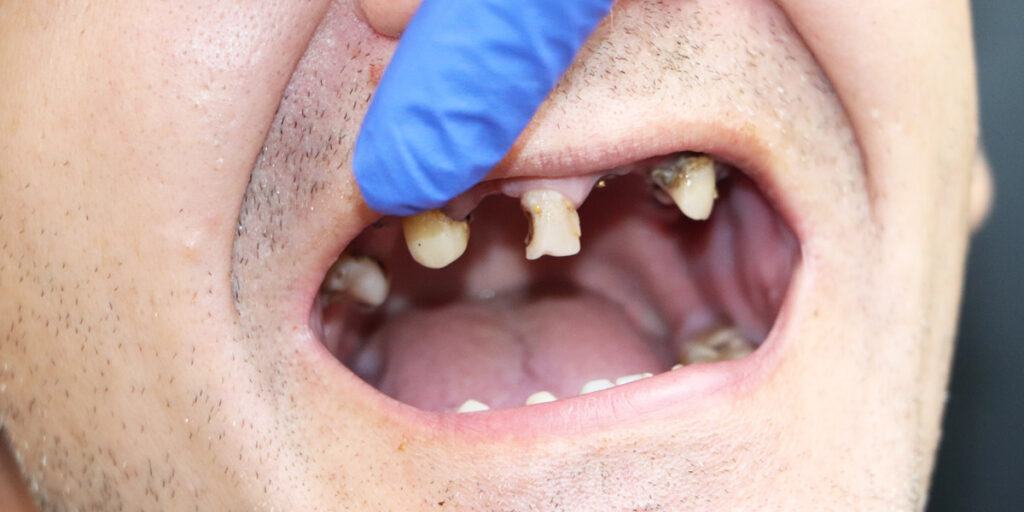
Meth mouth will look different depending on how advanced a meth user’s addiction is; it might look like someone with bad oral health needs some attention, or they might have extensive tooth decay with stained rotting teeth with visible sores around their lips. Without seeing the inside of their mouth, a person’s cheeks might look visibly sunken in and saggy, or you may see them grinding their teeth and tensing their jaw.
It is important to remember that people struggling with substance abuse are still human beings with feelings. Meth users are aware of their appearance, and many are already self-conscious and embarrassed. Bringing up their physical condition when discussing how to find treatment for their dental health and treatment programs for their addiction should be compassionate and avoid shaming them.
What Causes Meth Mouth?
The assumption that smoking meth is the only cause of meth mouth is wrong. According to the American Dental Association (ADA), meth users who smoke the drug have the same rate of dental disease as people who snort or inject it.
While smoking meth increases the likelihood of burns, the side effects of meth and the ingredients in meth cause the majority of meth mouth symptoms. Many meth users also smoke cigarettes, which compounds oral damage.
Some of the causes of meth mouth include:
Dry Mouth
Saliva forms a protective barrier in the mouth to prevent bacteria from sticking to teeth and causing decay. Meth is acidic and slows down saliva production, allowing acid and bacteria to attack and damage the teeth.
Cravings for Sweets
Meth users crave sugary drinks and candy. When the mouth is already dry, this allows the sugar to coat and stick to the teeth. Studies have shown that bacteria breed faster when it is attached to sugar. Dry, plaque-coated teeth are the perfect environment to speed up cavities and decay.
Teeth Grinding
Meth is a stimulant and causes muscle tensing and teeth grinding, which wears down and weakens teeth, eventually causing them to crack and break. Teeth grinding and jaw clenching can also cause temporomandibular joint (TMJ) damage, which is popping, cramping, and limited, painful movement in the jaw joint.
Malnutrition
Meth suppresses the appetite, leeches nutrients from the body, and shrinks blood vessels. Without circulation and the nutrients need to heal injuries, wounds heal slowly or not at all, gums recede, and the roots of teeth rot and die off.
Meth Binges
Meth is a highly addictive drug, and meth users generally spend days on end binging, causing them to neglect self-care and periods of poor oral hygiene. A crash often follows binges when meth users spend several days sleeping and recovering, which can also cause them to forgo hygiene. Repeated neglect of dental health accelerates meth mouth.
The Ingredients in Meth
Meth has a variety of components that can be acidic and corrosive to teeth and soft tissue. Smoking and snorting meth puts them in direct contact with oral tissue, but injecting meth also allows them into the bloodstream, which will reach the gums, tongue, and roots of teeth.
Finances and Stigma
Meth addiction can be all-consuming, and meth users spend most of their money on necessities and drugs. Dental care is expensive and seems pointless to someone who knows they will continue to use meth and damage their teeth. Furthermore, all types of drug users have reported avoiding medical treatment due to the stigma of addiction.
The rapid destruction of teeth in methamphetamine users results from multiple simultaneous mechanisms that overwhelm your mouth’s natural defenses. Dry mouth occurs as the drug suppresses saliva production through sympathetic nervous system activation, eliminating your primary protection against bacterial acids and demineralization.
Chemical erosion compounds this damage when acidic methamphetamine vapors contact enamel directly during smoking. Your weakened teeth then face bruxism, compulsive grinding and clenching during intoxication that cracks and fractures compromised enamel.
Sugar consumption intensifies decay as you seek relief from xerostomia through frequent sugary beverage intake, feeding acid-producing bacteria. Poor hygiene during extended binges allows bacterial overgrowth to flourish unchecked. Research demonstrates 96% of examined methamphetamine users had cavities, with 58% showing untreated decay. These converging factors create exponential destruction that standard oral defenses cannot counteract.

How Long Does It Take to Get Meth Mouth?
Within a year of using methamphetamines, meth mouth can happen. Long-term meth abuse is more likely to lead to severe, irreversible damage; however, even a few months of heavy meth use can cause extensive tooth decay and gum disease.
The Stages of Meth Mouth
Recognizing how meth mouth progresses through distinct stages helps you identify damage early and seek appropriate intervention.
Catching meth mouth early gives you the best chance to prevent irreversible damage and restore your oral health.
Stage One involves bad breath, swollen gums, and developing cavities. Dry mouth emerges as oral hygiene stimulant effects reduce saliva production.
Stage Two brings progressive deterioration:
- Mouth sores develop on lips and oral tissue
- Gum disease meth causes visible recession from the gum line
- Cavities spread throughout your dentition
- Tissue damage extends to tongue and tonsils
Stage Three presents severe dental decay meth use causes, teeth appear black, break at the root, and fall out entirely.
Timeline varies based on usage patterns. Heavy users progress faster, with 96% developing cavities according to the American Dental Association. Smokers face three times higher risk than those using other methods.
How Dentists Treat Meth Mouth
If you’re seeking treatment for meth mouth, your dentist will first require you to stop using methamphetamine before beginning any restorative work. Once you’ve achieved sobriety, your dental team will address active infections and decay through deep cleanings, fillings, or root canals depending on severity. In cases where teeth are beyond repair, extraction becomes necessary to eliminate infection sources and prepare your mouth for prosthetic replacement options.
Stopping Drug Use First
Stopping methamphetamine use represents the single most critical step in treating meth mouth, as continued drug use undermines every restorative dental procedure. Methamphetamine’s effects on your CNS drive behaviors like teeth grinding and sugar cravings that accelerate decay.
When you stop using, your body begins recovering:
- Your saliva production normalizes, restoring natural defenses against bacterial growth
- Compulsive grinding behaviors diminish, preventing further structural damage
- Cravings for sugary substances decrease, reducing cavity formation risk
- Early-stage decay may reverse within the first year with proper oral hygiene
Medical detoxification under professional supervision manages withdrawal symptoms while clearing the drug from your system. This step must precede dental restoration work because active use will damage newly treated teeth. Behavioral therapy and counseling address underlying addiction drivers, increasing long-term treatment success.
Treating Decay and Infections
Once you’ve stopped methamphetamine use, treating existing decay and infections becomes the immediate priority. Your dentist will first remove active infection to prevent failure of subsequent restorations. Controlling bacteria and treating inflamed gums establishes the foundation for recovery from chronic meth damage.
Professional interventions vary based on severity. Fluoride treatments strengthen compromised enamel in early-stage decay. Fillings address mild cavities, while crowns restore structural integrity in moderate cases. Root canals treat advanced decay without requiring extraction. Chlorhexidine mouthwashes combat Streptococcus mutans colonization effectively.
Gum disease treatment runs parallel to decay management. Professional cleaning reduces inflammation and prevents further tooth loss. Early intervention can reverse initial periodontal damage. Your dentist will develop a tailored treatment plan, with timelines ranging from weeks for mild cases to over a year for severe damage requiring implants.
Tooth Extraction Options
When decay progresses beyond the point where restorative treatments can save a tooth, extraction becomes the necessary intervention. You’ll find that surgical extraction under local anesthesia addresses teeth that have become black, brittle, or severely compromised by methamphetamine use.
Your dentist may recommend extraction to:
- Prevent the spread of oral infections to surrounding tissues
- Remove irreversibly damaged teeth before spontaneous loss occurs
- Prepare your mouth for prosthetic replacement options
- Eliminate sources of ongoing pain and complications
In extreme cases, you may require full mouth extraction followed by dentures. Following removal, your dental team will monitor healing complications that can arise from meth’s effects on tissue recovery. Post-extraction care focuses on restoring saliva production, maintaining improved oral hygiene, and scheduling regular follow-ups to guarantee proper healing.
Can You Reverse Meth Mouth?
How much damage can you actually undo once meth mouth has taken hold? The condition is largely irreversible, with severe enamel erosion and tooth loss representing permanent changes. Studies document rapid progression to complete edentulism within one year of regular use, primarily due to xerostomia-induced decay.
You must stop methamphetamine use as the essential first step. Cessation halts the chemical damage, bruxism, and sugar cravings that accelerate deterioration. Without abstinence, all interventions fail.
Once you’ve achieved sobriety, dental professionals can address remaining damage through fillings, root canals, and crowns for salvageable teeth. Non-restorable teeth require extraction followed by dentures, bridges, or implants. Gum disease treatment includes scaling and antibiotics.
While you can’t restore your original dental state, early intervention combined with sustained abstinence yields considerably better functional outcomes.
Meth Addiction Treatment
If you or a loved one is struggling with meth addiction, Northridge Addiction Treatment Center can help.
At NATC, we offer onsite medical detox to safely get you through meth withdrawal in a private, calming atmosphere with 24-hour medical care and support.
Our residential treatment center is an intimate setting that allows you to work through the roots of addiction with evidence-based treatments and a personalized treatment plan. At the same time, allowing your body to regain strength and health with healthy, chef-catered meals and amenities like our pool and hot tub area that help you relax and exercise, surrounded by the beauty of Los Angeles’ San Fernando Valley.
Reach out to our treatment specialists with any questions and to learn more about your treatment options. The path to a meaningful life in recovery is just a phone call away.
Frequently Asked Questions
Does Smoking Meth Cause Worse Dental Damage Than Snorting or Injecting It?
No, smoking meth doesn’t cause worse dental damage than snorting or injecting it. Research shows you’ll experience comparable rates of decay and xerostomia regardless of your administration route. However, if you’re injecting, you’ll likely face higher rates of tooth decay and disease severity than other methods. Your dental outcomes depend more on factors like dry mouth, sugary drink consumption, and oral hygiene habits than how you’re using methamphetamine.
How Long Does It Take for Meth Mouth to Develop After Starting Use?
You can develop meth mouth within months of regular use, with noticeable damage often appearing within the first year. Daily users experience faster progression than occasional users. You’ll likely see early signs, staining, dry mouth, and small cavities, within weeks to months. Severe decay requiring tooth extraction can occur within just one year of consistent use. Your individual progression depends on usage frequency, consumption method, and genetic predisposition to dental problems.
Will My Dental Insurance Cover Treatment for Meth Mouth Damage?
Your dental insurance likely won’t cover meth mouth treatment fully. Most policies exclude damage from illegal drug use under “intent-to-use” or self-inflicted injury clauses. Even if you qualify for basic coverage, annual maximums of $1,000-$2,000 fall far short of reconstruction costs averaging $20,000-$50,000. You’ll need prior authorization, and insurers often deny claims when substance abuse history is documented. Consider SAMHSA’s helpline for addiction programs that bundle dental care.
Can Meth Mouth Spread Infections to Other Parts of My Body?
Yes, oral infections from this condition can spread systemically throughout your body. When bacteria from abscesses and gum disease enter your bloodstream through damaged oral tissue, they can travel to crucial organs, potentially causing life-threatening complications including heart infections. Your compromised immune function and impaired tissue healing make it harder to contain these infections locally. You should seek prompt dental and medical evaluation to prevent bacterial migration beyond your oral cavity.
Are Certain People More Genetically Prone to Developing Meth Mouth?
Yes, you may carry genetic variants that increase your susceptibility. Research shows SLC6A4 gene polymorphisms and COMT Val158Met variations elevate addiction risk, potentially leading to more prolonged methamphetamine exposure and greater oral damage. Additionally, epigenetic modifications, including DNA methylation changes in these genes, can alter your dopamine regulation and reward pathways. However, you should understand that polygenic architecture means no single gene determines your risk; gene-environment interactions substantially influence outcomes.