Yes, moonshine poses significant dangers you won’t encounter with regulated spirits. Uncontrolled distillation produces unpredictable methanol concentrations, up to 2.8% in tested samples, where just 10 ml can cause permanent blindness or death. You’re also risking lead contamination, found in 58.3% of analyzed moonshine, often leaching from improvised equipment like car radiators. With alcohol content ranging from 40-80% ABV, you can’t reliably gauge your dose. Understanding these chemical hazards helps you recognize warning signs before consumption.
There are various names for illegal alcohol, such as white lightning, moonshine, hooch, rotgut, and mountain dew. These names add to its secretive and fascinating image, making some people believe it’s a strong and enjoyable drink.
However, it’s crucial to understand that moonshine isn’t safe to drink as it can have extremely harmful effects. Making moonshine, also known as “bootlegging,” significantly raises the risk of harm due to the absence of regulations. This lack of oversight leads to serious safety concerns and health risks.
What is Moonshine?
Moonshine is a type of alcohol that is made illegally using a process called distillation. It is usually unaged whiskey and is well-known for having excessive alcohol content. Unlike commercially produced liquors, it isn’t always subject to laws or regulations; it can have a much higher alcohol content.
To make moonshine, the following items are mixed: white corn, sugar, and yeast. These items are fermented, a process that converts sugar into alcohol. The next step is called distillation.
The distillation process separates alcohol from the fermented mixture. This results in a liquor with a high alcohol concentration.
Unpredictable Alcohol Content in Moonshine
When you consume moonshine, you’re dealing with alcohol by volume (ABV) concentrations that can range from 40% to over 90%, making accurate dose estimation nearly impossible. Unlike regulated spirits with standardized ethanol content, each batch of illicitly produced moonshine exhibits significant variability due to inconsistent distillation parameters and equipment. This unpredictability means you could unknowingly ingest double the ethanol concentration you anticipated, dramatically increasing your risk of acute alcohol toxicity.
ABV Ranges Widely
Because illicit moonshine lacks standardized production controls, its ethanol concentration fluctuates dramatically, ranging from 40% to over 80% ABV, creating significant dosing unpredictability for consumers. This variability represents one of the primary moonshine dangers, as you can’t accurately gauge your ethanol intake without knowing the precise concentration.
| ABV Category | Concentration Range |
|---|---|
| Low | Under 30% |
| Medium | 30-50% |
| High | 50-80% |
| Extreme | 80-95% |
| Commercial Standard | 40% |
Unregulated alcohol risks multiply when ethanol toxicity thresholds become impossible to calculate. You might consume what appears to be a standard serving, yet ingest double the expected ethanol dose. Some illicit operations produce spirits reaching 95% ABV, approaching pure ethanol. This concentration uncertainty directly correlates with increased overdose probability and acute poisoning incidents.
Batch-to-Batch Variability
Every batch of illicitly produced moonshine presents a distinct chemical profile, with ethanol concentrations shifting unpredictably between production runs. You’re dealing with makeshift stills, inconsistent heat sources, and variable fermentation conditions that create dangerous uncertainty. One batch might contain 40% ABV while the next reaches 80% or higher.
You can’t gauge safe consumption volumes when ethanol levels fluctuate this dramatically. The absence of standardized testing equipment means producers rely on unreliable methods like bubble tests, which fail to predict exact alcohol ratios. Without proper labeling or proof measurement, you’re fundamentally consuming an unknown quantity of ethanol.
This variability directly increases your risk of alcohol poisoning and severe CNS effects. Higher-than-expected concentrations trigger rapid intoxication, impairing your judgment before you recognize the danger you’re facing.
The Origins of Moonshine

Moonshine became widely known during the Prohibition era in the US, which lasted from 1920 to 1933. During this time, the manufacturing, sale, and distribution of alcoholic beverages were prohibited.
The term “moonshine” is used to describe illegally produced alcohol. It was made secretly at night, often using the moonlight to avoid detection by law enforcement.
However, the records of moonshine extend beyond prohibition times. The origins of this can be traced back to many different places. These include Appalachia in the United States, the Scottish Highlands, and the Balkans. In these regions, moonshine was frequently made to preserve surplus agricultural produce.
Today, moonshine production and consumption are mainly found in rural populations in states like Alabama, South Carolina, Georgia, and Mississippi. Most cases related to moonshine involve older males living in rural settings in West Alabama.
Although, moonshine consumption is not contained in the Southeast or rural populations alone. There were occasional reports of moonshine use in urban areas like Washington, DC, Michigan, Pennsylvania, and Virginia.
Is Moonshine Dangerous?
Moonshine is a hazardous substance because it lacks proper quality control during distillation. Distilling liquor is a scientific process that demands precision and expertise.
Moonshine is not commercially produced. It is usually made in unregulated settings. The equipment and methods used to make moonshine are not tested or approved.
To illustrate the risks involved, consider the distillation temperature. It is crucial to heat the alcohol to about 173.1 degrees Fahrenheit for safe production. Even a moderate deviation from this temperature can lead to the formation of harmful chemicals like formic acid and methanol.
What Makes Moonshine More Dangerous Than Other Spirits?
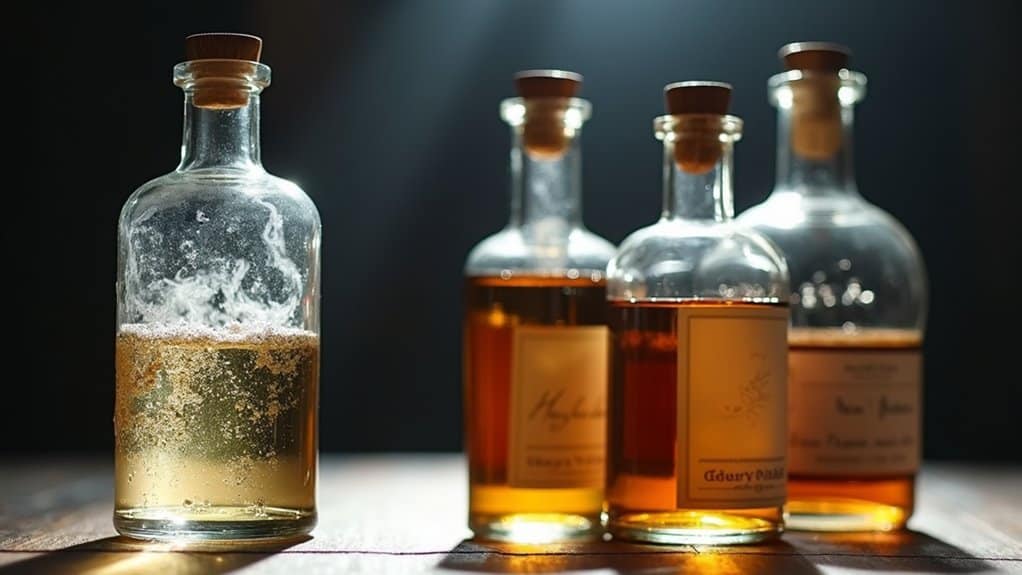
When you crack open a jar of homemade moonshine, you’re gambling with chemistry that commercial distillers have spent centuries perfecting. Unlike regulated spirits that undergo rigorous testing via gas chromatography, unregulated moonshine carries unpredictable concentrations of lethal compounds.
Methanol toxicity poses the greatest threat, just 10 ml causes permanent blindness, while 30 ml proves fatal. You can’t detect it by taste or smell. The lack of regulation means producers skip critical foreshot disposal, leaving concentrated acetone and volatile aldehydes in your drink. A 2019 CDC investigation confirmed methanol concentrations ranging from 0.3% to 2.8% of total alcohol in analyzed moonshine samples. Moonshiners may intentionally add methanol to boost the perceived alcohol content, which directly damages the optic nerve and explains the persistent legend about moonshine causing blindness.
Lead poisoning affects 58.3% of analyzed samples, originating from improvised equipment like car radiators. These toxic byproducts accumulate because there’s no quality control, no batch testing, and no traceability. Each jar represents a different chemical profile, and potentially different consequences. With moonshine containing 40% to 80% alcohol, the potency can mask these deadly side effects while accelerating intoxication to dangerous levels.
Methanol Poisoning From Contaminated Moonshine
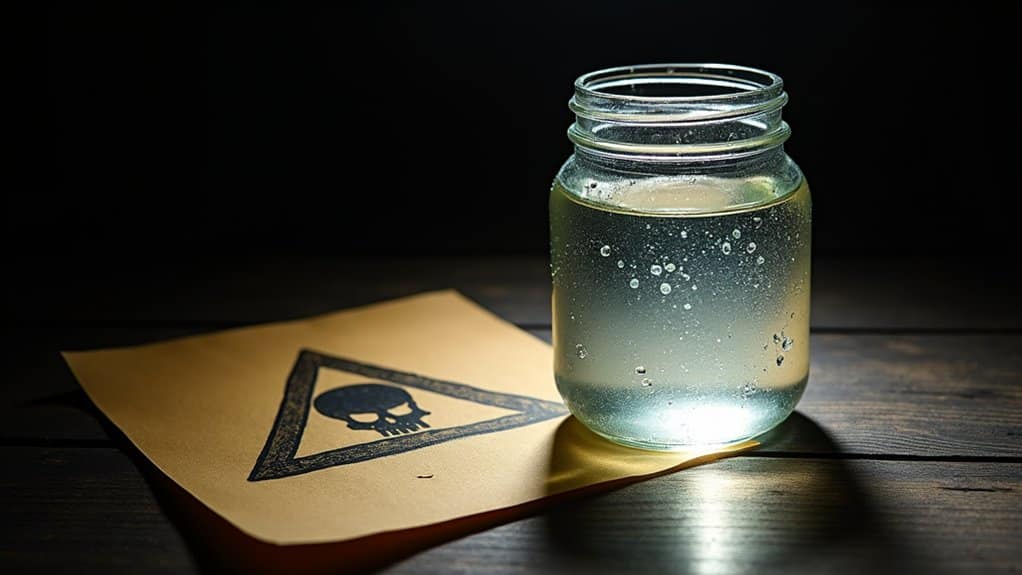
When you consume contaminated moonshine, you’re risking exposure to methanol, a toxic alcohol that labs have detected in numerous illicit spirit samples at concentrations far exceeding safe thresholds. Fruit-based distillates pose particularly heightened risks because pectin-rich substrates generate higher methanol yields during fermentation, with some contaminated batches testing at levels like the 24.84% methanol concentration found in Brazilian cachaça that killed 35 people. The severe poisoning consequences you face include metabolic acidosis, optic nerve destruction causing permanent blindness, and multi-organ failure, with as little as 10 ml of methanol proving fatal.
Methanol Detection in Samples
Detecting methanol in moonshine samples requires specific analytical methods, as you can’t distinguish it from ethanol through taste, smell, or visual inspection alone. Serum methanol testing confirms exposure even when you’re asymptomatic, making laboratory analysis essential for accurate identification.
You should understand the key detection challenges:
- Latent periods extend 12-24 hours without ethanol co-ingestion
- Early symptoms mimic standard ethanol intoxication
- Brain CT scans reveal abnormalities in only 26% of imaged cases
- Formate accumulation occurs before visible organ damage manifests
Gas chromatography remains the gold standard for quantifying methanol concentrations in liquid samples. You’ll find that toxicity thresholds matter critically, just 30 mL of pure methanol proves potentially fatal without intervention. Since symptoms correlate with both methanol volume and elapsed time, rapid analytical confirmation prevents delayed treatment and irreversible complications.
Fruit-Based Distillate Risks
While laboratory analysis identifies methanol contamination in finished products, understanding how fruit-based distillates generate this toxin in the first place helps you recognize high-risk moonshine before consumption.
Fruits high in pectin, apples, grapes, plums, and berries, produce methanol as a fermentation byproduct when yeast breaks down pectin structures. Plum-based alcohol can contain methanol concentrations up to 2.39%, greatly exceeding grain-based spirits.
Distillation errors compound this risk. When you fail to discard the foreshot, the initial low-boiling fraction, methanol remains in your final product. Improper temperature control and insufficient distillation runs further concentrate this CNS toxin.
Environmental contamination worsens outcomes. Glyphosate residues from treated orchards introduce additional methanol precursors. Just 10 milliliters of methanol causes permanent optic nerve damage, making fruit-based moonshine particularly hazardous without proper quality control.
Severe Poisoning Consequences
Methanol poisoning from contaminated moonshine follows a deceptive timeline that masks its severity. You’ll experience initial symptoms resembling typical intoxication, nausea, vomiting, and dizziness, within hours. However, your liver metabolizes methanol into formic acid over 12-24 hours, triggering delayed systemic toxicity.
The consequences include:
- Visual deterioration: Blurred vision progressing to permanent blindness from optic nerve damage
- Metabolic acidosis: Hyperventilation, tachycardia, and cardiovascular instability
- Neurological damage: Confusion, seizures, coma, and irreversible cognitive impairment
- Organ failure: Liver stress compounding multi-system collapse
Clinical data shows 44% of patients present with altered consciousness, while 17% face mortality. As little as 10 ml of methanol can prove lethal. Without rapid intervention, you risk permanent brain damage or death within 48 hours of ingestion.
Methanol is a toxic substance in paint thinners, antifreeze, mouthwash, and embalming fluids. These chemical compounds may have severe health consequences when consumed.
It is essential to recognize that moonshine production lacks quality control. This dramatically increases the potential for hazardous outcomes. Therefore, consuming moonshine is a risky and unsafe choice.
Lead and Heavy Metals in Homemade Moonshine
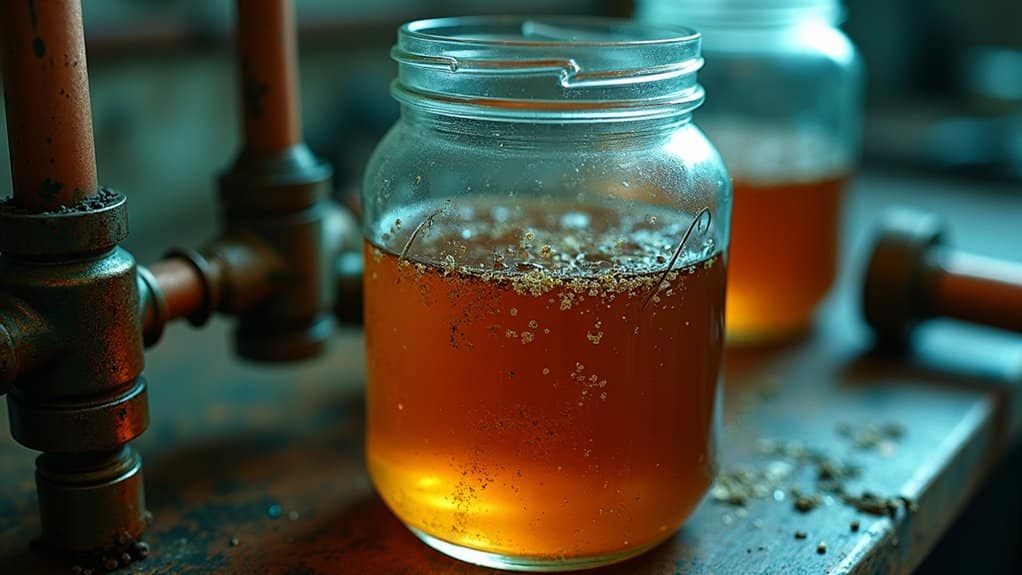
Heavy metal contamination poses a significant toxicological hazard in homemade moonshine, with lead representing the most prevalent and dangerous contaminant. Studies reveal that 43 out of 48 still samples contained lead levels between 5 and nearly 600 ppb, far exceeding the EPA’s 15 ppb water guideline. Additionally, 28.7% of 115 tested samples surpassed the FDA’s hazardous limit of 300 microg/dL.
You’re exposed to lead through contaminated equipment, car radiators with lead cores, copper piping sealed with lead solder, and generic brass plumbing fittings. This bioaccumulative toxin damages your kidneys, causes hypertension, triggers seizures, and impairs reproductive health. Prolonged exposure produces potentially irreversible nephropathy. Moonshine accounts for four out of five adult lead poisoning deaths in the USA over the past two decades, demonstrating its lethal potential.
The Dangers of Moonshine
Drinking moonshine carries numerous health risks due to its unregulated production methods. The lack of regulations allows for potential tampering with the alcohol, increasing the chances of contamination and using unsafe ingredients.
Moonshiners often employ materials and substances that can introduce harmful toxins into the final product. These contaminants may include hazardous substances like lead, copper, and others, which can seep into the liquor during the distillation process.
Methanol, also called wood alcohol, is a dangerous component found in moonshine. It is highly poisonous and can cause harm to one’s health. The absence of control in moonshine production can produce high levels of methanol as a byproduct.
Consumption of this toxic alcoholic drink can cause severe harm to the central nervous system or even death. Regulated liquors undergo rigorous testing to make sure that methanol remains at safe levels, whereas homemade moonshine lacks those safeguards.
Another danger associated with moonshine use is its inconsistent alcohol content. There are no standardized procedures for determining the strength of alcohol. This makes it difficult, as the quantity of alcohol by volume can vary significantly.
Consuming moonshine can lead to a person drinking more alcohol than intended. This can increase the risk of alcohol poisoning and alcohol-related accidents.
Furthermore, moonshine is typically characterized by a high alcohol content, making it highly flammable. Mishandling moonshine can result in accidental fires, posing significant risks to producers and consumers.
How to Spot Dangerous Moonshine Before Drinking
Before you take a sip of homemade moonshine, you’ll need to conduct several critical assessments to identify potential toxins that could cause serious harm or death.
Start with visual inspection, cloudiness indicates bacterial contamination, while yellow or brown discoloration suggests improper distillation. An oily sheen signals volatile impurities like methanol.
Next, perform olfactory checks for these warning signs:
- Paint thinner or solvent odors indicating methanol presence
- Chemical or antifreeze scents from incorrect distillation temperatures
- Sour, vinegar-like smells revealing bacterial contamination
- Overly sweet aromas masking toxic compounds
If you proceed to taste testing, watch for unusual bitterness, metallic aftertaste, or disproportionate burning sensations, all indicating dangerous contaminants. A numbing effect on your tongue confirms excessive impurities in the alcohol. Unknown production sources considerably increase contamination risk.
Side Effects of Moonshine
Due to its unusually high alcohol content, consuming moonshine can result in severely intensified side effects. Some side effects of drinking moonshine include:
- Confusion and feeling disoriented
- Vomiting and nausea
- Slow or difficulty in breathing
- Irregular heartbeat
- Skin appearing pale or blue-colored
- Seizures
- Loss of consciousness
- Symptoms of alcohol poisoning
Why High-Proof Moonshine Causes Alcohol Poisoning

Even if you’ve identified moonshine as free from visible contaminants, its high alcohol concentration poses a distinct threat: alcohol poisoning. Unregulated distillation produces inconsistent proof levels, making it nearly impossible to gauge ethanol intake accurately. You’re consuming heightened alcohol by volume that surpasses commercial spirits, accelerating absorption into your bloodstream.
High-proof moonshine triggers rapid intoxication because concentrated ethanol bypasses the gradual absorption typical of standard beverages. Your blood alcohol concentration spikes quickly, overwhelming hepatic metabolism. This speed impairs judgment and coordination before you recognize overconsumption.
Acute poisoning manifests through confusion, vomiting, and respiratory depression. Irregular heartbeat, seizures, and unconsciousness indicate severe toxicity requiring immediate intervention. Your body weight, metabolism, and tolerance influence susceptibility, but moonshine’s unpredictable potency amplifies risk regardless of individual factors.
It is important to note that these side effects can be hazardous and potentially life-threatening. Moonshine has a high potency. This increases the risks associated with alcohol consumption.
Consuming moonshine over the long term can greatly affect the liver due to its high alcohol content. The Centers for Disease Control and Prevention (CDC) warns that regular moonshine consumption can result in alcoholic liver disorder.
The condition progresses slowly and can lead to the following:
- The accumulation of fat in the liver, known as fatty liver
- This can progress to alcoholic liver disease
- Alcohol use can cause cirrhosis of the liver, a condition where the liver develops scars and loses its ability to function
It is crucial to understand that chronic consumption of moonshine or any excessive alcohol consumption can significantly increase the risk of liver damage. Seeking help and making healthier choices are essential to protect the liver and overall well-being.
Will Moonshine Blind You?
Improperly distilled moonshine can contain dangerous levels of methanol, which can cause permanent damage to the optic nerve. Methanol poisoning can result in a condition that damages the optic nerve, leading to partial or complete blindness.
Even a small amount of methanol can have severe effects:
- Consuming just 10 milliliters (slightly less than standard glass) of methanol is enough to cause blindness
- Drinking over 30 milliliters (about two shot glasses) can be fatal
It is essential to be aware of the dangers associated with using methanol. Moonshine, mainly produced in unregulated settings, carries a high risk of developing dangerous levels of this toxic substance. Taking precautions and avoiding improperly made alcohol is vital for protecting one’s health and vision.
Does Legal Moonshine Eliminate These Risks?
When you purchase legally produced moonshine, you’re obtaining a product subject to federal oversight that substantially reduces, but doesn’t eliminate, contamination risks.
Federal oversight of legal moonshine significantly reduces contamination risks, though it cannot eliminate them entirely.
Licensed distilleries operate under Alcohol and Tobacco Tax and Trade Bureau regulations, ensuring:
- Methanol detection protocols that screen batches before distribution
- Approved distillation equipment meeting federal safety standards
- Quality control mechanisms preventing heavy metal contamination from lead or arsenic
- Product traceability through mandatory documentation and labeling
You’re still consuming high-proof ethanol, which carries inherent toxicity risks regardless of production legality. However, you’ve eliminated the unpredictable variables present in illicit operations, contaminated equipment, untested batches, and absent accountability frameworks.
Legal moonshine doesn’t remove alcohol’s pharmacological dangers, but it does provide assurance that what you’re drinking contains only ethanol at labeled concentrations, not lethal contaminants.
Alcohol Addiction Treatment at Northridge Addiction Treatment Center
If you or someone you know is battling alcohol use use disorder, it is crucial to seek help. At Northridge Addiction Treatment Center, we provide evidence-based care that prioritizes your needs. NATC equips you with the essential abilities and strategies to manage a life free of substance abuse.
At NATC, our commitment is to transform the lives of those affected by alcoholism through effective treatments and therapies. Aiming to address the root causes of substance use disorders and any related mental health conditions, NATC is devoted to your recovery.
Take the first step towards a happy and healthy life rooted in recovery today. Our caring treatment specialists are eager to assist you. Don’t hesitate to reach out to us for support. Contact us today to begin your recovery journey.
Frequently Asked Questions
Can Moonshine Cause Permanent Blindness Even in Small Amounts?
Yes, you can suffer permanent blindness from drinking just a small amount of improperly distilled moonshine. When you ingest methanol, a toxic byproduct of poor distillation, your body metabolizes it into formaldehyde and formic acid, which destroy your optic nerve. As little as 10 milliliters of pure methanol causes irreversible vision loss. You’ll initially experience symptoms mimicking ethanol intoxication before optic damage manifests, making early detection critical for preventing permanent neurological impairment.
Is It Safe to Drink Moonshine During Pregnancy?
No, you shouldn’t drink moonshine during pregnancy. There’s no safe alcohol amount for pregnant women, and moonshine’s unregulated ethanol concentrations, potentially reaching 95% ABV, dramatically amplify fetal exposure risks. Alcohol crosses your placenta, elevating fetal blood alcohol levels. You’re risking miscarriage, stillbirth, and fetal alcohol spectrum disorders causing lifelong cognitive and physical impairments. Additionally, methanol contamination introduces cellular toxicity through formaldehyde conversion, compounding developmental dangers to your developing fetus.
How Long Does Moonshine Stay in Your System?
Moonshine’s ethanol typically remains detectable in your system for varying periods depending on the test. Your urine can show ethanol up to 12 hours, while EtG and EtS metabolites extend detection to 24-72 hours, potentially 3-5 days with heavy consumption. Blood tests detect alcohol for approximately 12 hours, and saliva testing offers a 12-24 hour window. Your metabolism, hydration levels, body mass, and consumption frequency substantially influence these clearance rates.
Can You Die From Drinking Moonshine Just Once?
Yes, you can die from drinking moonshine just once. If the batch contains methanol contamination, even a single consumption event poses lethal risk. Methanol concentrations exceeding 5000 mg/L cause acute toxicity, leading to loss of consciousness and death. You’re also vulnerable to severe alcohol poisoning if the ethanol concentration is dangerously high. Historical incidents confirm single-exposure fatalities, including cases where bottles contained up to 97% methanol.
Does Mixing Moonshine With Other Drinks Reduce Its Dangers?
No, mixing moonshine with other drinks doesn’t reduce its dangers. You can’t neutralize methanol contamination through dilution, as little as 10 ml still causes permanent blindness, and 30 ml remains fatal regardless of what you mix it with. The high ABV (40-80%) delivers significant alcohol loads even when combined with lower-proof beverages. Contaminants like lead, arsenic, and botulinum toxin persist unchanged. You’re simply masking the risks while consuming the same toxic compounds.