Blood tests detect active THC in your plasma for 12-24 hours after single use, while saliva tests catch recent exposure within a 24-72 hour window. Hair follicle tests reveal THC-COOH metabolites spanning up to 90 days of history. However, none of these methods actually measure impairment, research shows THC concentrations correlate poorly with cognitive or psychomotor deficits. Understanding each test’s specific applications will help you navigate workplace, legal, and medical screening scenarios. Blood tests detect active THC in your plasma for 12, 24 hours after single use, while saliva tests capture recent exposure within a 24, 72 hour window. Hair follicle tests reveal THC-COOH metabolites spanning up to 90 days of history. However, none of these methods actually measure impairment, research shows THC concentrations correlate poorly with cognitive or psychomotor deficits. Variables such as the edibles gummies delivery can shift absorption timing and peak levels without reliably indicating functional impairment. Understanding each test’s specific applications will help you navigate workplace, legal, and medical screening scenarios.
Blood vs. Saliva vs. Hair: How Each THC Test Works
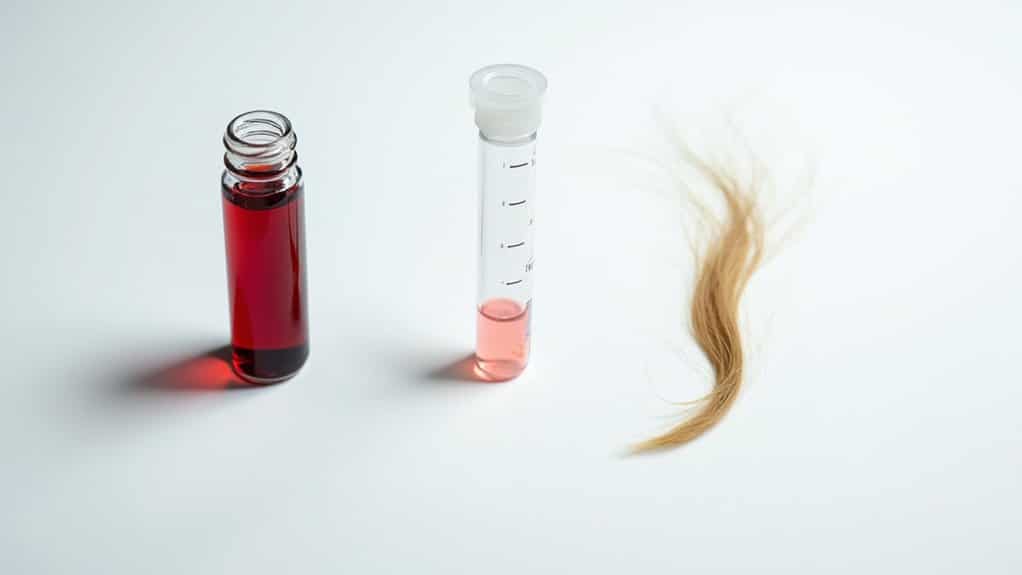
How exactly do these three testing methods detect THC in your system? Each approach targets different biological markers through distinct collection procedures.
Blood tests measure THC in blood plasma directly, requiring venous draws and GC-MS analysis to quantify active compound levels. This method captures current impairment with high precision.
Blood tests deliver the most accurate snapshot of active THC levels in your system right now.
Saliva testing uses oral swabs to detect parent THC from recent exposure. You’ll find this non-invasive method employs immunoassay screening followed by LC-MS confirmation. Saliva tests typically detect marijuana use within 1, 24 hours after consumption, making them ideal for identifying very recent use. Additionally, sample tampering is difficult since collection occurs under direct supervision.
Hair follicle analysis cuts 1.5-inch samples representing 90 days of history. THC hair test results reveal THC-COOH metabolites embedded in the keratin matrix through ELISA and GC-MS techniques.
When comparing blood vs urine test for THC or reviewing any thc detection chart, understanding these thc testing methods comparison helps you interpret results accurately.
How Long Does THC Stay Detectable in Each Test?
Understanding the mechanics behind each testing method provides the foundation for interpreting what matters most: actual detection windows.
Weed blood test detection time** varies considerably by usage pattern. If you’re a single-use consumer, expect THC detectability for 12-24 hours**. Frequent users face detection for 2-7 days, while chronic users may test positive for up to 30 days.
THC saliva test duration typically spans 24-72 hours, though detection can extend to 30 hours post-consumption. You’ll find rapid tests most effective within 24-48 hours of recent use.
The weed hair follicle test time frame captures the longest detection period, up to 90 days standardly, with some tests revealing use up to 12 months prior. This method tracks THC transferred through skin oils, making it particularly effective for identifying chronic consumption patterns. Research shows that 77% of heavy users tested positive on hair tests compared to only 39% of light users. The weed hair follicle test time frame captures the longest detection period, illustrating how THC detection in system can extend far beyond urine or blood testing, up to 90 days under standard conditions, with some tests revealing use up to 12 months prior. This method tracks THC transferred through skin oils, making it particularly effective for identifying chronic consumption patterns. Research shows that 77% of heavy users test positive on hair analyses compared to only 39% of light users.
Beyond usage frequency, individual factors such as gender, hydration, and metabolism can significantly influence how long THC remains detectable across all testing methods.
THC Test Accuracy for Impairment, Employment, and Legal Cases
When you’re evaluating THC test results for impairment, employment decisions, or legal proceedings, you need to understand that current testing methods measure THC presence, not actual impairment levels. Research consistently shows blood and saliva THC concentrations correlate poorly with driving performance and workplace task deficits, particularly in regular users who may test above legal thresholds while demonstrating no measurable impairment. A study analyzing blood, urine, and oral fluid samples found that THC levels did not correlate with cognitive or psychomotor impairment in participants. This disconnect creates significant risks where unimpaired individuals could be mistakenly identified as cannabis-intoxicated, while truly impaired drivers may not register as such on standard tests. Best practices now recommend combining biological testing with behavioral assessments or emerging technologies like fNIRS neuroimaging, rather than relying solely on per se THC limits that lack scientific validation for determining intoxication.
Impairment Testing Best Practices
Accurately determining cannabis impairment remains one of the most challenging problems in forensic toxicology, as traditional testing methods consistently fail to establish a reliable correlation between THC concentrations and functional impairment. While a THC swab test or saliva drug screen for marijuana detects recent use, neither confirms actual impairment. Research demonstrates this limitation, as law enforcement officers classified 49.2% of placebo participants as impaired using field sobriety tests, highlighting the substantial false-positive rate of current assessment methods. This challenge is compounded by the fact that THC metabolites can remain detectable in the bloodstream for weeks after last use, long after any impairing effects have subsided.
Current research supports these evidence-based practices:
- Combine fNIRS brain imaging with field assessments for 76% impairment detection accuracy
- Prioritize blood THC measurements over breath testing for recent use verification
- Use WAT, OLS, and FTN tests specifically, as they correlate with performance impairment
- Avoid relying solely on biofluid concentrations, which don’t indicate impairment degree
You’ll achieve more accurate results by integrating performance-based assessments rather than depending on THC presence alone.
Legal and Workplace Standards
Beyond impairment detection challenges, legal and employment contexts apply THC testing under vastly different standards, often with problematic assumptions about what these tests actually measure.
For workplace screening, SAMHSA and DOT approve saliva tests due to their quick results and cost-effectiveness ($15-50). The weed saliva detection period typically spans 24-72 hours, making it ideal for identifying recent use rather than historical consumption. Supervised collection minimizes tampering risks compared to urine protocols. Healthcare providers also utilize these tests to monitor patients undergoing substance abuse treatment, tracking compliance and progress throughout recovery programs.
Legal applications remain contentious. Some U.S. states and European jurisdictions enforce per se blood THC limits for impaired driving, despite poor correlation with actual impairment. Australia’s roadside saliva testing faces similar validity questions. No universal THC threshold exists, proposed limits range up to 15 nanograms without scientific consensus. Hair tests confirm past use but can’t establish impairment timing. Additionally, standard immunoassay screening methods used in many testing facilities cannot distinguish between delta-8 THC and delta-9 THC isomers, creating further complications for legal interpretation.
Blood THC Tests: Measuring Active Impairment
Blood tests measure Delta-9-tetrahydrocannabinol concentration in nanograms per milliliter, providing a snapshot of THC circulating in your bloodstream rather than stored metabolites that indicate past exposure. Unlike weed detection in saliva and blood for routine screening, blood testing captures active THC, which peaks approximately five minutes post-smoking before rapidly declining.
Blood tests capture active THC circulating in your bloodstream, peaking within minutes of smoking before rapidly declining.
However, blood THC levels don’t reliably correlate with impairment. Consider these critical limitations:
- Peak impairment occurs after most THC clears from your blood
- THC remains detectable for weeks without indicating current impairment
- No consistent blood concentration equates to impairment like alcohol’s BAC
- Blood samples taken hours post-incident miss peak THC levels entirely
Blood tests estimate but cannot directly measure brain THC concentration, making impairment inference inherently problematic. Emerging research shows that functional near-infrared spectroscopy can detect THC impairment by measuring increased oxygenated hemoglobin in the prefrontal cortex with 76.4% accuracy, outperforming traditional field sobriety tests.
Saliva THC Tests: Screening Recent Cannabis Use
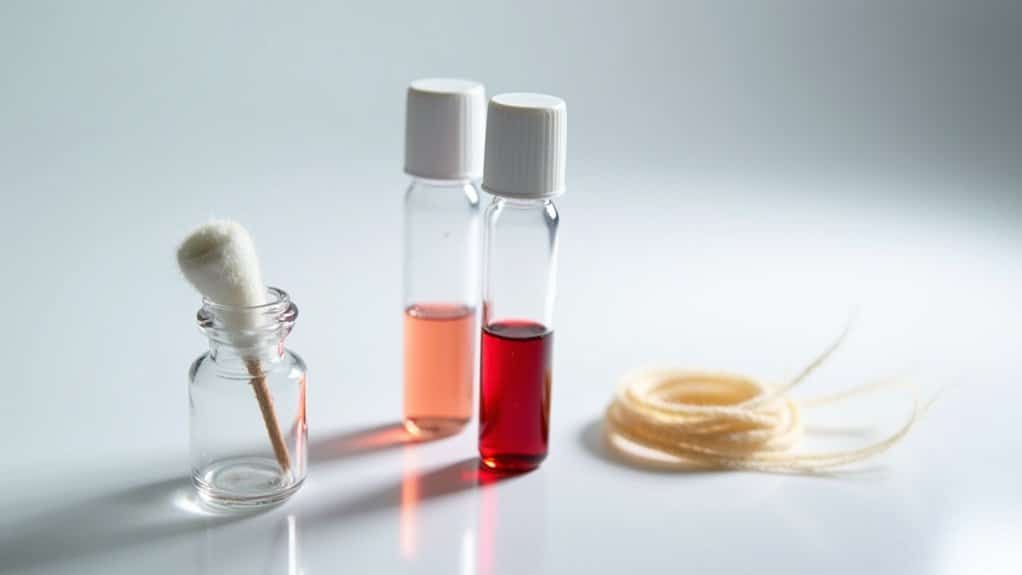
Saliva THC tests offer you a non-invasive screening method that detects recent cannabis use within a 24-72 hour window for occasional users and up to 7 days for regular users. You’ll find these tests commonly deployed in workplace screening applications and roadside checks because they require minimal collection equipment and can achieve 97% accuracy with proper administration. Research confirms these tests excel at spotting current drug use, with studies showing excellent specificity rates ranging from 0.93 to 1.00. However, you should understand that detection limitations exist, edible cannabis consumption typically produces negative results since THC parent compounds aren’t deposited in the oral cavity, and factors like hydration levels and saliva pH can substantially affect specimen concentrations. Additionally, using oral fluid production agents such as citric acid candy or chewing gum before testing has been shown to lower drug concentrations in saliva samples.
Detection Window Limitations
Understanding the limitations of saliva THC tests requires examining the narrow detection window that both enables and constrains their practical applications. You’ll find that saliva testing typically detects THC within 24-72 hours, considerably shorter than thc retention in hair, which extends up to 90 days.
Key Detection Window Limitations:
- Occasional users show detection periods of only 0-24 hours, potentially missing recent use
- Food intake, beverages, and mouth rinsing actively shorten your detection window
- Cutoff thresholds at 2 ng/mL provide ideal diagnostic accuracy, but sensitivity varies across devices
- Smoking creates rapid oral cavity clearing within 12 hours, while edibles remain detectable longer
Your metabolism speed, consumption method, and THC potency directly influence test reliability. These variables create inconsistent results that you must consider when interpreting saliva test outcomes. Additionally, chronic cannabis users show positive results 77% of the time, demonstrating how usage patterns significantly affect detection window accuracy.
Non-Invasive Collection Method
One significant advantage of saliva THC testing lies in its non-invasive collection method, which eliminates the need for needles, blood draws, or private bathroom facilities. You’ll find the process straightforward: a cotton swab is placed inside your mouth against your cheeks and gums, with collection devices containing absorbent pads that indicate when sufficient oral fluid has been absorbed. The entire procedure takes less than 10 minutes.
You can collect specimens yourself while a monitor observes from start to finish, which greatly reduces opportunities for sample adulteration or tampering. The pure cotton fibers minimize allergic reactions and don’t leave unpleasant aftertastes. Since collection occurs in any location without requiring privacy, employers and law enforcement can conduct testing on-site efficiently. Your samples remain stable in collection devices for up to 21 days between 2-30°C.
Workplace Screening Applications
Workplace safety demands reliable drug testing methods, and saliva THC tests have emerged as a practical solution for employers screening recent cannabis use. You’ll find these tests achieve 97% accuracy with proper administration, while lab-based confirmations reach 98% or higher. The observed collection process markedly reduces tampering risks compared to unmonitored urine samples.
Key advantages for workplace implementation:
- Results available within minutes, enabling efficient on-site screening
- SAMHSA and DOT approval validates testing reliability
- Detection window of 24-72 hours accurately identifies recent impairment
- Ideal for reasonable suspicion and post-incident testing scenarios
You should align your testing approach with company policy, job role risks, and applicable laws. Saliva testing excels at detecting active cannabis use when you need to rule out passive exposure.
Hair THC Tests: Detecting Use Over Months
Among the various THC detection methods, hair follicle tests stand out for their ability to reveal cannabis use over extended periods, typically up to 90 days with standard testing protocols. When you consume cannabis, THC metabolites enter your bloodstream and incorporate into the growing hair shaft. This process takes 7-10 days before drug-containing hair emerges from your scalp. Among the various THC detection methods, hair follicle tests stand out for their ability to reveal cannabis use over extended periods, typically up to 90 days with standard testing protocols. When you consume cannabis, including through vaping that affects thc vape detection, THC metabolites enter your bloodstream and incorporate into the growing hair shaft. This biological process takes about 7, 10 days before drug-containing hair emerges from your scalp, which is why hair testing reflects past use rather than recent impairment.
Standard tests analyze 1.5 inches of scalp hair, representing approximately three months of growth at 0.5 inches monthly. If you have longer hair, labs can perform segmental analysis, dividing samples into 1 cm sections to create month-by-month usage profiles. Body hair grows slower, potentially extending detection windows to 12 months.
However, hair tests can’t detect current intoxication or very recent use within the past week.
What Affects Your THC Detection Window?
How long THC remains detectable in your system depends on five interconnected factors that can dramatically alter test outcomes.
THC detection times vary wildly from person to person, five key factors determine whether you’ll pass or fail that test.
- Usage frequency: Single use clears within 3-5 days, while chronic heavy use saturates fat cells, extending detection to 30-60+ days.
- Dosage amount: Higher THC concentrations produce elevated metabolite levels, prolonging breakdown time across all biological samples.
- Consumption method: Heated consumption (smoking, vaping) converts THCA to THC, maximizing detection risk, whereas raw THCA passes through largely unchanged.
- Body composition and metabolism: Higher body fat percentages store THC longer due to its fat-solubility, while faster metabolic rates accelerate elimination.
Your individual physiology, including liver function and hydration levels, further influences how quickly you’ll clear THC metabolites from detectable ranges.
Matching the Right THC Test to Your Situation
Selecting the appropriate THC test depends on your specific detection needs, whether you’re an employer screening candidates, an individual preparing for compliance testing, or a professional evaluating recent impairment.
For pre-employment screening, hair testing provides a 90-day detection window that’s difficult to tamper with, making it ideal for safety-sensitive positions. If you’re conducting routine workplace compliance checks, urine testing offers a practical 1-3 day detection window for moderate users.
When you need to assess recent use or potential impairment, saliva testing detects THC within 12-48 hours post-consumption. For legal investigations, hair samples can be segmented into 1cm sections, creating month-by-month substance use profiles. Hair testing also demonstrates 77% sensitivity in heavy users, effectively distinguishing consumption patterns through THC-COOH metabolite detection.
Frequently Asked Questions
Can Secondhand Cannabis Smoke Cause a Positive Result on Hair THC Tests?
Yes, secondhand cannabis smoke can cause a positive hair THC test, though it’s unlikely under normal circumstances. Research shows that even 15 minutes of exposure in a non-ventilated space can deposit detectable THC in your hair. However, you’d need intense, prolonged exposure in poorly ventilated areas to trigger standard tests. Real-world passive exposure typically falls below detection thresholds, as the THC amount is roughly 100 times less potent than active consumption.
Does CBD Oil Use Trigger False Positives on Blood or Saliva THC Tests?
Pure CBD oil shouldn’t trigger false positives since drug tests target THC metabolites, not CBD. However, you face real risks from contaminated products. Research shows 21% of “THC-free” CBD products actually contain THC, and daily hemp-derived CBD use has produced 100% positive results at 20 ng/mL thresholds. Blood and saliva tests can detect trace THC from mislabeled products. You should verify your CBD source through third-party testing to avoid unexpected positives.
Can Mouthwash or Dental Products Affect Saliva THC Test Results?
Yes, mouthwash and dental products can affect saliva THC test results. These substances temporarily alter your mouth’s pH levels and may remove THC particles from oral surfaces. However, research shows this reduction is limited, water rinses lower THC concentrations, but peak levels often remain three-fold higher than standard 25 ng/mL cutoffs. You shouldn’t rely on these methods for clearance, as heavy users typically still test positive despite oral hygiene efforts.
Do Hair Treatments Like Dyeing or Bleaching Reduce THC Detection in Hair Tests?
Yes, hair treatments can reduce THC detection in hair tests. Bleaching causes the strongest chemical degradation of cannabinoids, affecting THC more than other metabolites. Perming similarly reduces concentrations through a leaching effect, while single applications of permanent dye have minimal impact. However, you shouldn’t rely on these methods, labs detect signs of chemical treatment through cortex damage and wash/staining analysis, which compromises your sample’s reliability and raises collection concerns.
How Do THC Test Cutoff Levels Differ Between States or Countries?
You’ll find significant variation in THC cutoff levels across jurisdictions. Colorado sets a 5 ng/mL blood THC threshold for impairment, while California doesn’t establish numeric limits, relying instead on behavioral observation. Internationally, hair testing applies 0.05 ng/mg cutoffs for THC detection. Federal U.S. employment tests use 50 ng/mL initial and 15 ng/mL confirmatory urine thresholds. These differences reflect varying regulatory approaches to balancing detection sensitivity with practical enforcement considerations.