Flakka is a potent synthetic cathinone (alpha-PVP) that’s classified as a Schedule I controlled substance by the DEA. When you use flakka, it floods your brain with dopamine, norepinephrine, and serotonin while blocking their reuptake, creating intense euphoria followed by dangerous side effects. You’ll experience rapid heart rate, dangerous hyperthermia, and potentially violent psychotic episodes that have earned it the nickname “zombie drug.” Understanding how flakka affects your body can help you recognize its serious dangers.
Belonging to a class of drugs called new psychoactive substances (NPS), Flakka is a lab-created drug with extreme and often disturbing psychological and physical effects.
Many people in the United States first became familiar with “zombie drug” headlines through widely shared news footage of people experiencing extreme agitation, paranoia, and violent behavior. Some early “face-eating” and similar incidents were initially attributed to synthetic drugs in media coverage, though later toxicology findings did not always confirm those claims. While sensational cases may be rare or misattributed, flakka addiction is serious, dangerous, and increasingly common.
Synthetic cathinones like Flakka are technically illegal, but that doesn’t prevent resourceful drug dealers from selling and marketing them as other substances to avoid legal detection.
Young people are especially vulnerable to synthetic drugs because they are cheap and widely available at gas stations and convenience stores, giving the false impression they are safer than other illicit drugs.
What Is Flakka?

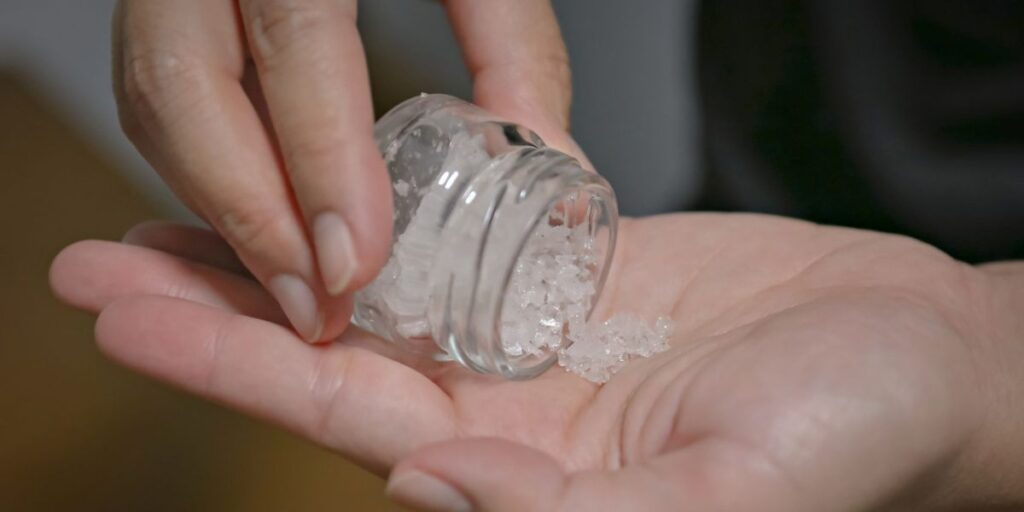
Flakka, chemically known as alpha-pyrrolidinopentiophenone (α-PVP), is a powerful synthetic cathinone that’s emerged as a significant public health concern. You’ll recognize it by its street names, flakka or gravel, and its distinctive white or pink crystalline appearance resembling aquarium gravel. As one of the most common compounds in new psychoactive substances, synthetic cathinones like flakka have contributed to the rise of over 540 novel psychoactive substances identified since 2014.
Alpha-PVP functions by blocking your brain’s dopamine and norepinephrine transporters, producing intense stimulant effects. The synthetic stimulant risks are substantial: it’s at least ten times more potent than cocaine. Your body’s S-isomer response drives the drug’s powerful effects, while the R-isomer proves thirty times less potent.
The addiction potential matches that of bath salts, making dependency development rapid and severe. Understanding these pharmacological mechanisms helps you recognize why flakka poses such extreme dangers to users and communities alike.
Flakka is a man-made synthetic cathinone chemically similar to bath salts. Considered a designer drug and part of the class of new psychoactive substances (NPS), Flakka (alpha-PVP) mimics the amphetamine-like stimulant effects of the khat plant.
The United States Drug Enforcement Agency (DEA) lists Flakka, among other synthetic cathinones, as a schedule I controlled substance because of the high potential for substance abuse and addiction with no possible medical benefits.
Why Is Flakka Called the Zombie Drug?
You’ve likely seen sensational news footage of flakka users displaying erratic, seemingly inhuman behavior, and this media coverage sparked the drug’s infamous nickname. The term “zombie drug” stems from the substance’s ability to trigger excited delirium episodes characterized by extreme agitation, paranoid delusions, and violent outbursts that can persist for hours or days. When you’re under flakka’s influence, you may experience such severe reality breaks that you exhibit superhuman strength sensations, complete dissociation, and unprovoked aggression that appears zombie-like to observers.
Zombie-Like Behavior Effects
Disturbing reports of users running naked through streets, displaying superhuman strength, and exhibiting violent, erratic behavior have earned flakka its notorious “zombie drug” nickname.
When you use flakka, you may experience vivid hallucinations and intense paranoia that distort your perception of reality. These effects often trigger bizarre, inhuman actions and unprovoked aggression. You might feel invincible, believing you possess superhuman strength and endurance.
The drug causes dangerous hyperthermia, elevating your body temperature to 104 degrees or higher, which risks severe organ damage. This physiological stress compounds the psychological symptoms, creating a perfect storm of erratic behavior.
Excited Delirium Episodes
When flakka triggers excited delirium, your brain experiences a dangerous surge of dopamine and norepinephrine that activates an extreme fight-or-flight response. This alpha-PVP effects cascade disrupts your hypothalamus, causing body temperatures to exceed 104°F while your cardiovascular system becomes severely strained.
During these episodes, you’ll experience:
- Tachycardia exceeding 100 beats per minute, increasing heart attack and stroke risk
- Violent aggression and paranoia affecting over 50% of users
- Psychotic episodes with delusions and complete loss of reality contact
- Hyperthermia leading to organ failure, including kidney and liver damage
Flakka-induced excited delirium requires immediate medical intervention. Without treatment, the combination of severe agitation, dehydration, and electrolyte imbalances can progress to cardiac arrest, permanent neurological impairment, or death.
Media Coverage Origins
The dramatic symptoms of excited delirium, violent outbursts, superhuman strength, and complete detachment from reality, caught media attention in ways that shaped public perception of synthetic cathinones. The 2012 Miami face-eating incident initially attributed to bath salts sparked widespread hysteria, though toxicology later revealed no drugs were present. This false connection persisted when flakka emerged.
By 2015, viral videos showing erratic behavior flooded social media, reinforcing the “zombie drug” narrative without verified evidence of actual flakka use. The DEA’s 2014 Schedule I classification of alpha-PVP highlighted its CNS effects and abuse potential, adding official weight to public concerns.
What Is Flakka Made of?
Underground chemists make Flakka with a process that binds the active ingredient α-pyrrolidinovalerophenone, a-PVP for short, to hydrochloride salt in crystal form. Synthetic drug makers frequently substitute active ingredients and additives to avoid detection from law enforcement, so each batch of Flakka is different.
Sold as a street drug in white or pink crystal form, users get high by swallowing, snorting, injecting, smoking, or vaping it. Some dealers add topical numbing agents like lidocaine, causing users to feel an instant numbing effect in the tissue it comes in contact with, like the gums, nose, or veins.
What Does Flakka Look Like?
Key identification markers include:
- Color: White or pale pink crystalline appearance
- Texture: Small, chunky crystals with a flaky consistency
- Odor: Strong, foul smell often compared to dirty socks when heated
- Packaging: Small plastic bags, sometimes designed to mimic candy
Understanding flakka’s appearance matters because the drug causes severe cardiovascular strain and life-threatening complications. You should know that dealers often pound these crystals into fine powder for various ingestion methods, altering its recognizable gravel-like form.
How Do People Use Flakka?

Anyone experimenting with flakka can administer the drug through multiple routes, each carrying distinct absorption rates and risk profiles. You may encounter users who smoke the substance through inhalation, which delivers rapid effects to the bloodstream. Snorting or nasal insufflation serves as another common delivery method, while some individuals consume flakka orally in tablet or powder form. Injection has also been documented among certain user populations, presenting heightened risks for infection and overdose.
Research reveals specific usage patterns: 27.7% of past-year users reported consuming flakka just 1-2 times annually, whereas 37.8% used it 3-5 times. More concerning, 19.2% of users qualify as high-frequency consumers, administering the drug 40 or more times per year. These patterns indicate significant variability in consumption behaviors across user populations.
Street Names for Flakka
Street names for Flakka, which is slang for a-PVP, include:
- La flaca
- Gravel
- Alpha-PVP
- Five-dollar insanity
- Devil’s drug
- Zombie drug
Effects of Flakka Use
The effects of Flakka use can be unpredictable and dangerous and last from three to four hours to days, depending on the potency of the batch, the person using it, and if other drugs and alcohol are present in the system.
Flakka is infamous for causing extreme physical and psychological effects, especially in people with co-occurring disorders.
Side effects of Flakka use include:
- Euphoria
- Hyperactivity
- Animated and disjointed speech
- Increased heart rate
- Increased blood pressure
- Increased sex drive
- Reduced appetite
- Facial ticks
- Twitching or jerking movements
- Sweating
- Intense staring or zoning out
- Panic attacks
- Disorientation
- Paranoia
- Hyperthermia or dangerously high body temperature
- Agitation
- Violent outbursts
- Delusions of super-strength
- Hallucinations
- Urges to self-harm
- Violence towards others
- Thoughts of suicide
- Seizures
The National Institute on Drug Abuse (NIDA) classifies the more extreme effects of Flakka as “excited delirium,” a condition similar to cocaine psychosis that causes psychotic breaks that can result in physical injuries and permanent brain damage or mental health conditions.
How Is Flakka Different From Bath Salts?

While both flakka and bath salts belong to the synthetic cathinone family, you’ll find critical differences that affect their danger profiles. Flakka contains only alpha-PVP, whereas bath salts comprise unpredictable mixtures of compounds like mephedrone, methylone, and MDPV, making potency levels inconsistent from one batch to the next. Research from Scripps shows alpha-PVP matches MDPV in addictive potential, yet flakka’s concentrated single-compound formulation often produces more intense, aggressive effects than the variable highs associated with mixed bath salts.
Chemical Structure Differences
Both flakka and bath salts belong to the synthetic cathinone class, but their molecular structures differ in significant ways that affect how they interact with the brain.
Flakka’s active compound, alpha-PVP, has the molecular formula C15H21NO. Bath salts typically contain MDPV or mephedrone, which feature distinct chemical arrangements.
Key structural differences include:
- Alpha-PVP lacks the 3,4-methylenedioxy motif that’s present in MDPV
- A pyrrolidine ring attaches at the 2-position in alpha-PVP’s structure
- A phenyl ring connects to a pentan-1-one chain in alpha-PVP
- MDPV contains a 3,4-methylenedioxy atom cluster that alpha-PVP doesn’t share
These structural variations contribute directly to differing psychoactive effects. You should understand that synthetic cathinones originate primarily from China or India, with chemical structures that manufacturers constantly modify.
More Intense Side Effects
Flakka ramps up the dangerous effects of synthetic cathinones to levels that surpass typical bath salts. You’ll experience more severe hyperstimulation, leading to excited delirium with heightened strength and paranoia. The drug triggers sympathomimetic toxicity that manifests as mania and tachycardia beyond what bath salts produce.
| Effect Category | Bath Salts | Flakka |
|---|---|---|
| Cardiovascular | Increased heart rate | Body temperature reaching 104°F, cardiac arrest risk |
| Behavioral | Panic attacks, agitation | Violent aggression, superhuman strength, psychosis |
| Physical | Dehydration | Rhabdomyolysis, renal failure, seizures |
Your body faces intensified organ damage, including kidney failure from severe hyperthermia and muscle breakdown. Neurological effects include prolonged psychosis and cognitive impairment resembling traumatic brain injury. These compounded risks make flakka much more dangerous than its predecessors.
Unpredictable Potency Levels
Because underground manufacturers produce flakka without quality control standards, each batch delivers wildly inconsistent alpha-PVP concentrations that make dosing impossible to predict. Unlike bath salts, which contain heterogeneous mixtures of multiple synthetic cathinones, flakka’s single active ingredient doesn’t guarantee safety, it simply means you’re facing one unpredictable variable instead of several.
The potency inconsistencies create these clinical dangers:
- You can’t determine how much alpha-PVP you’re actually ingesting
- A dose that produced manageable effects previously may cause overdose from a different batch
- The drug’s methamphetamine-equivalent potency means small concentration variations trigger dramatic physiological responses
- Emergency physicians cannot anticipate severity based on reported consumption amounts
Research confirms flakka serves as a stronger reinforcer than cocaine, making these unpredictable potency levels particularly hazardous for developing rapid addiction patterns.
Long-Term Effects
Because it is a relatively new street drug, the full scope of long-term effects is unclear. However, the results are becoming apparent as more people seek medical advice after suffering health effects.
Flakka is chemically similar to amphetamine-like stimulants, and Flakka addiction follows the same escalating behaviors as cocaine addiction, meaning tolerance and repeated use take a toll physically and psychologically.
Known long-term effects of Flakka include:
- Weightloss
- Heart palpitations
- Heart attacks
- Liver damage
- Jaundice
- Kidney failure
- Fatigue
- Chronic insomnia
- Depression
- Panic attacks
- Deteriorating muscle fiber
- Narrowing blood vessels and arteries
- Cognitive decline
- Worsening mental health
- Diminished speech capabilities
- Loss of motor control
- Stroke
- Seizures
- Withdrawal
- Persistent paranoia and psychosis
People on Flakka are also at risk of permanent harm caused by their excited delirium state, which can cause them to perform physical feats or irreversible self-harm acts. Even first-time users are at risk for long-term ramifications.
How Does Flakka Affect Your Brain?
Understanding how flakka enters your body matters, but grasping what happens once it reaches your brain reveals why this drug poses such severe dangers.
Flakka dramatically floods your brain with dopamine, norepinephrine, and serotonin while blocking their reuptake. This creates intense euphoria followed by severe crashes. The drug disrupts your prefrontal cortex, impairing decision-making and impulse control.
Your body experiences immediate physiological stress:
- Rapid heart rate exceeding 100 beats per minute
- Heightened body temperature reaching dangerous levels
- Muscle tremors and intense agitation
- Panic attacks triggered by norepinephrine surges
Long-term use causes neurotoxicity, killing brain cells and permanently altering neural pathways. You’ll experience cognitive decline, memory impairment, and increased risk of depression, anxiety, and psychosis. The damage to your brain’s reward system makes natural pleasure increasingly unattainable.
Flakka floods the brain and central nervous system with feel-good chemicals. However, those feelings can quickly become confusion, anxiety, and psychosis, accompanied by dangerous physical side effects and behaviors.
Flakka interacts with three main chemicals in the brain: serotonin, dopamine, and norepinephrine. These chemicals are responsible for psychological feelings of euphoria, relaxation, and reward, but they also work throughout the central nervous system to control vital biological functions.
Flakka’s immediate and potent effects on the brain contribute to its high potential for addiction, even in first-time users. When it leaves the system, it causes intense cravings and unpleasant withdrawal symptoms that make people seek it out to continue using it to avoid them, perpetuating the addiction cycle.
What Are the Health Risks of Using Flakka?
When you use flakka, you’re exposing your body to a cascade of dangerous health effects that can heighten rapidly from uncomfortable to life-threatening.
Cardiovascularly, you’ll experience amplified heart rate, hypertension, and irregular heartbeat, increasing your risk of heart attack, stroke, or cardiovascular collapse. Your body temperature can spike to 104-105 degrees Fahrenheit, causing hyperthermia that leads to internal bleeding and brain damage.
Flakka puts your heart in overdrive and your body temperature into dangerous territory, risking catastrophic cardiovascular and neurological damage.
Neurologically, you’re susceptible to seizures, muscle breakdown resulting in rhabdomyolysis, and acute kidney failure. Psychologically, flakka triggers severe agitation, paranoid psychosis, hallucinations, and violent behavior that can persist long after use.
The drug causes multi-system organ failure, including liver damage, respiratory distress, and dehydration. Overdose symptoms include coma, extreme agitation, and death from excited delirium or organ failure.
How Can You Tell If Someone Is Using Flakka?
Recognizing flakka use requires you to identify a distinct cluster of behavioral, physical, and cognitive warning signs that emerge rapidly after ingestion.
You’ll observe extreme agitation, violent outbursts, and bizarre behavior that appears unprovoked. Physical symptoms include tachycardia, hyperthermia, excessive sweating, and visible muscle spasms.
Key indicators to monitor:
- Paranoid delusions and hallucinations, Users often experience intense auditory or visual disturbances paired with delirium.
- Dramatic mood instability, Watch for rapid shifts between aggression and confusion.
- Social and functional deterioration, You’ll notice neglected responsibilities and increasing isolation.
- Physical distress signs, Chest pain, racing pulse, and seizures indicate potential overdose requiring immediate intervention.
You should treat any combination of these symptoms as a medical emergency warranting professional evaluation.
Is Flakka Legal in the United States?
Beyond identifying flakka use, you’ll need to understand its legal status to grasp the full scope of consequences associated with this substance.
The DEA classified alpha-PVP as a Schedule I controlled substance in 2014, placing it alongside heroin and LSD. This designation confirms flakka has high abuse potential, no accepted medical use, and lacks established safety parameters.
At the state level, New Mexico, Delaware, Oklahoma, and Virginia enacted Schedule I classifications by 2014. New York followed with legislation banning sale and distribution in 2015. Military personnel face prosecution under Article 92 of the Uniform Code of Military Justice.
Despite federal prohibition, enforcement remains challenging. Manufacturers alter chemical structures to create technically legal variants, and online distribution persists. You should recognize that possession or distribution carries severe federal and state penalties.
Treatment for Flakka Addiction and Substance Abuse in Northridge, Califonia
You are not alone despite how isolating and stigmatizing addiction can seem. Flakka addiction is complicated but can be overcome, especially with an experienced and compassionate team in your corner. Northridge Addiction Treatment Center strives to help you discover and reach your full potential free from substance abuse.
At NATC, we specialize in personalized treatment plans that address all aspects of your addiction. Our private, peaceful residential treatment center offers onsite medical detox to get you safely through withdrawal symptoms in a therapeutic, nurturing environment with 24-hour medical supervision and support.
Using dual diagnosis and medication-assisted treatment, we uncover and treat co-occurring disorders to begin improving your mental health and wellness, ensuring meaningful and lasting recovery.
The path to recovery is waiting for you. Reach out now to speak with one of our compassionate treatment experts that are eager to help.
Frequently Asked Questions
How Long Does Flakka Stay in Your System After Use?
Flakka (alpha-PVP) stays in your system for varying periods depending on the test type. You’ll test positive in urine for 1-3 days, in blood for 24-48 hours, and in saliva for 1-2 days after your last use. Hair tests can detect it for up to 90 days with chronic use. Your metabolism, dosage, and frequency of use will directly influence how quickly you’ll eliminate the drug.
Can Flakka Use Be Detected on a Standard Drug Test?
No, standard drug tests won’t detect flakka in your system. Common screening panels target substances like amphetamines, cocaine, and opioids but lack the specific reagents needed to identify alpha-PVP and other synthetic cathinones. If you’re being tested for flakka, you’ll need a specialized Novel Psychoactive Substances (NPS) panel or a bath salts drug kit specifically designed to screen for alpha-PVP, MDPV, and related compounds.
What Treatment Options Are Available for Flakka Addiction?
You have several evidence-based treatment options for flakka addiction. Medical detoxification provides continuous monitoring while medications manage cardiovascular symptoms, agitation, and psychotic effects. Inpatient rehabilitation offers intensive care in a controlled environment, which is often necessary given flakka’s prolonged psychological effects. Outpatient programs let you maintain daily responsibilities while attending therapy. Psychological interventions include cognitive-behavioral therapy, contingency management, and group therapy to address underlying issues and build lasting recovery skills.
How Much Flakka Does It Take to Overdose?
You can overdose on flakka with doses exceeding just 0.1 grams. The drug’s extreme potency, approximately ten times stronger than cocaine, creates a dangerously thin margin between intoxication and overdose. If you’re vaping flakka, you can’t accurately measure your intake, which rapidly overloads your bloodstream. Your risk increases with each use as tolerance develops, pushing you toward higher, potentially fatal doses.
Where Did Flakka Originally Come From Geographically?
You can trace Flakka’s origins to multiple geographic sources. The drug’s parent compound, cathinone, derives naturally from the khat plant native to East Africa and the Arabian Peninsula. However, α-PVP itself emerged from laboratory synthesis, first appearing in scientific literature in 1963 and patented in 1967. Today, you’ll find most Flakka production concentrated in China and India, with some regional manufacturing occurring in Eastern European locations like Ukraine.