Inhalant abuse is less discussed than other addictions and dismissed as something teenagers do that isn’t very serious or dangerous. But, the reality is that people of all ages abuse inhalants, especially poppers, and they have harmful effects that are addictive and deadly.
Recently in the United States, poppers have been coming back as the recreational drug of choice among young adults, especially in gay clubs and the rave scene. Poppers is a slang term for a specific type of inhalant sold in capsules and vials to be popped open and inhaled for a head rush. They contain strong chemicals initially developed for medical purposes or industrial cleaning.
Popper’s drug effects include head rushes and short-lived euphoria; users also increase the risk of brain damage, nerve damage, heart problems, and sudden sniffing death syndrome (SSDS).
It is technically illegal to sell poppers and other inhalants for human consumption. Still, stores label them as leather cleaners, video head cleaners, room deodorizers, nail polish removers, or liquid aromas to get around the restrictions.
What Are Poppers?
Poppers are liquid mixtures of amyl nitrates, amyl nitrites, butyl nitrate, butyl nitrites, alkyl nitrates, amyl nitrites, and solvents. Poppers are also known as alkyl nitrites, which trigger rapid vasodilation throughout the body’s blood vessels within seconds of inhalation.
There are a lot of different substances considered inhalants, but poppers are unique because of their packaging, scent, and short-term but powerful effects. Poppers come in small bottles, glass vials, or capsules. The name came to be because of the noise the sealed bottles make when twisted or broken open.
Poppers are inhaled directly from the bottle, or people dip the ends of cigarettes into the liquid to inhale the vapors while they smoke. They are highly flammable, so bringing a flame near them or inhaling them while burning results in fire-related injuries and lung damage.
The Food and Drug Administration (FDA) declared poppers unsafe for human consumption amid increased hospitalizations and deaths of popper users. To avoid legal charges and liability, sex shops, gas stations, and head shops sell them as room odorizers, liquid aromas, leather cleaners, or other cleaning products.
How Poppers Affect Your Body Within Minutes

When you inhale poppers, alkyl nitrites trigger rapid vasodilation throughout your body’s blood vessels within seconds. Your smooth muscles relax immediately, causing blood pressure to drop sharply. This vasodilation peaks almost instantaneously, with effects lasting from several seconds to a few minutes.
Your cardiovascular system responds to compensate for the sudden pressure drop. Your heart rate accelerates, and you’ll experience flushing and warmth spreading across your face and neck. Blood flow to your brain alters rapidly, producing the characteristic head rush. Because the effects are so brief, repeated use is often required to maintain the desired high. Since the FDA does not regulate poppers, there is no way to ensure the purity or potency of what you’re inhaling.
Neurologically, you’ll feel euphoria surge within seconds alongside lightheadedness and dizziness. Your skin sensitivity increases, warm sensations spread body-wide, and smooth muscles throughout your body loosen. These effects, including anal sphincter relaxation, dissipate within minutes as the compounds metabolize. While poppers are not physically addictive, their euphoric and relaxing effects can lead to psychological dependency with frequent use.
Slang Terms
The name poppers is already slang for chemical inhalants. The chemical names include butyl nitrate, amyl nitrates, alkyl nitrates, amyl nitrites, and solvents.
Other slang terms for poppers come from brand names and purposes they are sold under, their chemical makeup, and their effects on people.
According to the FDA, common slang terms for poppers include:
- Amyls
- Snappers
- Jungle juice
- Quicksilver
- Rush
- Boppers
- Bold
- Kix
- TNT
- Thrust
- Ram
- Rock hard
- Liquid gold
What Are Poppers Drugs Used For?
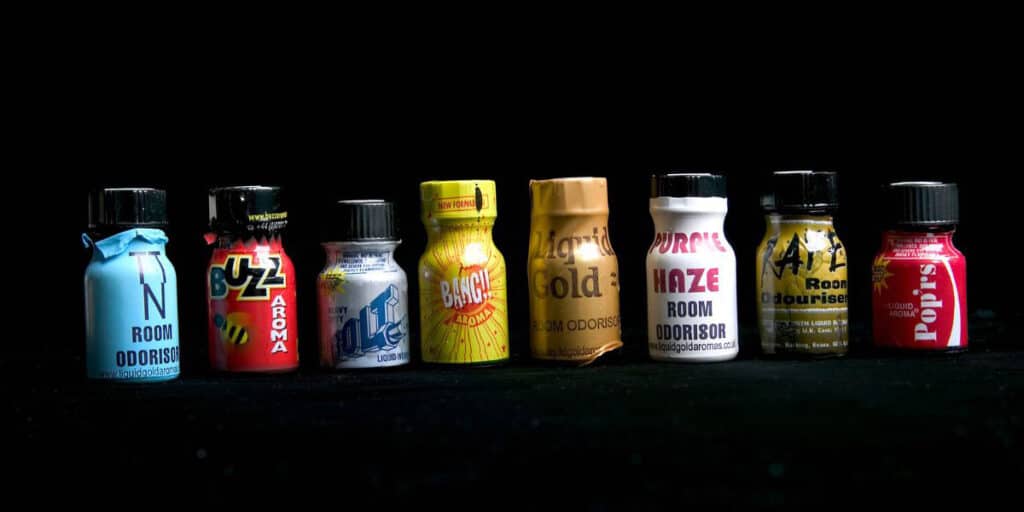
Initially, people used poppers to treat cyanide poisoning and heart conditions, but safer and more stable alternatives were discovered, and they fell out of use. Now people use poppers for a quick high and head rush of euphoria.
People frequently mix poppers with alcohol and other drugs, which strains the internal organs and can cause side effects and health complications.
Poppers are also popular in sex clubs and among gay men because they increase sex drive, lower inhibitions, and relax muscle reflexes, making anal sex with men more pleasurable.
It is common for people who use poppers to increase their pleasure during sex to mix them with erectile dysfunction medications. Combining these two drugs is especially dangerous because they cause extreme drops in blood pressure, leading to fainting, strokes, and heart attacks.
Poppers Drug Effects
Poppers are known for increasing sex drives and lowering inhibitions. The desired effects of sniffing poppers, or inhalant drugs, are excitement, lightheadedness, warm sensations throughout the body, increased libido, and short-lived intoxication similar to being drunk.
When people inhale poppers, they decrease the oxygen supply to the brain, open up blood vessels, and depress the central nervous system causing relaxation and temporary euphoria. They also promote dopamine production in the brain to cause feelings of happiness and contentment. Unfortunately, the unpleasant and dangerous side effects of poppers outweigh the pleasurable feelings.
According to the National Institute on Drug Abuse (NIDA), poppers drug effects include:
- Headaches
- Loss of consciousness
- Nausea
- Confusion
- Drops in blood pressure
- Increased heart rate
- Chest pain
- Blurry vision
- Slurring
- Aggression
- Blackouts
- Coughing
- Choking
- Nosebleeds
- Losing balance
- Passing out
- Sudden sniffing death syndrome (SSDS)
Side Effects Ranging From Headaches to Seizures
Beyond the rapid onset of euphoria and warmth, poppers produce a spectrum of adverse effects that range from mild discomfort to life-threatening emergencies.
You’ll commonly experience headaches from vasodilation, dizziness from hypotension, and nausea. Direct liquid contact causes skin irritation, while vapor exposure triggers ocular inflammation.
| Mild Effects | Moderate Effects | Severe Effects |
|---|---|---|
| Headaches | Irregular heartbeat | Seizures |
| Dizziness | Chest pain | Methemoglobinemia |
| Nausea | Disorientation | Vision loss |
| Skin rash | Breathing difficulty | Brain damage |
| Flushing | Coordination loss | Coma |
The poppers effects extend beyond acute symptoms. Chronic inhalation damages your respiratory system, weakens immune function, and increases cancer risk. When combined with phosphodiesterase inhibitors or stimulants, you face stroke and cardiac arrest. Repeated use patterns may indicate developing substance use disorder.
Inhalant drugs like poppers are incredibly unpredictable and dangerous because statistically, SSDS affects first-time and long-term users the same.
Long-Term Effects of Poppers
The high and accompanying physical effects of poppers do not last long. However, there are long-term effects of chronic popper abuse.
Long-term physical and behavioral side effects of poppers include:
- Increased risk of sexually transmitted infections (STIs)
- Canker sores
- Sore throats
- Soft tissue damage and sores around the nose and mouth
- Vission loss
- Skin rashes
- Methemoglobinemia, an overproducing of red blood cells depriving organs of oxygen
- Mood disorders
- Violent outbursts
- Respiratory infections
- Tooth damage and decay
- Irritability
- Painful increase in eye pressure
- Hallucinations
- Heart problems
- Chronic migraines
- Brain damage
- Seizures
- Death
It’s worth noting that poppers are highly flammable, and some people prefer to add them to cigarettes, which can cause burns and severe lung damage on top of the other risks.
Who Should Never Use Poppers?

Several distinct populations face heightened risks that make popper use medically contraindicated. If you have cardiovascular conditions, alkyl nitrites can trigger dangerous hypotension, arrhythmias, and sudden cardiac events. You’re at increased risk for stroke or heart attack when drug interactions occur between poppers and cardiac medications.
If you’re pregnant, you shouldn’t use poppers under any circumstances due to risks to both you and the developing fetus. Those with glaucoma, respiratory conditions like COPD, or anemia face specific physiological dangers from alkyl nitrites’ mechanisms of action.
You must avoid poppers entirely if you take erectile dysfunction medications like sildenafil or tadalafil. These drug interactions cause life-threatening blood pressure drops. Similarly, if you’re on blood pressure medications or ADHD prescriptions affecting cardiovascular function, combining these with poppers creates compounded cardiovascular strain.
Drug Combinations That Make Poppers Deadly
Although poppers alone carry significant cardiovascular risks, combining them with certain substances creates synergistic effects that can prove fatal within minutes.
PDE5 Inhibitors (Viagra, Cialis)
When you combine poppers with erectile dysfunction medications, both substances induce vasodilation simultaneously. This interaction triggers severe hypotension, potentially causing stroke, cardiac arrest, or death.
CNS Depressants (GHB, Ketamine)
Mixing poppers with CNS depressants compounds blood pressure reduction and respiratory depression. You’re facing heightened overdose risk, unconsciousness, and potentially fatal breathing suppression.
Stimulants (Cocaine, MDMA)
Stimulants elevate your heart rate while poppers drop blood pressure, creating contradictory cardiovascular demands. This strain increases arrhythmia risk and sudden cardiac events.
ADHD Medications and Antihypertensives
Any prescription affecting cardiovascular function amplifies poppers’ hypotensive effects, raising your risk for strokes and fatal cardiac complications.
Long-Term Risks of Regular Popper Use
While acute drug interactions pose immediate mortality risks, sustained popper use triggers progressive physiological deterioration across multiple organ systems. When you chronically inhale alkyl nitrite inhalants, you’re exposing yourself to cumulative cardiovascular strain, irregular heart rhythms, and heightened stroke risk.
The poppers risks extend to your respiratory system, where prolonged exposure causes bronchitis, chronic coughing, and exacerbated asthma symptoms. Neurologically, you’ll experience memory deficits, impaired concentration, and potential seizure activity from neurotoxic accumulation.
Your ocular health faces significant threats through popper maculopathy, retinal damage that compromises central vision. Additionally, chronic use weakens your immune function, increases certain cancer risks, and produces tissue damage manifesting as burns, sores, and skin irritation around mucous membranes. These compounding effects underscore the severe consequences of habitual use.
Most long-term side effects of inhalant abuse can resolve or reverse with time and proper medical care. Suffocation and sudden sniffing death syndrome have no cure or reversal drug available.
Inhalant Abuse
Most inhalants are not chemically addictive; instead, people become addicted to the rush and the circumstances surrounding their use. Inhalant users often struggle with other substances as well. Therefore treating inhalant abuse requires evidence-based, comprehensive treatment that addresses substance abuse and the underlying conditions and behaviors that contribute to it.
At Northridge Addiction Treatment Center, we take a whole-person approach to recovery, addressing addiction and co-occurring disorders. Using our dual-diagnosis program, our caring and experienced team will identify underlying mental health conditions and develop an evidence-based treatment plan based on your needs.
Our residential treatment center removes you from the stress and everyday environments that make using easy. Surrounded by the beauty of Los Angeles’s mountains and beaches, you can begin to heal in a peaceful, supportive family environment. We also provide 24-hour medical supervision during our on-site medical detox to start you on your path to recovery safely and comfortably, with a clear mind.
Through many effective, evidence-based treatment programs and therapies, our staff works closely with each resident to transform their lives and teach them strategies to overcome challenges and prevent relapse.
Reclaim your life with Northridge Addiction Treatment Center. Reach out now to speak with one of our compassionate treatment specialists and take the first steps on your path to recovery.
A Healthier Life Is Within Your Reach
Poppers produce intense but brief effects that many users underestimate the cardiovascular and neurological risks associated with their use deserve more attention than they typically receive in popular conversation. Northridge Treatment Center provides evidence-based dialectical behavior therapy rehab center built to address every aspect of addiction with clinical precision and genuine compassion. Serving individuals throughout Encino, our +1 (855) 584-3819 team is available around the clock ready to help you take the next step toward lasting recovery.
Frequently Asked Questions
How Long Do Poppers Stay Detectable in Your System After Use?
You’ll find poppers clear your system rapidly due to their short half-life. Blood tests can’t detect them after 12-24 hours, while urine testing may identify traces for up to 72 hours post-use. Standard 5-panel drug screenings won’t flag alkyl nitrites, you’d need specialized testing for detection. Your metabolism, usage frequency, and liver function directly influence how quickly your body processes and eliminates these compounds.
Are Poppers Legal to Purchase and Possess in the United States?
You can legally purchase and possess poppers in the United States when they’re marketed as room odorizers, leather cleaners, or air fresheners, not for human consumption. Federal law prohibits sale for inhalation under the Anti-Drug Abuse Act of 1988, yet this labeling loophole persists. Individual possession isn’t criminalized federally, though Louisiana specifically penalizes recreational use. You’ll find these products at adult stores with disclaimers stating “not for human consumption.”
Can Poppers Cause Addiction or Physical Dependence With Repeated Use?
You won’t develop physical dependence on poppers like you would with opioids or alcohol. Your body doesn’t experience classic withdrawal symptoms upon cessation, and you won’t require medical detox. However, you can develop psychological dependence through repeated use. You’ll notice cravings for the euphoric sensation, compulsive usage patterns in social or sexual contexts, and tolerance that drives increased frequency. Psychological withdrawal manifests as irritability, anxiety, mood disturbances, and difficulty concentrating.
What Should You Do if Someone Accidentally Ingests Poppers?
If someone ingests poppers, you should call emergency services immediately and avoid driving them yourself. Place an unresponsive but breathing person in the recovery position, and start CPR if they’re not breathing. Collect any substance containers for medical staff. Watch for cyanosis, confusion, and hypotension, these indicate methemoglobinemia. Hospital treatment involves intravenous methylene blue administration. Contact poison control for guidance while awaiting emergency responders.
Do Poppers Interact With HIV Medications Like Antiretrovirals?
You won’t encounter significant pharmacokinetic interactions between poppers and most antiretrovirals, including Biktarvy. However, you should exercise caution with ritonavir or cobicistat-boosted regimens, as these pharmacokinetic enhancers may potentiate poppers’ vasodilatory effects, increasing hypotension risk. There’s no documented impact on CD4 counts or viral load suppression. You’ll find the greatest danger lies in combining poppers with erectile dysfunction medications like sildenafil, which creates severe additive hypotensive effects.