Shrooms don’t show up on most drug tests because standard 5-panel and 10-panel immunoassays aren’t designed to detect psilocybin or psilocin, they’re targeting substances like THC, opioids, and amphetamines instead. Psilocin’s short half-life of 1, 3 hours means it clears your system within 24, 48 hours. However, you can still get caught through specialized LC-MS/MS testing, court-ordered hair analysis, or forensic investigations that specifically screen for psychedelic compounds. Understanding the specific detection windows helps you assess your actual risk.
Why Shrooms Don’t Show Up on Most Drug Tests
Standard drug screening panels don’t include psilocybin or psilocin among their target analytes. When you undergo routine 5- or 10-panel immunoassay testing, laboratories target THC, cocaine, opiates, amphetamines, and PCP, substances with documented workplace safety implications and higher prevalence rates.
This exclusion explains why false negatives shrooms drug test results occur so frequently. Can labs test for shrooms? Yes, but specialized drug testing for psilocybin requires advanced analytical methods like liquid chromatography-mass spectrometry (LC-MS/MS), which aren’t cost-effective for routine screening. These specialized tests specifically detect psilocin, the metabolite that psilocybin converts into after consumption. The expense associated with these specialized psilocybin tests makes them rarely performed outside of specific investigative circumstances.
DOT-regulated testing and standard employment panels exclude psilocybin entirely unless organizations specifically request expanded assays. Commercial laboratories typically offer psilocybin detection only as an optional add-on service, reinforcing its absence from default testing protocols across clinical, occupational, and legal settings.
Factors That Affect How Long Shrooms Stay Detectable
Several interconnected variables determine how long psilocybin and its active metabolite psilocin remain detectable in your system. Dose greatly impacts detection windows, higher amounts extend metabolite presence from 24, 48 hours to approximately 3 days in urine. Your individual metabolism, liver function, and kidney health directly influence clearance rates, with impairment prolonging elimination. Since psilocin has an elimination half-life of about three hours, it typically takes four to five half-lives for the drug to be at least 95% removed from your system. Additionally, higher body mass and adequate hydration may support faster elimination of these compounds from your body.
Understanding why shrooms don’t show up on drug tests also requires examining testing methodology. Since psilocybin not on standard panel configurations means specialized LC-MS or GC-MS techniques are necessary for detection. These sensitive assays identify lower concentrations than routine immunoassays, effectively extending practical detectability.
When considering are mushrooms detectable on drug tests, frequency matters. Chronic use can extend urine detection to 72+ hours, while hair follicle testing may reveal use up to 90 days post-ingestion.
When considering are mushrooms detectable on drug tests, frequency matters. Shroom detection in urine tests can extend to 72+ hours with chronic use, while hair follicle testing may reveal use up to 90 days post-ingestion.
How Long Shrooms Stay in Urine, Blood, and Hair
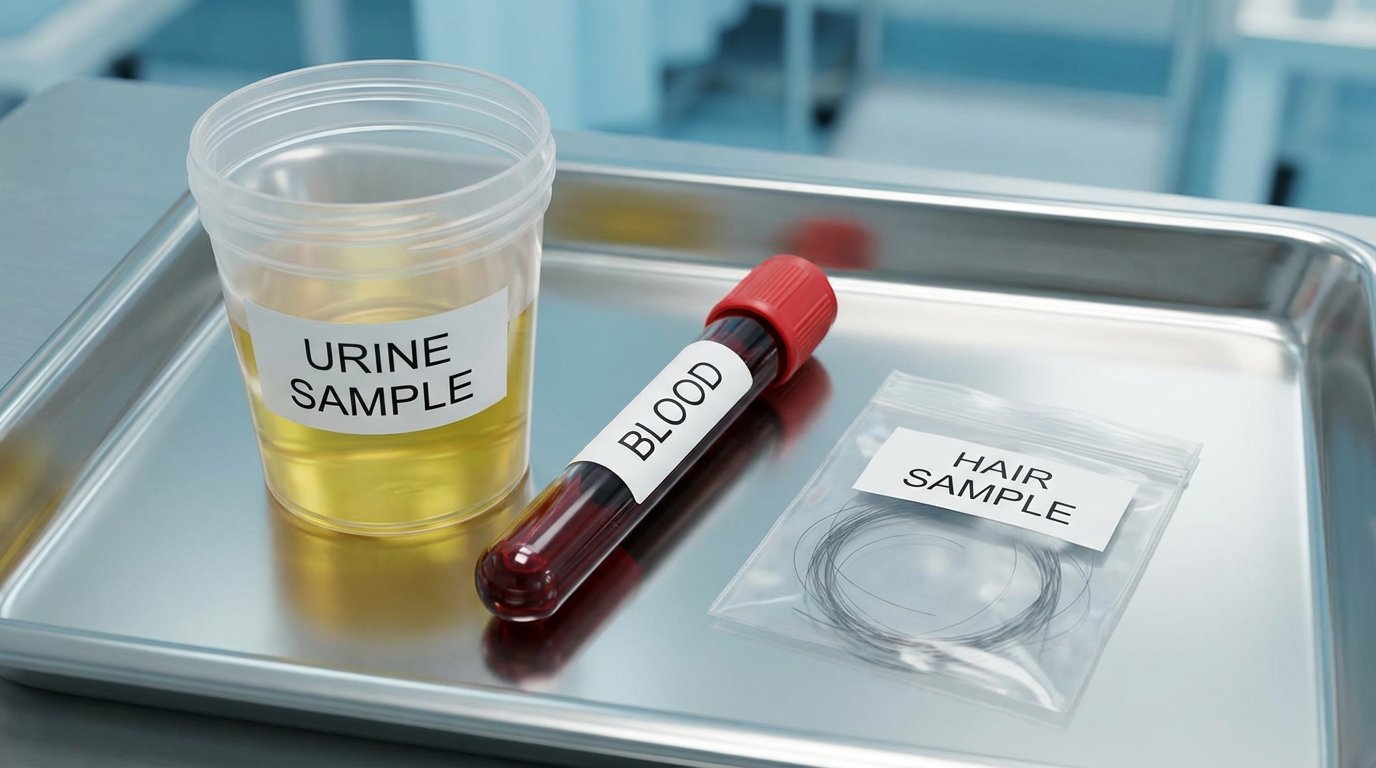
Psilocybin breaks down rapidly once it enters your bloodstream, which directly impacts detection windows across different biological samples. Your body converts psilocybin to psilocin within hours, with 65, 66% of compounds excreted in urine within the first 3, 8 hours post-ingestion.
Detection windows by sample type:
- Urine: Detectable for 24, 48 hours; extended to 3 days with high doses
- Blood: Psilocin remains detectable for approximately 6, 15 hours
- Hair: Can reveal use for up to 90 days using follicle analysis
- Psilocin half-life: Only 1, 3 hours, ensuring rapid clearance
- Near-complete elimination: 80, 85% cleared within 8 hours
Blood testing’s limited utility stems from psilocybin’s brief presence, sometimes under one hour. Hair analysis offers the longest retrospective window but requires specialized forensic methodology unavailable in standard screening protocols. Psilocybin is not detected on standard drug tests, which is why employers and probation officers rarely screen for it unless they specifically request specialized testing. When testing is ordered, urine samples must be protected from light to prevent degradation of the compounds being measured.
When Shrooms Can Show Up on a Drug Test
While standard drug panels won’t flag your psilocybin use, specific circumstances can change this equation. If you’re subject to court-ordered hair analysis, specialized laboratory testing orders, or emergency room toxicology screens, you may encounter assays configured to detect psilocin and its metabolites. Hair tests can detect psilocybin for up to 90 days after use when specialized methods like LC-MS/MS are employed. Urine tests using LC/MS-MS technology can detect psilocybin and psilocin at a threshold of 1.0 ng/mL, with positive results undergoing confirmatory testing for accuracy. Understanding when these targeted tests apply helps you assess your actual risk of detection beyond routine screening scenarios. Do shrooms show up on drug test can be a real concern for people in testing environments. While standard urine tests usually don’t detect psilocybin, more specialized screenings might. Understanding these risks is important for making informed decisions about use.
Specialized Lab Testing Orders
Specialized laboratory testing can pick up psilocin when standard drug screens won’t, though these orders require specific requests and advanced analytical techniques.
LC-MS/MS (liquid chromatography-tandem mass spectrometry) delivers the precision needed to detect psilocin at concentrations as low as 1 ng/mL. You’ll encounter these tests in forensic investigations, clinical toxicology workups, and expanded employer panels for safety-sensitive positions. Research from the Shanghai Key Laboratory of Forensic Medicine has contributed to advancing these analytical methodologies for detecting psychoactive substances.
Key scenarios where specialized testing applies:
- Forensic laboratories analyzing post-mortem samples or criminal evidence
- Emergency departments evaluating acute intoxication or impairment
- Employers requiring custom hallucinogen screening beyond standard panels
- Impaired driving investigations requiring blood confirmation
- Legal disputes necessitating chain-of-custody documentation
Your detection window remains narrow, approximately 24 hours in urine and even shorter in blood. Turnaround times typically span 7, 14 days for confirmed results. Urine specimens must be wrapped in foil to protect from light degradation during collection and transport.
Court-Ordered Hair Analysis
Court-ordered testing transforms the detection domain considerably, particularly in family law and custody disputes where judges need evidence of long-term substance use patterns rather than a single-day snapshot. When you’re subject to court-ordered screening, hair analysis becomes the preferred modality because it captures approximately 90 days of drug exposure history. Unlike standard workplace drug panels, which typically include 5-, 10-, or 12-panel screens, court-ordered hair tests specifically target psilocin.
Hair testing detects psilocin, the active metabolite, using LC-MS/MS or GC-MS technology with forensic-grade sensitivity. Research documents psilocin concentrations around 150, 161 pg/mg in confirmed users’ hair samples. You should note that drugs require 10, 14 days post-ingestion before appearing in hair emerging above the scalp. This extended detection window is particularly significant given that magic mushrooms alter mood, emotions, and perception during their active effects, making evidence of use relevant in custody evaluations.
Courts mandate strict chain-of-custody procedures ensuring sample integrity and legal admissibility. Turnaround times typically range from 48, 72 hours for negative screens, with confirmed positives requiring an additional 72 hours for verification. Courts mandate strict chain-of-custody procedures ensuring sample integrity and legal admissibility, which is especially important when determining how long shrooms stay in your system. Turnaround times typically range from 48, 72 hours for negative screens, with confirmed positives requiring an additional 72 hours for verification.
Emergency Room Toxicology Screens
Most emergency room toxicology screens won’t detect psilocybin or psilocin because standard immunoassay panels, including ELISA and CEDIA methods, don’t contain antibodies targeting these compounds.
You should understand these critical limitations:
- Standard ED panels target alcohol, cocaine, amphetamines, opiates, benzodiazepines, cannabinoids, and PCP, not hallucinogens
- Psilocin’s molecular structure doesn’t cross-react with antibodies designed for common drug classes
- Rapid clearance reduces detection likelihood even with sensitive methods
- A negative result doesn’t exclude psilocybin use
- Physicians rely on clinical presentation, not lab confirmation, for diagnosis
If targeted LC-MS/MS testing is ordered, detection becomes possible within the 24-48 hour urine window. However, results typically arrive after clinical resolution, making them irrelevant for acute care decisions. Your treatment remains supportive regardless of laboratory confirmation, as psilocybin rarely causes life-threatening physical symptoms and management focuses on supportive care and psychological symptom management until effects subside. Gas chromatography-mass spectrometry remains the reference standard for confirmatory testing when definitive identification of psilocybin is clinically or legally required.
Why Shrooms Clear Faster Than THC or Opioids
Your body processes psilocybin with remarkable speed, psilocin’s half-life of just 1, 3 hours means most of the active compound clears your system within 4, 6 hours. Compare this to THC, which stores in fat tissue and can remain detectable for weeks, or many opioids that persist for 2, 4 days in urine. This rapid hepatic metabolism and renal clearance explains why psilocybin metabolites typically disappear from blood and urine within 24 hours, making detection far more challenging than with longer-acting substances.
Rapid Metabolism and Elimination
Psilocybin’s rapid clearance from your body stems from four interconnected pharmacokinetic factors that distinguish it from persistent compounds like THC or many opioids.
- Extensive first-pass metabolism converts psilocybin to psilocin in your gut and liver before it reaches systemic circulation
- Efficient glucuronidation via UGT1A9 and UGT1A10 transforms psilocin into water-soluble conjugates within hours
- High systemic clearance (155, 263 L/h) rapidly removes psilocin from your bloodstream
- Minimal lipid storage prevents accumulation in adipose tissue, unlike THC’s fat-soluble persistence
- Dominant renal excretion eliminates 80, 85% of metabolites through urine within 24 hours
Your body excretes approximately 33% of a psilocybin dose as 4-HIAA and 20% as psilocin-O-glucuronide within one day. This metabolic efficiency explains why detection windows remain remarkably narrow compared to other controlled substances. The oral elimination half-life of psilocin ranges from 2.1 to 4.7 hours, meaning the compound is substantially cleared from your system within a single day.
Short Half-Life Comparison
Because psilocin’s plasma half-life ranges from just 50, 108 minutes, your body eliminates approximately 75% of the compound within 3.5 hours of ingestion, a clearance rate that markedly contrasts with THC and many opioids.
| Substance | Plasma Half-Life | Urine Detection Window |
|---|---|---|
| Psilocin | 50, 108 minutes | Up to 24 hours |
| Psilocybin | 160, 180 minutes | Up to 24 hours |
| THC (occasional use) | 1, 2 days | 3, 30+ days |
| Oxycodone | 2, 4 hours | 1, 3 days |
| Fentanyl | ~60 minutes | Extended with chronic use |
THC’s lipophilic properties cause it to accumulate in adipose tissue, creating prolonged detection windows despite comparable initial half-lives. Psilocybin compounds don’t bioaccumulate considerably, only 15, 20% transiently resides in fatty tissue. This pharmacokinetic distinction explains why standard panels detect THC weeks later while psilocin becomes undetectable within 24 hours.
What to Do If You Have a Drug Test Coming Up

When you’re facing an upcoming drug test, determining the specific panel and methodology provides critical information for risk assessment. Standard 5- and 10-panel screens don’t include psilocybin assays. However, specialized LC-MS testing can detect psilocybin metabolites when specifically ordered.
Understanding your specific drug test panel is essential, standard screens rarely include psilocybin, but specialized testing can detect it when ordered.
Consider these critical factors:
- Verify your test type, standard employment screens differ substantially from court-ordered forensic panels
- Calculate your detection window, urine detection spans 24, 72 hours; blood testing rarely exceeds 24 hours
- Assess legal jurisdiction risks, forensic and custody cases frequently employ expanded hallucinogen panels
- Evaluate personal metabolic variables, body composition, organ function, and dosage affect clearance rates
- Avoid sample tampering, adulterants trigger invalidation and compound legal consequences
If you’re subject to hair or nail analysis, abstinence periods become irrelevant since these matrices reflect months of substance history.
Frequently Asked Questions
Can Psilocybin Cause a False Positive for Other Drugs on Standard Panels?
Psilocybin rarely causes false positives on standard drug panels. The immunoassay antibodies in 5-, 10-, or 12-panel tests aren’t designed to bind psilocybin or psilocin, so cross-reactivity with PCP, LSD, or amphetamines is extremely uncommon. If you’re using a low-quality, non-validated test kit, there’s slightly higher risk. However, any disputed positive typically undergoes GC-MS or LC-MS/MS confirmation, which definitively distinguishes psilocybin from other substances.
Do Microdoses of Shrooms Show up Differently Than Full Doses on Tests?
Microdoses produce lower peak psilocin concentrations than full doses, making you less likely to exceed standard LC-MS/MS cutoffs (~1.0 ng/mL) on targeted urine tests. However, if you’re microdosing repeatedly over weeks, you’ll accumulate detectable psilocin in hair and nails, keratin-based tests capture cumulative exposure regardless of individual dose size. Standard workplace panels won’t detect either dose level since they don’t include psilocybin/psilocin.
Can Secondhand Exposure to Shroom Spores Trigger a Positive Drug Test?
No, secondhand exposure to shroom spores won’t trigger a positive drug test. Standard panels don’t screen for psilocybin, and specialized LC-MS/MS assays require psilocin concentrations of ≥1.0 ng/mL, levels achievable only through direct ingestion of milligram-level doses. Spores contain primarily genetic material, not pharmacologically significant psilocybin quantities. No forensic or clinical literature documents measurable psilocin in biofluids from environmental spore contact. You’d need actual consumption to produce detectable results.
Will Eating Store-Bought Culinary Mushrooms Affect My Drug Test Results?
No, eating store-bought culinary mushrooms won’t affect your drug test results. These varieties, button, cremini, portobello, shiitake, and oyster, contain no psilocybin or psilocin, the specific hallucinogenic compounds targeted by mushroom drug panels. Standard 5-, 10-, and 12-panel employment screens don’t test for mushrooms at all. Even specialized psilocybin assays detect only unique metabolites produced from hallucinogenic species. Clinical toxicology literature documents no false positives from normal dietary mushroom consumption.
Are Home Drug Test Kits Available That Can Detect Psilocybin or Psilocin?
Yes, you can purchase dedicated psilocybin/psilocin urine dip cards designed for home use. These lateral flow chromatographic immunoassays typically employ cutoff concentrations of 300, 500 ng/mL and deliver qualitative results within approximately five minutes. However, they’re considerably less sensitive than laboratory LC/MS-MS methods, which detect concentrations as low as 1.0 ng/mL. You should treat these rapid kits as preliminary screening tools, not confirmatory diagnostics, they remain niche products compared to standard multi-panel tests.