An 8-ball of cocaine contains approximately 3.5 grams, which equals one-eighth of an ounce. This quantity typically yields 25 to 35 individual lines and often indicates you’ve progressed beyond occasional use. Street prices currently range from $120 to $300 depending on your location and purity levels. Because street cocaine is frequently cut with dangerous substances like fentanyl, visual inspection can’t determine safety. Understanding the terminology, health risks, and warning signs can help you recognize when use has escalated.
What Is an 8-Ball of Cocaine?

Why does the term “8-ball” appear so frequently in discussions about cocaine use and addiction? This street slang describes a specific quantity that’s become a standard unit in illicit drug markets. The 8-ball, equivalent to 3.5 grams, is often referenced in the context of transactions and personal usage. Understanding this term is essential for recognizing the broader implications of substance abuse and the risks of cocaine addiction that accompany such usage.
If you’re wondering how many grams is an 8 ball of coke, the answer is approximately 3.5 grams,exactly one-eighth of an ounce. This measurement applies to both powder and crack cocaine. The substance is typically sold in plastic bags but can also be found wrapped in tin foil or cellophane.
Understanding this terminology matters for recognizing warning signs of stimulant misuse. When someone references an “8-ball,” they’re describing a significant quantity that typically yields 25 to 35 individual lines. This amount often indicates use beyond casual experimentation and can signal escalating consumption patterns that increase addiction risk and health complications. The cost of an 8-ball varies significantly by location, ranging from $60 to $560 depending on demand and purity. The term became widespread during the mid-1980s when this quantity typically sold for $300 to $350.
The Origin Behind the 8-Ball Terminology
The term “8-ball” emerged in the mid-1980s U.S. drug market as coded shorthand for one-eighth of an ounce of cocaine, which translates to approximately 3.5 grams. You’ll find this terminology rooted in the fractional ounce measurement system that dealers had long used to create pricing tiers for illegal substances. During this era, an 8-ball typically sold for $300 to $350 on the street. The coded language evolved from existing slang in other illicit drug markets before becoming specifically associated with cocaine during the 1980s surge. Understanding this language can help you recognize warning signs of drug involvement and have more informed conversations about substance use. The earliest printed records of this slang term appear in 1980s newspaper articles documenting cocaine-related arrests and street prices of that era. As the popularity of cocaine grew, so did the lexicon surrounding its trade, leading to a proliferation of terms that reflected not only quantity but also quality and potency. The origin of the term 8ball has since become a cultural marker in discussions about drug culture, impacting music, movies, and media portrayals of substance use.
Mid-1980s Drug Market
During the mid-1980s, cocaine trafficking underwent rapid expansion across U.S. cities, creating the conditions that would cement “8-ball” into drug vernacular. If you’re wondering how many grams in an 8 ball of cocaine, the answer traces directly to this era’s street economics. Dealers broke ounces into standardized retail units, with the 3.5-gram segment emerging as an ideal intermediate size.
This quantity offered a practical middle ground, larger than single-use bags yet smaller than full ounces. The standardization reduced legal risk for lower-level dealers while meeting growing demand from nightclub and party scenes. By 1985-1986, newspaper reports documented undercover buys of “eight balls” priced around $300-$350. This coded terminology spread rapidly, providing concise shorthand that masked explicit drug references while facilitating transactions nationwide. The term derives from one-eighth of an ounce in the English measurement system, explaining why this specific weight became the standard unit.
Fractional Ounce Measurement System
Before cocaine ever reached American streets, fractional ounce measurements had already established themselves as standard commercial practice across U.S. markets. The imperial system’s apothecary divisions, originally designed for precious metals and medicinal compounds, created the framework drug distributors would later adopt. The standardization of these weight measurements traces back centuries, with England’s Weights and Measures Act 1824 formally redefining standard units and establishing official custody of measurement standards.
When you examine how many grams are in an 8-ball, you’re looking at exactly 3.5 grams, derived from one-eighth of an ounce. This measurement became the standardized retail unit throughout North American distribution networks during the late 20th century. Interestingly, the metric system dominates international drug trafficking because drugs originate from countries that use metric measurements as their standard.
Understanding how many grams is an 8 ball helps you recognize concerning quantities. The weight of an 8 ball represents a significant purchase amount, often indicating escalating use patterns. Converting an 8 ball in grams provides critical context for identifying problematic consumption levels requiring intervention.
Physical Characteristics and Common Packaging Methods
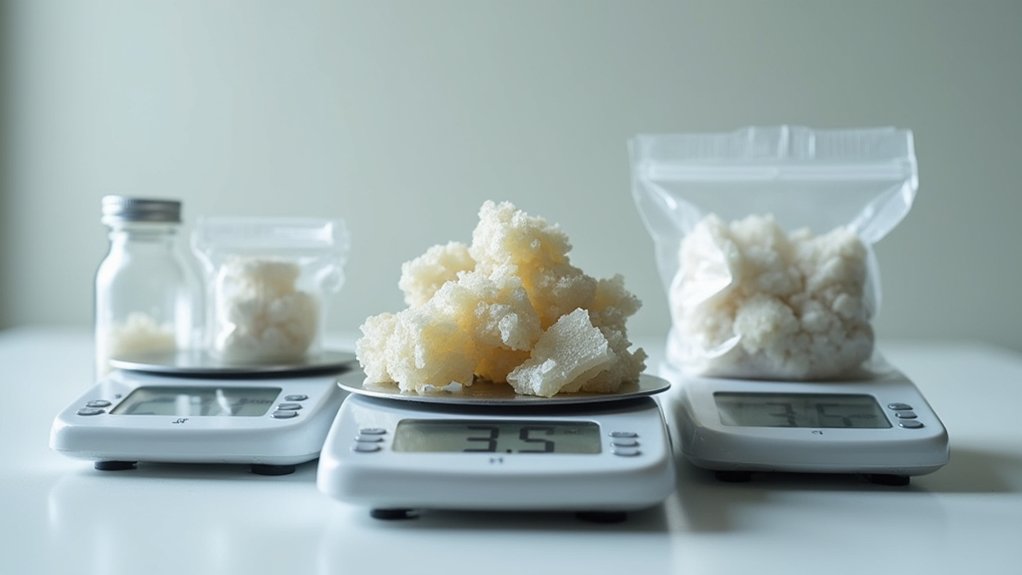
Understanding cocaine’s physical characteristics helps you recognize warning signs and assess potential risks. Powdered cocaine typically appears as a white to off-white crystalline substance, though color and texture vary considerably based on purity and cutting agents, you can’t determine strength or safety by appearance alone. Regular users often develop a greyish or pale appearance as the drug restricts blood vessels and reduces oxygen flow to skin cells. Manufacturers frequently add substances like local anesthetics as cutting agents because they mimic cocaine’s numbing effects while remaining visually undetectable. Prolonged snorting can cause severe internal damage, including collapsed nasal bridge and permanent loss of blood supply to nasal tissues. Street-level distribution commonly uses small plastic baggies, paper bindles, or corner-tied bags, while larger quantities arrive compressed in plastic-wrapped bricks before being divided into standard units like grams or 8-balls.
Powder Appearance Variations
Several physical characteristics distinguish cocaine powder from other white substances you might encounter. When cocaine measurement explained in clinical contexts, understanding visual identification becomes essential for harm reduction. Pure cocaine appears as a fine, white crystalline powder with a subtle sheen under direct light.
| Characteristic | High Purity | Street-Level |
|---|---|---|
| Color | Uniform white | Off-white, yellowish, gray |
| Texture | Consistent crystalline | Irregular, variable |
| Appearance | Pearlescent sheen | Dull, inconsistent |
Street samples contain cutting agents like lidocaine, caffeine, or cornstarch that alter texture and coloration. Additives like mannite or inositol create a crystalline sparkle, while phenacetin adds a yellowish tint to the powder. You’ll notice humidity causes clumping due to cocaine’s hygroscopic nature. The powder dissolves rapidly in water without residue, a distinguishing factor from many adulterants. Because street cocaine is often cut with other substances, determining its actual purity through visual inspection alone remains virtually impossible. Fentanyl is particularly dangerous because it is impossible to differentiate from cocaine with the naked eye. These variations directly impact potency and associated health risks.
Distribution Packaging Types
When examining cocaine at the distribution level, packaging methods reveal critical information about quantity, intended market, and potential contamination risks. You’ll find street-level sales typically use small zip bags, twisted plastic corners, or paper bindles containing 0.1, 0.3 grams. These materials are easily concealed and disposed of during hand-to-hand transactions.
8-ball and multi-gram packaging follows a different pattern. The standard 3.5-gram unit often appears in compressed poly bags or tightly wrapped plastic, sometimes molded into a ball shape. You’ll notice these packages feel dense and malleable rather than loose. Dealers frequently use layered wrapping, inner cellophane sealed within a second bag, to control odor and prevent detection. The color typically appears bright white, but can vary significantly if the cocaine has been cut with other substances. Additionally, when encountering these packages, it may be important for friends and family members to remain vigilant by identifying cocaine use warning signs. Symptoms can include increased energy levels, euphoric behavior, and sudden changes in social circles. Awareness of these red flags can be crucial in addressing potential substance abuse issues early on.
Understanding these packaging types helps you recognize signs of distribution versus personal use, which carries significant legal and health implications.
Current Street Prices and Regional Market Variations
Street prices for an 8-ball of cocaine vary considerably across U.S. markets, typically ranging from $120 to $300 depending on geographic location, purity levels, and local supply dynamics.
In major urban areas, you’ll typically find prices between $120 and $250 due to higher supply and dealer competition. Rural and remote regions often see prices climb to $250 or more, reflecting scarcer supply and increased trafficking risks. Coastal areas near trafficking routes generally report lower costs than inland markets.
Understanding that an 8-ball contains 3.5 grams, not 5 grams of cocaine, helps you recognize quantity thresholds associated with escalating use patterns. Purity greatly impacts pricing; heavily cut products cost less but carry unpredictable risks. Demand spikes during weekends and events can temporarily inflate prices, while law-enforcement activity disrupts supply chains and elevates costs.
Who Uses 8-Balls and Typical Consumption Patterns
Beyond pricing, understanding who typically purchases 8-balls reveals important patterns about cocaine use trajectories and risk factors. You’ll find this quantity most commonly among young to middle-aged adults in nightlife settings, clubs, raves, festivals, and private parties. The 8-ball often serves as a group supply, shared among several people over a single night or weekend.
If you’re buying an 8-ball rather than a single gram or 5 of coke, you’ve likely escalated from occasional use. Regular users prefer this quantity because the per-gram cost drops drastically. Heavy users may consume the entire 3.5 grams in one binge session, while lighter users stretch it across a weekend.
This progression, from grams to 8-balls, signals increasing tolerance and dependency risk, often accompanied by polysubstance use involving alcohol.
Health Dangers and Signs of Cocaine Addiction
Though cocaine delivers intense short-term euphoria, the drug exacts a severe toll on nearly every organ system in your body. Cardiovascular strain occurs immediately, your heart rate spikes, blood vessels constrict, and cardiac emergencies can strike even with first use. Neurological crises including seizures and strokes pose life-threatening risks, while chronic use damages your brain’s structure and function.
Your cocaine addiction risk escalates rapidly due to the drug’s short-acting high, which drives compulsive redosing. Watch for these warning signs: escalating doses, continued use despite mounting consequences, financial problems, and deteriorating relationships.
Mental health suffers considerably, expect increased anxiety, paranoia, depression, and potential psychosis with sustained use. Cognitive impairment, poor impulse control, and emotional dysregulation compound the damage, accelerating functional decline across all life domains. Effective intervention is crucial for those struggling with addiction, as comprehensive cocaine detox treatment can help individuals reclaim their mental health and stability. Through a combination of medical support and therapeutic approaches, patients can address the underlying issues driving their substance use. Long-term recovery strategies are essential in preventing relapse and fostering healthier coping mechanisms.
Frequently Asked Questions
How Long Does Cocaine From an 8-Ball Stay Detectable in Drug Tests?
If you’ve used an 8-ball (3.5 grams), expect detection times to vary by test type. Urine tests can detect cocaine metabolites for 7, 10 days after heavy use. Blood tests typically show use for 48, 72 hours. Saliva testing detects cocaine for 24, 48 hours. Hair tests reveal use for up to 90 days. Your metabolism, hydration, and overall health profoundly influence these windows. Consider seeking support if you’re concerned about your use.
What Legal Penalties Exist for Possessing an 8-Ball of Cocaine?
You face serious legal consequences for possessing an 8-ball of cocaine. In most U.S. states, you’ll be charged with a felony, risking up to several years in prison and fines reaching $100,000 or more. Factors like prior convictions, proximity to schools, or evidence suggesting distribution can substantially/considerably/markedly increase penalties. However, first-time offenders may qualify for drug court or diversion programs, offering treatment alternatives instead of incarceration.
Can You Overdose From Consuming an Entire 8-Ball at Once?
Yes, you can absolutely overdose from consuming an entire 8-ball at once. At 3.5 grams, you’re ingesting nearly three times the amount that can cause fatal overdose in some individuals. You’ll face severe risks including seizures, cardiac arrest, stroke, and respiratory failure. Factors like purity, your tolerance level, and any other substances in your system tremendously affect outcomes. If you’re experiencing overdose symptoms, call 911 immediately, this is a medical emergency.
How Do Cutting Agents Affect the Actual Cocaine Content in an 8-Ball?
Cutting agents drastically reduce the actual cocaine in an 8-ball. While you’re purchasing 3.5 grams, typical street purity of 40, 60% means you’re getting only 1.4, 2.1 grams of actual cocaine, sometimes less than 1 gram in heavily cut product. Dealers add adulterants like lidocaine, caffeine, and levamisole to increase bulk and profit. This variability creates dangerous unpredictability, as you can’t gauge true potency by appearance, making consistent dosing impossible and overdose risk substantial.
What Treatment Options Are Available for Someone Addicted to Cocaine?
You have several effective treatment options for cocaine addiction. Cognitive behavioral therapy (CBT) and contingency management show strong results for achieving abstinence. You can choose between inpatient rehab with 24/7 support or intensive outpatient programs, which research shows are equally effective for initial treatment. While no FDA-approved medications exist yet, topiramate and other medications show promise. You’ll benefit most from extensive care that includes detox, therapy, and aftercare planning.