Benadryl’s Half-Life Is 2.4 to 9.3 Hours in Adults
When diphenhydramine enters your bloodstream, its elimination half-life ranges from 2.4 to 9.3 hours in healthy adults, with a median of 4.3 hours across multiple clinical studies. Your liver drives this metabolism process, with cytochrome P450 enzymes, primarily CYP2D6, processing 50 to 60% of the drug during elimination.
The half-life variation you experience depends on several factors. A 1985 review documented elimination between 3.4 and 9.3 hours across five studies, while 2009 research confirmed ranges of 4.3 to 9.3 hours. Peak plasma concentration occurs 2 to 4 hours after you take a dose. Complete elimination of the drug from your system occurs between 13.2 and 49 hours after your last dose. However, chronic use may lead to drug accumulation in tissues, potentially extending these elimination times beyond typical ranges.
If you’re taking medications that affect liver enzymes, including certain antibiotics, antifungals, or seizure medications, your metabolism rate may shift, either accelerating or slowing diphenhydramine clearance from your system.
Why Benadryl Half-Life Varies So Much Between People
Your body’s processing speed for Benadryl depends on three key variables: age-related metabolic changes, liver and kidney function status, and genetic differences in enzyme activity. If you’re over 65, your half-life can stretch to 13.5 hours compared to roughly 5.4 hours in children, meaning the same 25mg dose lingers much longer in your system. Your CYP2D6 enzyme genetics and any existing hepatic or renal impairment further determine whether you’ll clear the medication quickly or experience prolonged sedation that affects dosing safety. Complete elimination from your body typically requires 24-48 hours, though detection in certain tests remains possible for up to 4 days after your last dose. Understanding these individual differences is crucial because diphenhydramine toxicity is dose-dependent, with moderate symptoms appearing at doses as low as 0.3 grams and severe symptoms occurring at 1 gram or more. Your body’s processing speed for Benadryl depends on three key variables: age-related metabolic changes, liver and kidney function status, and genetic differences in enzyme activity. These factors collectively shape the benadryl effects timeline, explaining why responses vary so widely between individuals. If you’re over 65, your half-life can stretch to about 13.5 hours compared with roughly 5.4 hours in children, meaning the same 25 mg dose lingers much longer in your system. Your CYP2D6 enzyme genetics and any existing hepatic or renal impairment further determine whether you’ll clear the medication quickly or experience prolonged sedation that affects dosing safety. Complete elimination typically requires 24, 48 hours, though detection in certain tests may persist for up to four days after the last dose. Understanding these differences is critical because diphenhydramine toxicity is dose-dependent, with moderate symptoms reported at doses as low as 0.3 grams and severe effects at 1 gram or more.
Age Affects Metabolism Speed
Although diphenhydramine’s half-life technically ranges from 3 to 9 hours across the general population, your age profoundly influences where you fall within this spectrum. Age factors considerably alter how quickly your body processes this antihistamine. Research on similar first-generation antihistamines shows chlorpheniramine’s half-life extends from 12 hours in children to 23 hours in the elderly population.
Your metabolism slows as you age due to decreased hepatic blood flow and altered body composition. Studies confirm that aging increases total body fat while reducing water content, affecting drug distribution. Research using cynomolgus monkeys as elderly models demonstrated decreased hepatic clearance of diphenhydramine with aging, findings that align with clinical observations in humans. However, a double-blind, randomized crossover study involving 37 volunteers aged 21 to 76 found that age and gender did not significantly influence diphenhydramine pharmacokinetics. If you’re older, Beer’s criteria classify diphenhydramine as potentially inappropriate due to heightened adverse effect risks. Children metabolize the drug faster, requiring weight-based dosing adjustments. Consider second-generation antihistamines if you’re elderly to minimize cognitive impairment and prolonged sedation.
Liver and Kidney Health
Both your liver and kidneys work together to clear diphenhydramine from your system, with each organ handling roughly 50-60% of the drug’s processing burden. Your liver metabolizes the drug through CYP2D6 enzymes, while your kidneys excrete 50-75% of the metabolites through urine.
When liver function declines, your elimination half-life can extend from 9 hours to 15 hours. Compromised kidney function similarly prolongs detection windows and systemic clearance times proportionally to impairment severity.
If you have hepatic or renal dysfunction, dosage accumulation becomes a significant concern. The standard 4-6 hour dosing interval assumes normal organ function. With impaired clearance capacity, repeated doses before complete elimination create dangerous concentration buildup. You’ll need adjusted dosing schedules and extended monitoring if either organ system shows functional decline. Drug interactions can also affect diphenhydramine’s half-life and elimination, making it essential to inform your healthcare provider about all medications you’re taking. The complete metabolism process through your liver and kidneys takes 24-48 hours to finish, which explains why detection windows vary significantly between individuals.
Genetic Enzyme Differences
Nearly all diphenhydramine metabolism occurs through CYP2D6 enzymes, but genetic polymorphisms create four distinct metabolizer phenotypes that dramatically alter how long the drug stays in your system.
| Metabolizer Type | CYP2D6 Activity | Clinical Impact |
|---|---|---|
| Poor Metabolizers | Minimal/absent | Prolonged half-life, toxicity risk |
| Intermediate | Reduced | Slower clearance |
| Extensive | Normal | Standard 3-9 hour half-life |
| Ultrarapid Metabolizers | Elevated | Paradoxical excitation possible |
CYP2D6 genetic polymorphisms determine your clearance rate. Poor metabolizers process diphenhydramine 5-6 times slower than extensive metabolizers, causing dangerous accumulation. Ultrarapid metabolizers face different risks, their high enzyme activity converts diphenhydramine into excitatory compounds, potentially triggering paradoxical reactions instead of sedation.
Pharmacogenomic testing identifies your metabolizer status, enabling precise dosing adjustments and safer drug-interaction management. When CYP2D6 inhibitors are coadministered, extensive metabolizers may experience similar reduced metabolism as poor metabolizers, effectively converting their phenotype and prolonging diphenhydramine’s effects. CYP2D6 functions as the high-affinity enzyme primarily responsible for diphenhydramine N-demethylation, which explains why genetic variations in this specific enzyme have such profound effects on drug clearance.
Benadryl Half-Life by Age: Children, Adults, and Elderly
Because diphenhydramine’s half-life varies dramatically across age groups, understanding these differences proves essential for safe dosing and timing. The benadryl half life in children averages 5.4 hours, while young adults experience a diphenhydramine half life of approximately 9.2 hours. Elderly individuals face the longest elimination period at 13.5 hours.
These age comparisons reveal significant clinical implications. Children clear the medication at 49.2 mL/min/kg, compared to 23.3 mL/min/kg in young adults and just 11.7 mL/min/kg in seniors. Despite shorter half-lives, children require careful supervision due to heightened sensitivity. Research shows children achieved maximum flare suppression of 87.2%, significantly higher than the response seen in adults.
For elderly patients, prolonged sedation and impairment persist 12 to 24 hours after dosing. Complete elimination takes approximately five half-lives, meaning adults typically need 24 to 48 hours for full clearance. Signs of overdose include extreme drowsiness, dilated pupils, blurry vision, confusion, racing heart, dry mouth, difficulty urinating, and agitation.
How Your Liver and Kidneys Process Benadryl
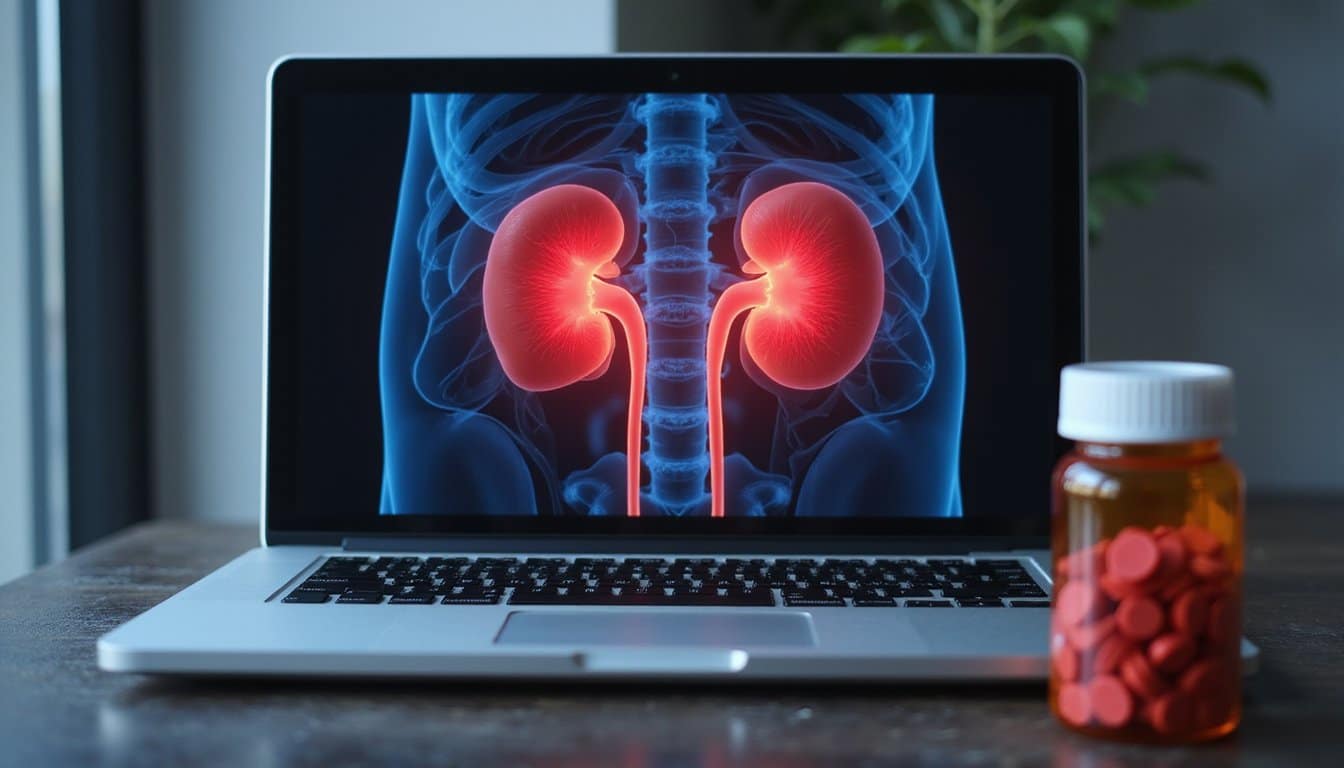
While age profoundly affects how quickly you clear diphenhydramine, your liver and kidneys ultimately determine the drug’s fate in your body.
Your liver metabolism handles the initial processing through cytochrome P450 enzymes, particularly CYP2D6. During first-pass metabolism, your liver breaks down 50-60% of each oral dose before it reaches systemic circulation. This explains why bioavailability ranges from just 40-60%. The primary product of this hepatic breakdown is nordiphenhydramine, which is less active than the parent compound.
After hepatic processing, kidney elimination takes over. Your kidneys excrete 50-75% of the dose as metabolites, with only 1% leaving unchanged. The organs work together through recirculation, your kidneys filter diphenhydramine and return unused portions to your liver for additional metabolism. Once absorbed, diphenhydramine distributes extensively throughout the body with a volume of distribution of 3.3-6.8 l/kg following a standard 50 mg oral dose.
This dual-organ system completes elimination within 24-48 hours. If you’re taking CYP450 inhibitors, expect altered serum concentrations and potentially prolonged effects.
Health Conditions That Slow Benadryl Clearance
Several underlying health conditions can profoundly impair your body’s ability to clear diphenhydramine, extending its half-life well beyond the typical 3-9 hour range.
Liver impairment effects greatly impact clearance since your liver processes 50-60% of diphenhydramine through first-pass metabolism. Hepatic dysfunction elevates blood levels and can extend elimination beyond 48 hours. Similarly, kidney function issues prolong clearance as impaired filtration reduces excretion efficiency. Adequate hydration can support the body’s ability to eliminate Benadryl more efficiently, so dehydration may further compound these issues.
Chronic health conditions compound these risks. If you have heart disease, you’ll face increased toxicity at lower doses. Long QT syndrome heightens rapid toxicity risk, while seizure disorders elevate danger with diphenhydramine use. The drug’s anticholinergic properties can cause urinary retention, further compromising renal filtration. You should consult your healthcare provider before taking Benadryl if any of these conditions apply.
Does a Higher Dose Mean Benadryl Stays Longer?
When you take a higher dose of diphenhydramine, your body’s metabolic pathways can’t speed up to match, they process the drug at a fixed rate regardless of how much you’ve ingested. This means a 100 mg dose leaves 50 mg in your system after one half-life cycle, while a 50 mg dose drops to just 25 mg in that same timeframe, resulting in considerably different clearance windows. You should expect higher doses to extend your total elimination time from the standard 24-48 hours to potentially four days, which directly impacts drug interaction risks and side effect duration.
Dose-Dependent Elimination Times
Because diphenhydramine follows dose-dependent pharmacokinetics, higher doses don’t just produce stronger effects, they actually extend how long the drug remains in your system. The dosage impact directly influences clearance time proportionality: a 50mg dose reduces to 25mg after one half-life, while a 100mg dose only drops to 50mg, requiring additional half-life cycles for complete elimination.
Study data confirms that higher doses produce longer half-lives compared to lower doses. A standard 25mg dose typically clears within 12 to 24 hours, but elevated intake can extend total elimination to 48 hours or beyond.
Accumulation from repeated dosing compounds this effect. When you take doses every 4-6 hours, the next dose enters your system before the previous one fully clears, building concentration levels that prolong detection windows up to four days.
Higher Doses Overwhelm Metabolism
Most diphenhydramine doses undergo extensive first-pass metabolism through your liver’s CYP450 system, with CYP2D6 handling the primary breakdown through N-demethylation. When you take higher doses, you risk hepatic metabolism saturation as excess diphenhydramine overwhelms your liver’s processing capacity. This enzyme and pathway overload causes accumulation in your bloodstream, extending elimination time greatly.
Dose-dependent toxicity effects emerge rapidly with excessive intake:
- Doses exceeding 500 mg trigger delirium and hallucinations
- Moderate toxicity (0.3 grams) causes confusion and ECG disturbances
- Severe toxicity (1 gram+) risks seizures, coma, and death
- CYP2D6 saturation prolongs metabolite clearance
- Repeated high dosing compounds accumulation risk
Even healthy adults experience dramatically extended elimination when doses exceed recommended limits, as metabolites persist longer than therapeutic effects.
How Long Benadryl Effects Last After Peak Levels
After diphenhydramine reaches peak plasma concentration at approximately 1.5 hours post-administration, you’ll experience active therapeutic effects for 4 to 6 hours, the window that determines standard dosing intervals.
However, understanding how long does Benadryl stay in your system requires looking beyond symptom relief. While antihistamines like diphenhydramine provide noticeable allergy control during this active window, residual drowsiness persists 6 to 12 hours after your dose. You’ll likely notice peak sedation around 1 to 2 hours, gradually diminishing but remaining significant enough to impair alertness.
Complete systemic clearance takes 24 to 48 hours, far longer than the therapeutic effects you perceive. This distinction matters for drug interactions and next-day activities. Anticholinergic effects, including dry mouth, appear within 20 to 30 minutes and may extend into the following day.
How Long Benadryl Shows Up on Drug Tests
If you’re facing a drug screening, you should know that diphenhydramine can remain detectable in your urine for 2 to 4 days, in blood for 24 to 48 hours, in saliva for 2 to 4 days, and in hair follicles for up to 90 days. You’ll also want to be aware that Benadryl can trigger false positive results for PCP, benzodiazepines, and opioids on standard immunoassay panels. Before any testing, you should disclose your diphenhydramine use to the testing facility, as no specific screening exists for this antihistamine and confirmatory testing may be necessary.
Standard Drug Test Detection
Standard drug tests typically don’t screen for diphenhydramine, but specialized panels can detect this antihistamine when there’s suspicion of abuse or overdose.
Key Testing Factors to Evaluate:
- Urine detection remains the most common method, with a 1-4 day detection window depending on dosage frequency
- Blood detection offers a shorter 24-48 hour window, extending to 3-4 days with heavy use
- Saliva tests detect diphenhydramine for approximately 24 hours to 2-4 days
- Hair follicle testing provides the longest window, detecting use up to 90 days post-ingestion
- Your metabolism, age, and overall health directly influence clearance rates
You should disclose diphenhydramine use before any drug screening. No standard testing kits exist specifically for this antihistamine, requiring specialized analysis when detection is necessary.
False Positive Test Results
Beyond routine detection windows, diphenhydramine creates a more complex testing concern: cross-reactivity with immunoassay screens that flags false positives for substances you haven’t taken.
You should know that Benadryl triggers false positive results for multiple drug categories. Urine tests may incorrectly indicate opioids, with detection time extending 2-4 days post-ingestion. Cross-reactivity also produces false positive readings for PCP, benzodiazepines, and tricyclic antidepressants. TCA false positives can persist at least 60 hours after diphenhydramine intoxication.
Higher dosages and frequent use increase your false positive risk. Since no specific Benadryl panel exists, standard immunoassays remain vulnerable to interference.
To protect yourself, disclose all diphenhydramine use before testing. Request confirmation testing for any positive result. Consider switching to second-generation antihistamines, which don’t cause these cross-reactivity issues.
Can You Speed Up Benadryl Clearance?
Many people wonder whether they can accelerate diphenhydramine’s elimination after taking Benadryl, but the body’s clearance mechanisms operate within fixed physiological limits. While hydration impact plays a supportive role in kidney function, it won’t dramatically speed up elimination. Similarly, physical activity effects remain modest, light movement may boost circulation, but won’t override your body’s natural processing timeline.
Metabolic influences, particularly CYP2D6 enzyme activity, largely determine your clearance rate and can’t be changed through lifestyle interventions.
Supportive measures to ponder:
- Stay well-hydrated to support kidney excretion efficiency
- Engage in light activity only when drowsiness permits
- Avoid additional doses to prevent accumulation
- Skip concurrent CNS depressants that may prolong effects
- Consult your healthcare provider if effects persist beyond 48 hours
Signs Benadryl Is Staying in Your System Too Long
While supportive measures can help your body process diphenhydramine naturally, recognizing when the drug lingers longer than expected becomes your next priority.
Persistent drowsiness extending beyond 8 hours post-dose signals delayed clearance. You may also experience cognitive impairments including confusion, memory problems, and difficulty concentrating, particularly concerning in older adults.
| Warning Sign | When to Seek Help |
|---|---|
| Drowsiness lasting 12+ hours | Contact healthcare provider |
| Blurred vision with eye pain | Immediate evaluation needed |
| Heart palpitations or racing | Urgent medical attention |
| Hallucinations or seizures | Emergency care required |
Cardiovascular signs like tachycardia, irregular heartbeat, or persistent low blood pressure indicate your body isn’t eliminating diphenhydramine efficiently. If you’re taking other CNS depressants or have compromised liver or kidney function, these symptoms warrant immediate medical consultation.
Frequently Asked Questions
Can I Drink Alcohol While Benadryl Is Still in My System?
You shouldn’t drink alcohol while Benadryl remains in your system. Combining these substances intensifies CNS depression, amplifying drowsiness, impairing coordination, and increasing respiratory depression risk. Since diphenhydramine’s half-life ranges from 2.4-9.3 hours, residual drug persists 13-49 hours post-dose. Your liver metabolizes both substances, and alcohol competes for processing, slowing elimination. Wait 24-48 hours after your last dose before consuming alcohol to minimize dangerous interactions.
Will Benadryl Interact With My Prescription Medications During Elimination?
Yes, Benadryl can interact with your prescription medications throughout its elimination period. Since your liver processes diphenhydramine via CYP2D6 enzymes, drugs that inhibit this pathway, including certain antidepressants, antipsychotics, and heart medications, can prolong clearance beyond 48 hours. You’ll face increased risks with CNS depressants, MAO inhibitors, and anticholinergic medications. You should consult your healthcare provider about specific interactions before combining Benadryl with any prescriptions.
Is It Safe to Breastfeed Before Benadryl Completely Leaves My Body?
You should consult your healthcare provider before breastfeeding while taking Benadryl. There’s no direct data confirming safety during the elimination period. Diphenhydramine’s lipophilic nature creates a large volume of distribution, meaning it can persist in tissues and potentially transfer to breast milk. Your individual clearance rate depends on liver and kidney function, age, and dosage. Don’t assume you’re clear based on general timelines, get personalized medical guidance first.
How Long Should I Wait After Benadryl Before Driving Safely?
You should wait at least 4 to 6 hours after taking Benadryl before driving, though 12 to 24 hours provides a safer margin for complete cognitive recovery. If you’re elderly, extend your waiting period to 13.5 hours or longer due to slower drug clearance. Those with liver or kidney impairment should wait 24 to 48 hours. Single doses clear faster than repeated dosing, so factor your dosage schedule into your timeline.
Can Benadryl Accumulation Occur With Daily Use Over Several Weeks?
Yes, Benadryl can accumulate with daily use over several weeks. When you take diphenhydramine repeatedly, its anticholinergic effects build up in your system, increasing your risk of cognitive impairment, confusion, and sedation. Your body develops tolerance to the sleep benefits quickly, but the anticholinergic burden keeps rising. You should avoid daily long-term use, as cumulative exposure drastically elevates dementia risk, particularly if you’re over 65.