Shrooms won’t show up on your standard workplace drug test. The 5-panel, 10-panel, and 12-panel screenings employers use don’t target psilocybin or its active metabolite, psilocin. Your body rapidly converts psilocybin to psilocin, which has a half-life of just 1-3 hours, meaning 65% clears through urine within three hours. Only specialized LC-MS/MS testing can detect these compounds, and there are specific circumstances where you might actually encounter this advanced screening.
Do Shrooms Show Up on Standard Drug Tests?
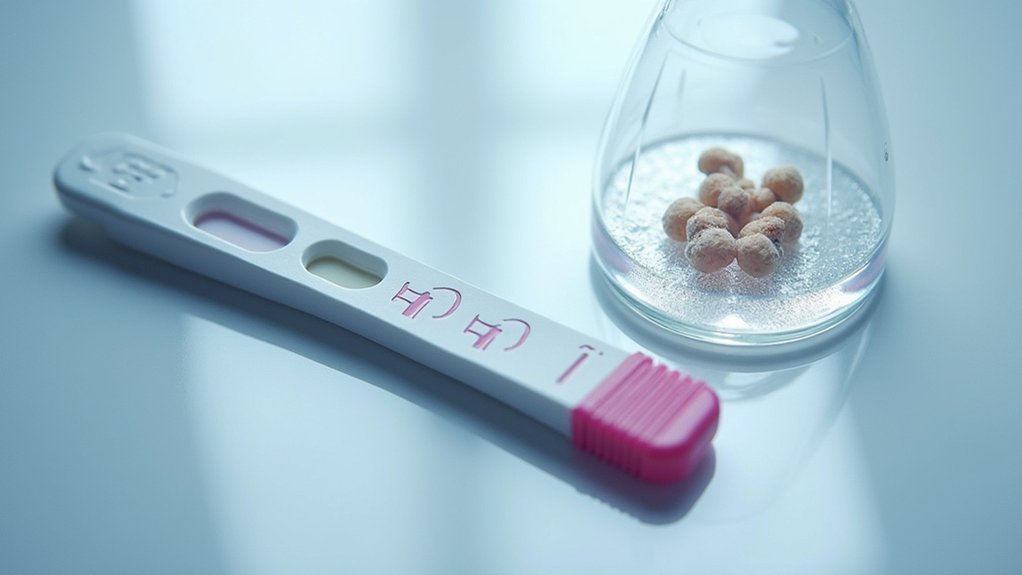
Standard drug tests don’t screen for psilocybin or its active metabolite psilocin. When you undergo a typical 5-panel, 10-panel, or 12-panel urine test, the screening targets THC, cocaine, amphetamines, opiates, and PCP, not psychedelic compounds.
So, do shrooms show up on a drug test used by employers or schools? No. These routine panels lack immunoassay strips designed for psilocin detection. The psilocybin drug test requires specialized LC-MS/MS technology that most facilities don’t employ for standard screening.
So, do shrooms show up on a drug test used by employers or schools? No, and this explains why shrooms aren’t detected in tests. Routine screening panels lack immunoassay strips designed to identify psilocin, the active metabolite of psilocybin. Detecting psilocybin reliably requires specialized LC-MS/MS technology, which most testing facilities do not use for standard employment or academic screening.
Your body rapidly metabolizes psilocybin into psilocin, but this metabolite’s brief presence in urine makes routine detection impractical. Standard drug tests prioritize substances with higher abuse prevalence and longer detection windows, making specialized tests the only reliable method for identifying psilocybin consumption. When specialized urine panels are used, they can detect shrooms for up to 24 hours after last use.
How Long Do Shrooms Stay in Your System?
Once psilocybin enters your bloodstream, your liver rapidly converts it to psilocin, the metabolite responsible for psychedelic effects. This conversion happens quickly, with psilocin’s half-life lasting just 1, 3 hours. Your body eliminates approximately 65% of psilocybin compounds through urine within the first three hours. Psilocybin is primarily cleared from the body within a single day. However, individual factors like metabolism, age, and liver function can significantly affect how quickly your system processes and eliminates these compounds.
Your liver transforms psilocybin into psilocin within hours, with your body eliminating most compounds through urine remarkably fast.
Detection windows vary extensively by testing method:
- Urinalysis: Specialized shrooms drug tests detect metabolites for 24, 48 hours, though heavy use may extend this to 72 hours
- Blood tests and saliva tests: These offer the shortest detection windows, typically under 6 hours for blood, with levels undetectable after 24 hours
- Hair tests: Hair follicles retain psilocybin metabolites for up to 90 days
When asking “do mushrooms show up on drug test,” understand that psilocybin mushrooms require specialized screening targeting specific metabolites.
What Tests Can Actually Detect Shrooms?
Understanding how quickly psilocin clears your system raises a practical question: which tests actually identify these metabolites? Standard urine drug tests won’t detect psilocybin or psilocin since routine panels focus on opioids, cannabinoids, amphetamines, and cocaine, not classic hallucinogens.
When targeted screening becomes necessary, laboratories employ liquid chromatography-tandem mass spectrometry (LC-MS/MS) to identify psilocin at concentrations as low as 0.3-1 ng/mL. These specialized forensic and clinical methods provide highly specific quantitative results that immunoassays can’t match. Research from institutions including the Shanghai Key Laboratory of Forensic Medicine has contributed to advancing these detection methodologies. Results from these specialized tests typically take 7 – 14 days from specimen collection to release to the ordering provider.
Blood assays using LC-MS/MS serve primarily in impaired-driving investigations or hospital toxicology workups. Hair follicle testing extends detection windows considerably, approximately one centimeter of hair reflects one month of potential exposure. Fingernail analysis captures use history for up to six months, though these matrices document historical patterns rather than acute intoxication.
When You Might Actually Get Tested for Shrooms
Four distinct scenarios increase your likelihood of facing targeted psilocybin screening: court-ordered testing, emergency medical evaluation, substance use treatment intake, and safety-sensitive employment investigations.
Psilocybin testing typically occurs in four key situations: legal proceedings, medical emergencies, treatment intake, and workplace safety investigations.
Court-ordered testing applies during probation, parole, child custody disputes, or DUI cases where hallucinogen use is alleged. Courts favor hair tests and fingernail tests for extended detection windows, up to 90 days and six months respectively. A positive result in custody cases can lead to reduced visitation rights or even removal of guardian rights.
- Hospital settings: Toxicology screens may target psilocybin when you present with acute psychosis or panic after suspected ingestion
- Substance use treatment: Intake assessments occasionally include hallucinogen panels to establish thorough use patterns
- Safety-sensitive roles: Post-incident investigations in transportation, aviation, or defense sectors can trigger expanded screening beyond standard panels
Your metabolic clearance rate determines detection success, psilocin clears blood within 4, 6 hours, narrowing effective testing windows considerably. Individuals with higher body fat percentages or slower metabolisms may experience extended detection times compared to those with faster metabolic processes.
Why Most Employers Don’t Test for Shrooms
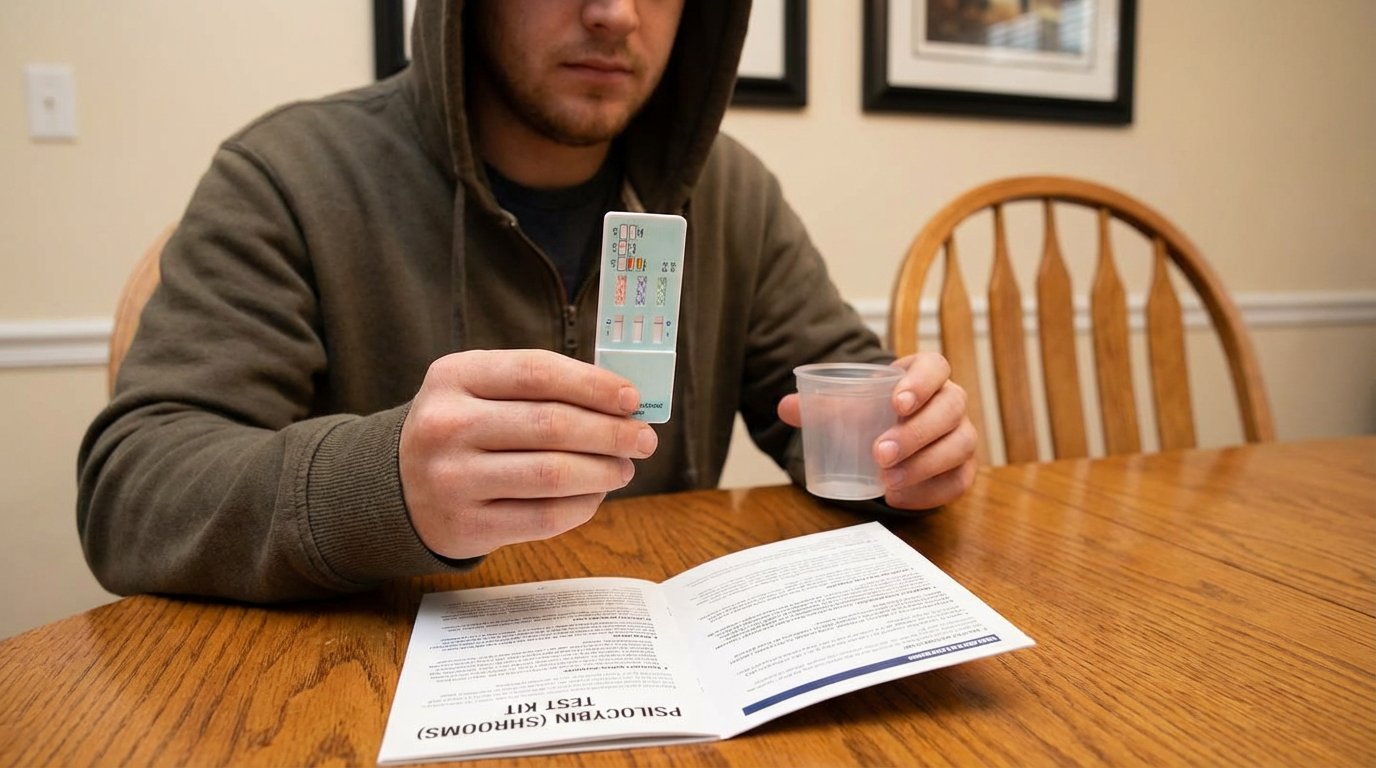
Standard workplace drug panels bypass psilocybin entirely because the compound doesn’t appear on federally recommended SAMHSA testing guidelines. Your typical 5-panel and 10-panel employer drug panels target THC, cocaine, opioids, amphetamines, and PCP, substances with longer detection periods and higher prevalence rates.
Routine drug screenings skip psilocybin for practical reasons. The testing method required for accurate psilocin detection demands LC-MS/MS technology, which costs considerably more than standard immunoassays. Healthcare drug panels rarely justify this expense given psilocybin’s 24-hour detection window.
The sensitivity levels needed for specialized panels require extensive lab validation and trained personnel. Most employers won’t invest in expanded detection capabilities when the compound clears your system rapidly. Low positivity rates and brief metabolite persistence make psilocybin testing a poor return on investment for corporate screening programs. When specialized testing is conducted, urine specimens require a cutoff level of 500 ng/mL to register a positive result.
Frequently Asked Questions
Can Drinking Water or Detox Drinks Help Flush Psilocin From Your System Faster?
Drinking water won’t meaningfully speed up psilocin elimination from your system. Your liver metabolizes psilocin with a half-life of 1, 3 hours, and hydration can’t override this fixed pharmacokinetic process. Detox drinks primarily dilute your urine rather than chemically remove metabolites, labs often flag diluted samples anyway. Your metabolism, dosage, and organ function determine clearance rates far more than fluid intake. Since psilocin typically clears within 24, 48 hours naturally, aggressive flushing offers minimal practical benefit.
Will Taking Psilocybin Microdoses Still Show up on Specialized Drug Tests?
Yes, microdoses can still show up on specialized drug tests. While you’re consuming far less psilocybin than a full dose, LC-MS/MS assays detect psilocin at very low ng/mL concentrations. Your detection window shortens, urine likely clears within 24 hours post-microdose, but it doesn’t disappear entirely. If you’re microdosing repeatedly, you’ll accumulate trace metabolites in hair and nails, extending detectability to 90 days and six months, respectively.
Do Synthetic Psilocybin Compounds Used in Clinical Trials Trigger the Same Test Results?
Yes, synthetic psilocybin used in clinical trials triggers identical test results. Your body converts both synthetic and mushroom-derived psilocybin into psilocin through the same dephosphorylation process. Drug tests detect psilocin’s chemical structure, not its origin. Whether you’ve received GMP-grade clinical psilocybin or consumed natural shrooms, specialized assays like LC-MS/MS can’t distinguish between sources. Standard workplace panels won’t detect either form unless they specifically include hallucinogen analytes.
Can Secondhand Exposure to Magic Mushroom Spores Cause a Positive Drug Test?
No, secondhand exposure to magic mushroom spores won’t cause a positive drug test. Spores contain no psilocybin or psilocin, the metabolites tests actually detect. You’d need to actively ingest mushroom material for your body to metabolize psilocybin into detectable psilocin. Airborne spores, surface contact, or proximity to cultivation environments don’t provide pharmacologically meaningful doses or bypass the digestive absorption required for systemic detection. No documented cases link passive spore exposure to positive results.
Does Psilocybin Use Affect the Accuracy of Other Drug Test Results?
Psilocybin won’t affect the accuracy of your other drug test results. The compound and its metabolite psilocin have distinct indole structures that don’t cross-react with standard immunoassays targeting THC, cocaine, amphetamines, opiates, or PCP. When labs use LC, MS/MS confirmation methods, they measure each analyte independently with high specificity. Your psilocybin consumption won’t trigger false positives or alter detection thresholds for other substances in multi-drug panels.