The addiction treatment continuum of care supports your long-term recovery by matching treatment intensity to your changing clinical needs. You can step up when symptoms escalate or use returns, and step down as you stabilize. Continuity preserves your gains, prevents drop-off, and reduces isolation. At least 12 months of continuing care links to stronger abstinence outcomes. Practical supports like transportation and employment assistance sustain your progress. The details below show how each level works.
Key Takeaways
- The continuum matches care intensity to changing clinical needs, allowing patients to step up or down based on severity, stability, and safety.
- At least 12 months of continuing care is linked to stronger abstinence outcomes and preserves treatment gains over time.
- Coordinated handoffs transfer diagnosis, medications, relapse history, and recovery supports to prevent gaps that cause drop-off between care levels.
- Practical supports like transportation and employment assistance address barriers, reduce relapse risk, and sustain consistent engagement in recovery.
- Recovery housing and community supports supplement clinical care, reduce isolation, and target the social drivers of relapse.
How Does the Addiction Treatment Continuum of Care Support Long-Term Recovery

A continuum of care supports long-term recovery by matching treatment intensity to your clinical severity, moving you across levels of treatment as your stability and safety needs change. The SUD levels of care span early intervention, outpatient, intensive outpatient/partial hospitalization, residential/inpatient, and medically managed inpatient services, letting you step up or step down instead of staying in one fixed program.
This structure reduces drop-off when you’re not ready for lower-intensity support, improving retention during early stabilization. After you complete primary treatment, continuing care preserves your gains, maintaining abstinence, limiting relapse severity, and addressing renewed use. A minimum of 12 months of continuing care is linked to stronger abstinence outcomes. That’s how a continuum of care sustains recovery over time.
What Does Continuum of Care Mean in Addiction Treatment
Continuum of care means addiction treatment is organized as a stepwise model across multiple levels of intensity, rather than delivered through a single fixed program. You move through levels that match your clinical severity, stability, and safety needs at any given point. The structure spans several distinct stages:
Addiction treatment isn’t one fixed program, it’s a stepwise model with multiple levels of intensity, matched to your changing clinical needs.
- Early intervention and outpatient services that reach you before substance use becomes more severe
- Intensive outpatient and partial hospitalization that provide structured, higher-frequency support
- Residential, inpatient, and medically managed inpatient care that deliver around-the-clock stabilization for high-acuity cases
You can be stepped up or stepped down as your symptoms change, so treatment intensity always aligns with clinical need. A full continuum supports you from acute stabilization through maintenance and ongoing community support.
What Clinical Changes Can Cause Someone to Step Up to More Intensive Care

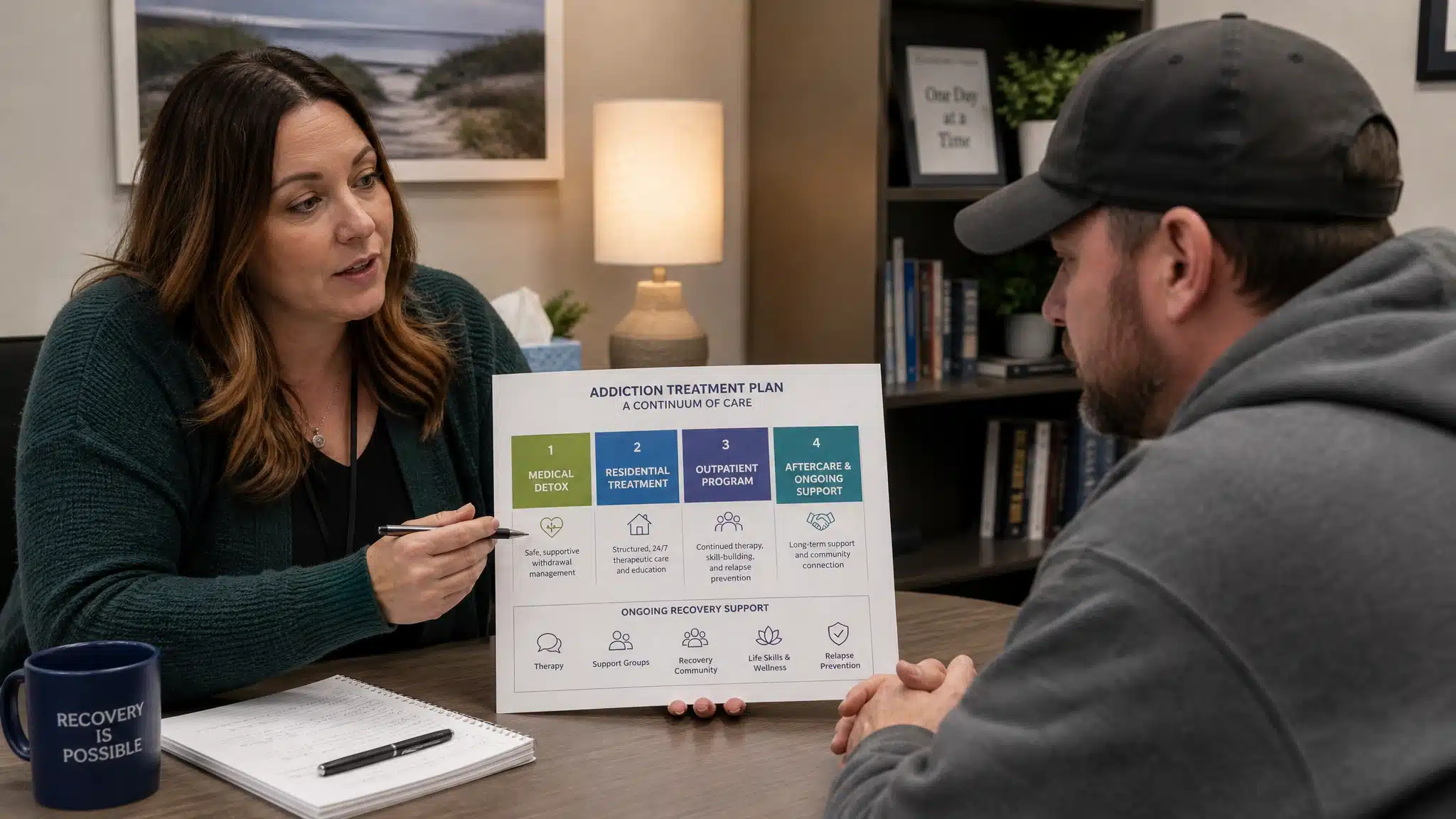
Several clinical changes can cause someone to step up to more intensive care, including escalating symptoms, breakdown in abstinence, or more severe renewed use. Stepping up happens when your current level no longer matches your clinical severity, stability, or safety needs. When you can’t maintain stability in outpatient care, moving to intensive outpatient, partial hospitalization, or residential care matches treatment to your acuity.
You’ll step up to medically managed inpatient services if you need around-the-clock stabilization for high-acuity conditions. Co-occurring impairments or worsening safety concerns also warrant structured, interdisciplinary residential care. This isn’t a failure, it’s how the continuum works. Matching care intensity to your changing needs reduces drop-off, preserves treatment gains, and keeps you engaged when a lower level isn’t enough.
What Progress Can Allow Someone to Step Down to Less Intensive Treatment
Progress that allows someone to step down to less intensive treatment includes stabilized symptoms and decreased safety needs. The continuum of care lets your treatment intensity match your current clinical severity, so as you gain stability, you move toward lower-acuity support. Stepping down preserves early treatment gains while shifting you into continuing care that maintains abstinence and addresses any renewed use.
Clinicians typically consider a step-down when you demonstrate:
- Stabilized symptoms, reduced acute withdrawal, cravings, or co-occurring impairments that no longer require around-the-clock monitoring.
- Lower safety risk, decreased risk of harm, allowing structured outpatient care instead of residential or inpatient settings.
- Increased engagement, readiness to use recovery support services like peer support, housing, and employment assistance in daily life.
What Information Should Follow a Patient During a Level-of-Care Transition


Clinical information should follow you during a level-of-care transition, preserving the gains you’ve made instead of forcing you to restart. When you step up or down, your care team should transfer records that reflect your progress, ongoing needs, and safety considerations. This continuity matches treatment intensity to your current clinical severity without losing prior context.
| Information Category | Why It Follows You |
|---|---|
| Diagnosis and severity | Matches care intensity to clinical need |
| Medication and stabilization status | Prevents gaps in medically managed care |
| Relapse and nonresponse history | Guides continuing-care planning |
| Recovery supports engaged | Links housing, employment, peer services |
| Treatment goals and progress | Preserves early gains over time |
Transferring this information reduces drop-off and strengthens your long-term recovery.
How Can Providers Prevent Gaps When Someone Changes Treatment Settings
Providers prevent gaps by matching your care intensity to your current clinical need as you move between settings, rather than treating each transition as a fresh start. Because care can be stepped up or down as your stability and safety needs change, providers coordinate the handoff so early treatment gains aren’t lost. They connect you with continuing care and practical supports that address the social drivers of relapse.
Care that follows you between settings protects the progress you’ve already made, so recovery keeps moving forward.
To keep your transition seamless, providers focus on:
- Continuing care, less intensive treatment that maintains abstinence and limits relapse severity for at least 12 months
- Recovery support services, including peer support, recovery housing, and recovery check-ups placed along your journey
- Practical supports, such as housing, employment, and transportation assistance that stabilize daily functioning
This coordination reduces drop-off.
How Can Addiction Medications and Therapy Continue Across Different Levels
Your medications and therapy can follow you across each level of the continuum, continuing without interruption as your care intensity changes. When you move from medically managed inpatient care to residential, intensive outpatient, or outpatient services, your treatment intensity shifts, but your core interventions don’t have to stop. You can continue the same medications and evidence-based therapy as care steps up or down, matching support to your symptoms, stability, and safety needs. This consistency helps you maintain abstinence, limit relapse severity, and address renewed use. Because a minimum of 12 months of continuing care is linked to stronger abstinence outcomes, sustaining your medications and therapy across levels protects early treatment gains and reinforces long-term recovery instead of resetting your progress.
How Can Recovery Housing and Community Support Complement the Clinical Continuum
Recovery housing and community support complement the clinical continuum by extending your clinical care into daily life, where relapse risks like unstable housing and isolation often surface. These services target the social drivers of relapse, reinforcing the gains you make in treatment. When you connect with peer-based support, recovery housing, and recovery community centers, you build a durable network that sustains abstinence beyond the initial episode of care.
Recovery doesn’t end at discharge, it thrives in daily life, where stable housing and peer connection turn treatment gains into lasting change.
Common supports offered by treatment facilities include:
- Housing assistance (54% of facilities), which stabilizes your living environment
- Peer support (57%), which reduces isolation and reinforces sustained recovery
- Transportation and employment assistance (44% and 39%), which address practical barriers
Find Support for Each Stage of Recovery
Recovery can require different levels of support as your needs change over time. Northridge Addiction Treatment Center offers addiction treatment programs designed to support people at different stages of recovery. Whether you are stepping into more structured care or preparing for the next phase, you can verify insurance coverage or call our team to discuss available treatment options and the next step.
Frequently Asked Questions
Can Someone Enter the Addiction Treatment Continuum at Any Level?
Yes. You do not have to begin at the lowest level of care. Placement depends on your current symptoms, withdrawal risk, medical and mental health needs, relapse risk, and recovery environment. Some people may begin with residential or medically managed care, while others may start with outpatient support. Treatment can then step up or down as your needs change.
Does Insurance Cover All Levels of the Continuum of Care?
Coverage varies, so you won’t always find every level fully paid. The knowledge provided doesn’t specify insurance details across the continuum, which spans early intervention, outpatient, intensive outpatient, residential, and medically managed inpatient care. You’ll want to verify your specific plan’s benefits for each level and any recovery support services, since practical supports like housing, employment, and peer assistance aren’t always covered the same way clinical treatment is.
How Long Does a Full Continuum of Care Usually Take?
Your full continuum of care doesn’t follow a fixed timeline, it adjusts to your clinical severity, stability, and safety needs. You might move quickly through acute stabilization and inpatient care, then step down to outpatient services. What matters most is continuing care afterward: at least 12 months has been associated with stronger abstinence outcomes. So plan for a year or more of ongoing support to protect your early treatment gains.
Can Family Members Participate in Continuum of Care Decisions?
Yes, your family members can participate in your continuum of care decisions, and their involvement often strengthens your outcomes. Family counseling is widely available, offered by 83% of treatment facilities, making it the most common recovery support service. When you include family in planning, you’re addressing social drivers of relapse and building a stronger support network. This engagement reinforces stability as you move across levels of care and into long-term recovery.
What Qualifications Should Providers Have Across the Treatment Continuum?
You’ll want providers matched to each level’s intensity. At medically managed inpatient levels, you need physicians and nurses delivering around-the-clock stabilization. Residential and inpatient programs require interdisciplinary clinical teams treating severe or co-occurring conditions. For continuing care and recovery support, you’ll rely on peer recovery specialists, counselors, and housing or employment support staff. Since care steps up or down, you should confirm each provider’s credentials fit that clinical severity.