Yes, NyQuil can become habit-forming if you use it regularly beyond its intended purpose. The combination of DXM, doxylamine, and 25% alcohol content creates sedative effects your brain may start to crave. Research shows approximately 30% of regular users develop psychological dependence, and tolerance can build within 2-3 weeks of repeated use. If you’re concerned about your NyQuil use, understanding the warning signs and health consequences can help you take action.
Why NyQuil Can Become Addictive
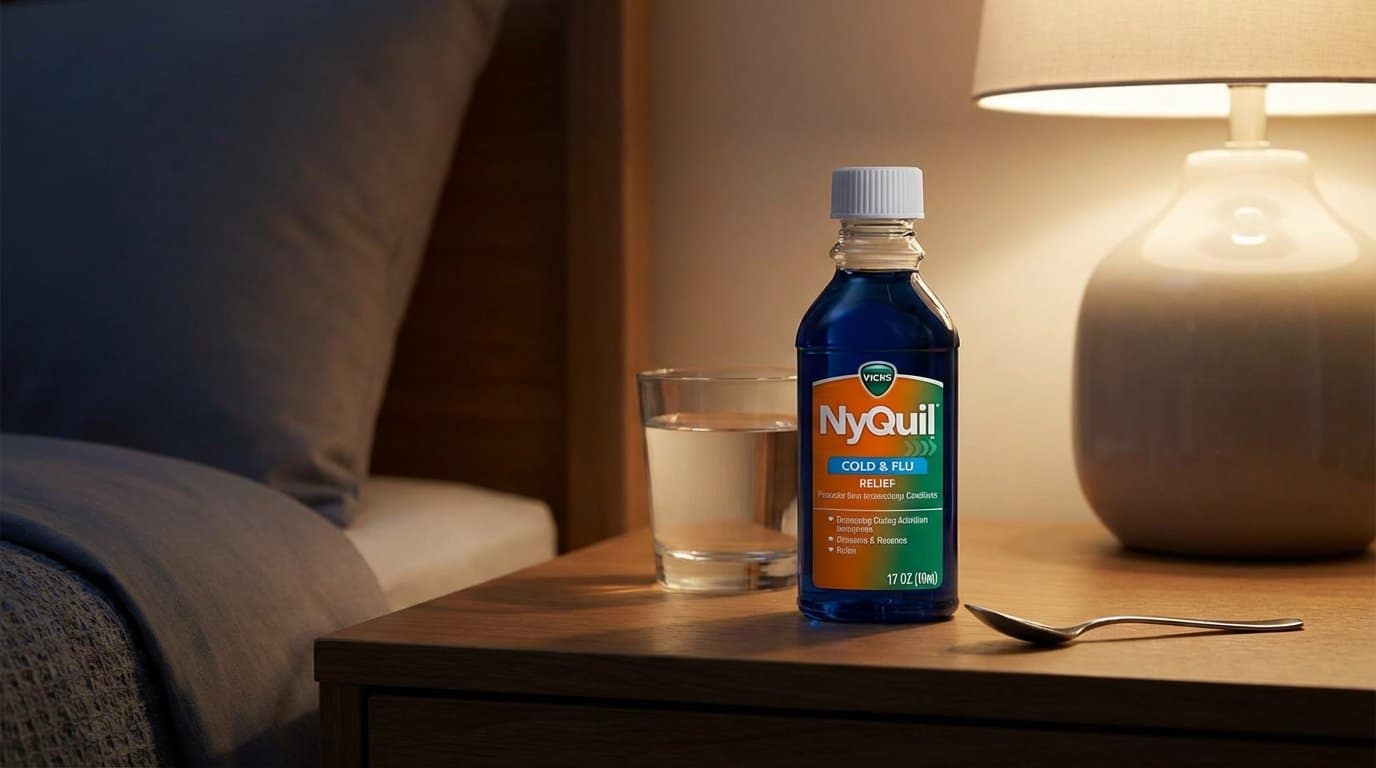
When you reach for NyQuil repeatedly to fall asleep, you’re exposing your brain to a potent combination of psychoactive substances that can rewire your relationship with sleep. This habit forming cough syrup contains DXM, which affects NMDA receptors and can produce calming effects that reinforce continued use. Doxylamine blocks histamine receptors, creating powerful sedation your body learns to expect. When you reach for NyQuil repeatedly to fall asleep, you’re exposing your brain to a potent combination of psychoactive substances that can rewire your relationship with sleep. This habit-forming cough syrup contains DXM, which affects NMDA receptors and can produce calming effects that reinforce continued use, while doxylamine blocks histamine receptors, creating powerful sedation your body learns to expect, factors central to nyquil safety considerations for sleep and why routine use can become problematic over time.
The 25% alcohol content intensifies these sedative properties, creating a cocktail your brain craves. Research shows approximately 30% of regular users develop psychological dependence. As tolerance builds, you’ll need higher doses for the same effect, disrupting natural sleep patterns. Prolonged use causes brain chemistry changes that disrupt neurotransmitter balance, making it increasingly difficult to sleep without the medication.
OTC drug abuse often goes unrecognized because these medications aren’t controlled substances. However, the combination of ingredients creates genuine dependency risk when used beyond treating cold symptoms. Those with a family history of substance use disorders face heightened vulnerability to developing NyQuil addiction due to genetic predisposition.
Signs You Might Be Dependent on NyQuil
Recognizing dependence on NyQuil often starts with noticing patterns you can’t easily break. You may experience psychological dependence when you feel unable to sleep without it or become anxious when it’s unavailable. Research indicates approximately 30% of regular users develop this type of reliance. Recognizing dependence on NyQuil often starts with noticing patterns you can’t easily break. You may experience psychological dependence when you feel unable to sleep without it or become anxious when it’s unavailable, often accompanied by nyquil side effects next day such as grogginess, brain fog, or irritability. Research indicates approximately 30% of regular users develop this type of reliance, reinforcing the importance of addressing sleep issues with safer, purpose-built approaches.
Recognizing NyQuil dependence begins with identifying patterns you can’t break, approximately 30% of regular users develop psychological reliance.
Watch for these key warning signs of substance misuse:
- You’re using NyQuil when you’re not sick, purely for its sedative effects
- You’ve increased your intake because previous amounts no longer work
- You hide bottles or feel secretive about your consumption
- You experience withdrawal symptoms like insomnia, restlessness, or tremors when stopping
Additional red flags include cognitive impairment, persistent fatigue, and preoccupation with obtaining NyQuil. The misuse of DXM-containing products like NyQuil results in over 6,000 ER visits annually across the United States. High doses of dextromethorphan can cause dissociation or hallucinations, making it particularly dangerous when misused. If you recognize these patterns, it’s time to seek professional guidance.
How NyQuil Dependence Develops Over Time

Understanding how NyQuil dependence develops requires examining the timeline and mechanisms behind this progression. When you use NyQuil repeatedly, your body begins adapting within two to three weeks. The tolerance building process starts quickly, your original dose loses effectiveness, prompting you to take more.
Dextromethorphan, a key ingredient, acts on NMDA receptors and produces calming effects that reinforce continued use. As your brain chemistry adjusts to regular exposure, you may experience cravings and difficulty functioning without it. Research indicates approximately 30% of regular users develop psychological dependence. The risk of dependency increases significantly when NyQuil is combined with other substances, leading to more severe medical outcomes.
The progression mirrors patterns seen in substance use disorders. Your body requires increasingly larger amounts to achieve the same sleep-inducing effects, creating a cycle that’s difficult to break without intervention. When you stop misusing NyQuil, you may experience sleep disturbances and cravings, which are common indicators of dependence.
What NyQuil Does to Your Body Long-Term
Your liver bears the heaviest burden from long-term NyQuil use. Each dose delivers 650mg of acetaminophen, and when combined with the medication’s 25% alcohol content, hepatotoxicity risk escalates considerably. Chronic nyquil abuse can lead to cumulative liver damage and, in severe cases, acute liver failure.
Beyond liver concerns, nyquil dependence creates cascading health effects:
- Cognitive decline, Doxylamine’s anticholinergic properties increase dementia risk and cause persistent memory impairment
- Neurological symptoms, Chronic use triggers recurring headaches, blurred vision, and coordination problems
- Gastrointestinal distress, Expect worsening constipation, nausea, and stomach pain
- Mood disruptions, Irritability, anxiety, and depression commonly develop alongside regular use
These effects compound over time, making early intervention critical for protecting your long-term health. Research shows that multi-substance exposures, such as combining NyQuil with alcohol, are linked to 2.53 times higher likelihood of severe medical outcomes. Additionally, dextromethorphan found in NyQuil can produce euphoric, dissociative effects when misused, contributing to the medication’s addiction potential.
How to Stop Using NyQuil Safely
Stopping NyQuil after prolonged use requires careful planning to manage withdrawal symptoms safely. You’ll likely experience nausea, anxiety, insomnia, and flu-like symptoms as the sedative effects wear off. These symptoms typically peak within 72 hours of your last dose. Stopping NyQuil after prolonged use requires careful planning to manage withdrawal symptoms safely. As the sedative effects fade, highlighting how long does nyquil last in your system, you may experience nausea, anxiety, insomnia, and flu-like symptoms. These reactions typically peak within 72 hours of your last dose, underscoring the importance of tapering guidance and medical oversight when discontinuing regular use.
Medical supervision offers the safest approach to discontinuation. Physicians can monitor your crucial signs, including heart rate and anxiety levels, while managing uncomfortable symptoms like tremors and sweating.
Tapering methods prevent intense withdrawal reactions. Rather than stopping abruptly, you’ll gradually reduce your dose over several weeks under professional guidance. This approach minimizes insomnia, agitation, and cravings.
If you’ve used NyQuil daily for more than two weeks, contact SAMHSA’s National Helpline for free 24/7 treatment referrals. Professional rehab programs address both physical and psychological dependence effectively.
Frequently Asked Questions
Is Nyquil Addiction More Common in People With Underlying Mental Health Conditions?
Yes, you’re at higher risk for NyQuil addiction if you have underlying mental health conditions. Research shows 48% of individuals with mental health issues turn to non-prescription medications like NyQuil for relief, often developing problematic patterns. If you’re dealing with anxiety, insomnia, or depression, you’re more likely to self-medicate, creating habitual use that strengthens psychological dependence. Pre-existing substance use disorders further elevate your risk of compulsive use.
Can Teenagers Become Addicted to Nyquil Faster Than Adults?
Yes, you’re more vulnerable to developing NyQuil dependence as a teenager than an adult. Your developing brain shows heightened sensitivity to DXM’s effects on NMDA receptors, and you’ll build tolerance faster, potentially requiring larger amounts for the same sedative effect. Research indicates genetic predisposition accelerates dependency in adolescents, and if you’re self-medicating for insomnia or stress, you’ll strengthen habitual patterns more rapidly than adult users would.
Does the Alcohol Content in Nyquil Contribute to Its Addictive Potential?
Yes, the alcohol content in NyQuil can contribute to its habit-forming potential. Standard liquid formulations contain approximately 10% alcohol by volume, higher than most beers. If you’re repeatedly using NyQuil for sleep, you may develop a reliance on both its sedating antihistamines and its alcohol component. This combination creates reinforcing effects that can establish problematic use patterns. You should consider alcohol-free formulations if you’re concerned about dependency risks.
Are Certain Genetic Factors Linked to Higher Nyquil Dependency Risk?
Yes, genetic factors substantially influence your risk for NyQuil dependency. Research shows genetic predisposition accounts for 40-60% of addiction vulnerability. If you’ve got a family history of substance abuse, you’re more susceptible to developing problematic use patterns. Your inherited traits affect how your body metabolizes NyQuil’s active ingredients and how quickly you build tolerance. These genetic vulnerabilities can accelerate dependency development and increase compulsive use behaviors.
How Does Nyquil Misuse Compare to Other Over-The-Counter Medication Addictions?
NyQuil’s misuse potential exceeds many OTC medications due to its unique combination of active ingredients. Its DXM component produces euphoric effects similar to ketamine and PCP at high doses, while doxylamine creates sedative dependence comparable to other antihistamine sleep aids. Additionally, NyQuil contains 25% alcohol, increasing dependency risk beyond most cough syrups. You’re facing compounded risks that single-ingredient OTC medications don’t typically present.