Understanding drug tests that can detect shrooms requires distinguishing between routine screening panels and specialized testing methods. Standard 5-, 10-, and 12-panel drug tests do not detect psilocybin because common immunoassay screens lack cross-reactivity with tryptamine compounds. Detection typically occurs only through specialized LC-MS/MS assays that specifically target psilocin metabolites. In these cases, urine detection windows generally range from 24, 48 hours, blood testing from 6, 15 hours, and saliva testing for under 12 hours. Hair follicle tests can detect metabolites for up to 90 days, while nail analysis may extend detection to 3, 6 months. Understanding which test is used and when it is ordered helps clarify the likelihood of detection.
Do Shrooms Show Up on Standard Drug Tests?
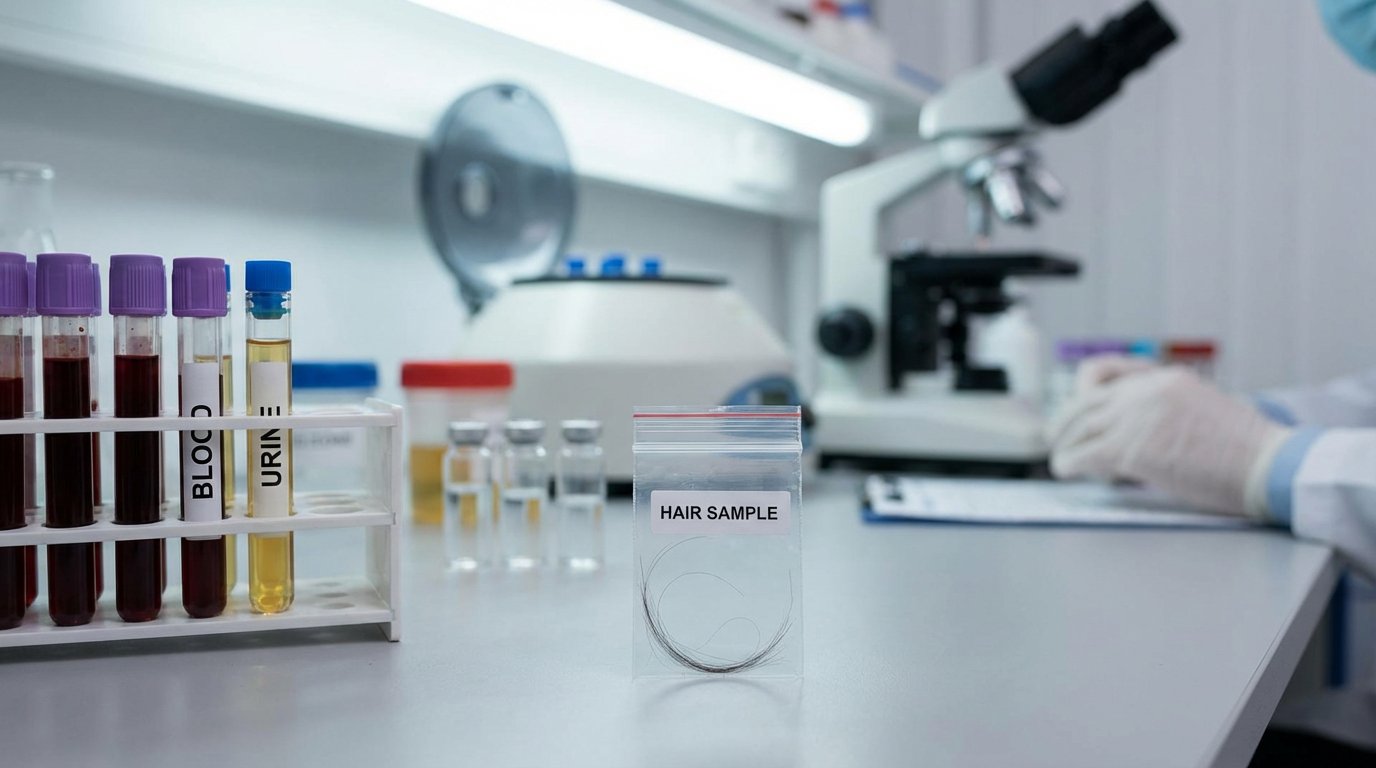
Standard drug tests used in employment, clinical, and legal settings do not typically screen for psilocybin or its active metabolite psilocin. Most 5-, 8-, 10-, and 12-panel immunoassay screens focus on THC, cocaine, amphetamines, opioids, and PCP. These panels lack cross-reactivity with psilocybin compounds, meaning you won’t trigger a positive result from mushroom use alone.
Standard drug tests used in employment, clinical, and legal settings do not typically screen for psilocybin or its active metabolite psilocin. This distinction is important when considering probation rules for drug testing, as most 5-, 8-, 10-, and 12-panel immunoassay screens focus on substances such as THC, cocaine, amphetamines, opioids, and PCP. These panels lack cross-reactivity with psilocybin compounds, meaning mushroom use alone is unlikely to trigger a positive result.
A standard psilocybin urine test doesn’t exist within routine screening protocols. Employers and healthcare providers rarely order expanded panels that include psychedelics due to cost and limited practical demand. Home drug-test kits and roadside point-of-care tests similarly omit psilocybin detection. When specialized testing is ordered, psilocybin can be detected in urine for up to 24 hours after the last use. Multiple clinical sources confirm that standard pre-employment and random workplace screenings almost never identify shroom use, making detection through conventional testing methods highly unlikely. As attitudes toward substance use evolve, discussions around psychedelics and workplace drug screenings are becoming increasingly relevant. Employers may soon face pressure to reassess their testing protocols in light of changing perceptions and potential therapeutic benefits associated with psychedelics. This shift could lead to the introduction of more inclusive screening practices that account for the growing interest in substances like psilocybin.
How Long Are Shrooms Detectable in Urine, Blood, and Saliva?
Because psilocybin converts rapidly to its active metabolite psilocin, detection windows vary considerably across biological samples. If you’re wondering whether shrooms show up on a urine test, the answer depends on timing. A urine test for mushrooms typically detects psilocin within 24, 48 hours post-ingestion, though heavy use may extend this to 72 hours. Approximately 65% of psilocybin compounds are excreted within three hours.
Blood testing offers an even narrower window. Psilocin’s 1, 3 hour half-life means blood concentrations decline steeply, with detection limited to 6, 15 hours in most cases.
Saliva testing data remains sparse, but detection windows likely mirror blood’s brief timeframe. Saliva tests can detect psilocybin for less than 12 hours after consumption. Psilocybin is present in saliva for about 1 to 24 hours, though individual results may vary. Whether mushrooms can be detected in urine or other samples ultimately hinges on test timing, sensitivity thresholds, and individual metabolism.
Can Hair and Nail Tests Detect Shrooms Months Later?
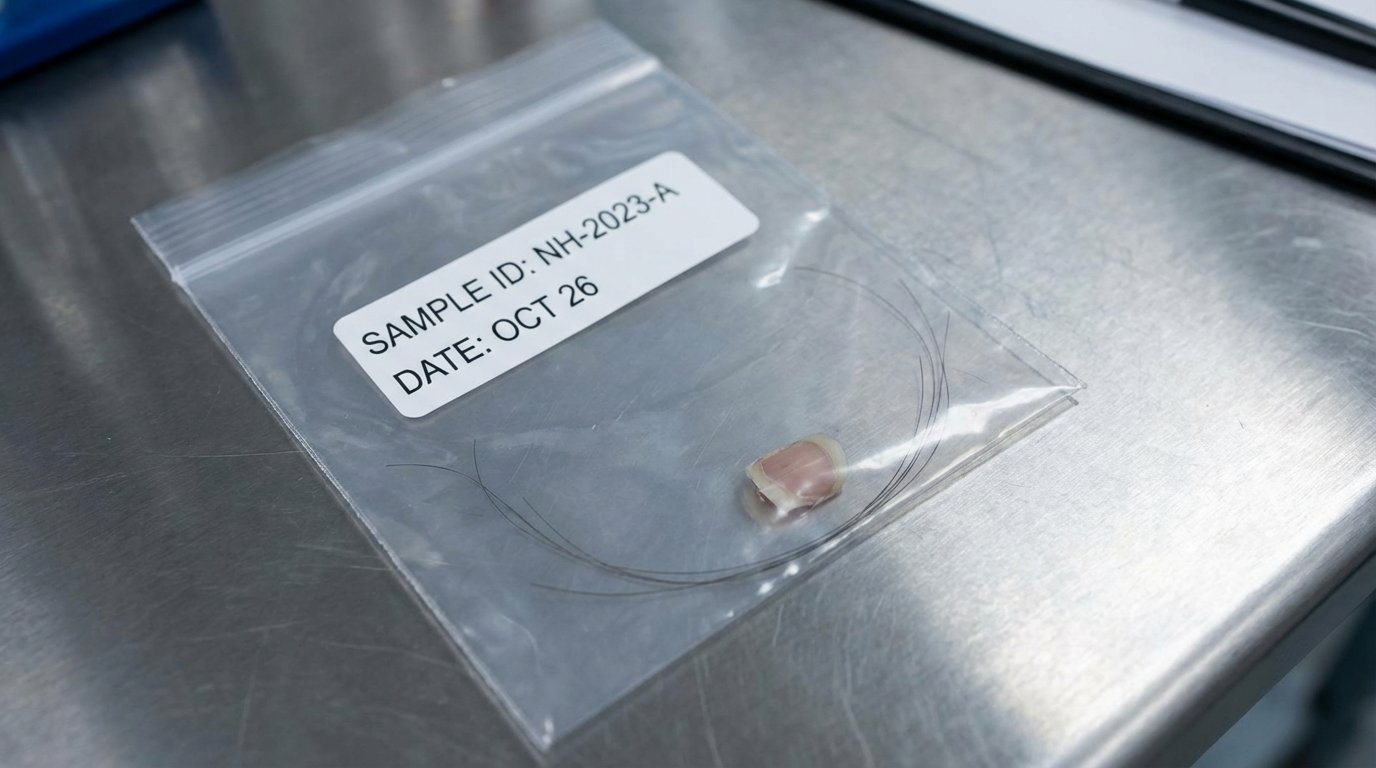
While urine, blood, and saliva offer only brief detection windows measured in hours or days, hair and nail testing extends this capability to months. A hair follicle test shrooms analysis can detect psilocybin metabolites for approximately 90 days, since head hair grows at roughly 1 cm per month. A psilocybin hair test requires specialized LC-MS/MS methodology, which most standard panels don’t include.
While urine, blood, and saliva offer only brief detection windows measured in hours or days, the effects of shrooms on drug testing become more apparent with hair and nail testing, which extends detection capability to months. A hair follicle test shrooms analysis can detect psilocybin metabolites for approximately 90 days, since head hair grows at roughly 1 cm per month. A psilocybin hair test requires specialized LC-MS/MS methodology, which most standard panels don’t include.
| Test Type | Detection Window | Timing Precision |
|---|---|---|
| Hair | Up to 90 days | Segmentable monthly |
| Fingernail | 3, 6 months | Non-segmentable |
| Toenail | 3, 6 months | Non-segmentable |
Drug metabolites incorporate into keratin structures approximately 10, 14 days post-ingestion. You’ll rarely encounter these tests in routine screening due to high costs and technical complexity. Despite these extended detection capabilities, most employers use 5-panel and 10-panel tests that do not include mushrooms in their screening protocols. However, these extended-window tests are particularly effective in child custody disputes where courts need to establish evidence of ongoing substance misuse over time.
Which Drug Tests Actually Screen for Shrooms?
Most routine drug screens won’t detect psilocybin or psilocin because standard 5-panel and 10-panel tests don’t include these compounds. These panels target THC, cocaine, amphetamines, opiates, PCP, and sometimes benzodiazepines or barbiturates, not hallucinogens.
If you’re subject to specialized testing, dedicated LC-MS/MS assays can identify psilocin in urine at cutoffs around 1 ng/mL. A blood test psilocybin screening operates similarly but offers a narrower detection window due to rapid metabolism. Results from specialized psilocin testing typically take 7 – 14 days from specimen pickup to release to the ordering provider.
Forensic laboratories and court-ordered programs may specifically request hallucinogen panels that include psilocybin metabolites. Research from institutions like the Shanghai Key Laboratory of Forensic Medicine continues to advance detection methodologies for various controlled substances including hallucinogens. Hair testing through niche providers can document exposure over months. However, standard workplace and emergency department immunoassays won’t flag shrooms unless someone explicitly orders targeted chromatography-mass spectrometry confirmation.
What Factors Affect How Long Shrooms Stay in Your System?
Detection capability tells only part of the story, how long psilocybin compounds remain detectable depends heavily on your body’s metabolic machinery and exposure patterns.
Your liver rapidly converts psilocybin to psilocin, which then undergoes glucuronidation via UGT1A9 and UGT1A10 enzymes. MAO-A handles up to 81% of phase I hepatic metabolism, converting psilocin to inactive 4-HIAA. Genetic variability in these enzymes directly influences your clearance rate. Interestingly, research shows that CYP2D6 genotype did not significantly influence psilocin plasma concentrations in studied populations, suggesting other metabolic pathways may compensate.
Dose and frequency matter considerably. Higher doses increase peak concentrations and extend detection windows, while repeated use promotes metabolite accumulation. When considering whether drug tests test for psilocybin, remember that psilocin typically clears plasma within 24 hours post-ingestion. However, individual factors, including hepatic function, enzyme polymorphisms, and CYP2D6 activity, create heterogeneous elimination timelines that complicate standardized detection predictions. The oral elimination half-life of psilocin ranges from 2.1 to 4.7 hours, which explains why the compound clears relatively quickly compared to many other substances.
Frequently Asked Questions
Can Drinking Water Help Flush Psilocybin Out of Your System Faster?
Drinking water won’t dramatically speed up psilocybin elimination from your system. Your body converts psilocybin to psilocin rapidly, with detection windows primarily determined by your metabolism, dose, and frequency of use, not hydration levels. While adequate water intake supports normal kidney function, no controlled studies show it shortens detection times. Additionally, labs can flag diluted urine samples, and excessive water consumption risks dangerous hyponatremia. Time remains the only reliable clearance factor.
Will Eating Shrooms Once Show up Differently Than Regular Use?
Single use and regular use typically appear identical on standard drug panels because most don’t include psilocybin. However, on specialized assays, you’ll see differences: one-time use produces detectable psilocin for under 24 hours, while repeated dosing can extend your urine detection window to 1, 3 days. Chronic users also carry higher residual metabolite concentrations, increasing the likelihood you’ll exceed low cutoff thresholds (around 1.0 ng/mL) near the detection window’s end.
Can Secondhand Exposure to Shrooms Cause a Positive Drug Test?
No, secondhand exposure to shrooms won’t cause a positive drug test. You’d need to ingest psilocybin for detectable systemic absorption, casual contact, handling, or environmental proximity doesn’t deliver sufficient compound levels to meet testing cutoffs. Unlike cannabis, shrooms aren’t smoked, eliminating meaningful airborne exposure. Even specialized LC-MS/MS assays require threshold concentrations that incidental contact can’t produce. No documented cases exist of secondhand shroom exposure triggering positive results in forensic or clinical literature.
Do Microdoses of Psilocybin Show up on Specialized Drug Tests?
Yes, microdoses can show up on specialized drug tests, though detection remains challenging. Your body still metabolizes psilocybin into psilocin, the target analyte in hallucinogen panels. LC-MS/MS assays detect psilocin at nanogram-per-milliliter levels, but microdoses produce lower metabolite concentrations with shorter detection windows. You’ll likely test positive only within approximately 24 hours post-ingestion in urine, while hair and nail detection depends on cumulative exposure from repeated microdosing protocols.
Can You Request a Retest if You Believe Your Shroom Result Is Wrong?
Yes, you can typically request a retest if you dispute a positive psilocybin result. Most certified labs use split-specimen protocols, preserving a second sample portion for independent confirmatory testing. You’ll need to submit your challenge within the program’s specified timeframe, often just days after notification. Valid grounds include missing GC-MS/LC-MS confirmation, chain-of-custody irregularities, or timing inconsistencies with psilocin’s 15, 72 hour detection window. You may bear retest costs if confirmed positive.