A meth pipe typically looks like a small glass tube with a rounded bulb at one end, often called a “bubble” or “oil burner.” You’ll find them in clear, blue, or green glass, usually just a few inches long for easy concealment. They’re also made from metal or ceramic, and sometimes disguised as decorative glass roses. If you’re trying to identify one, understanding the specific visual signs and materials can help you recognize what you’re seeing.
The Glass Bubble Pipe: Most Common Meth Pipe Design
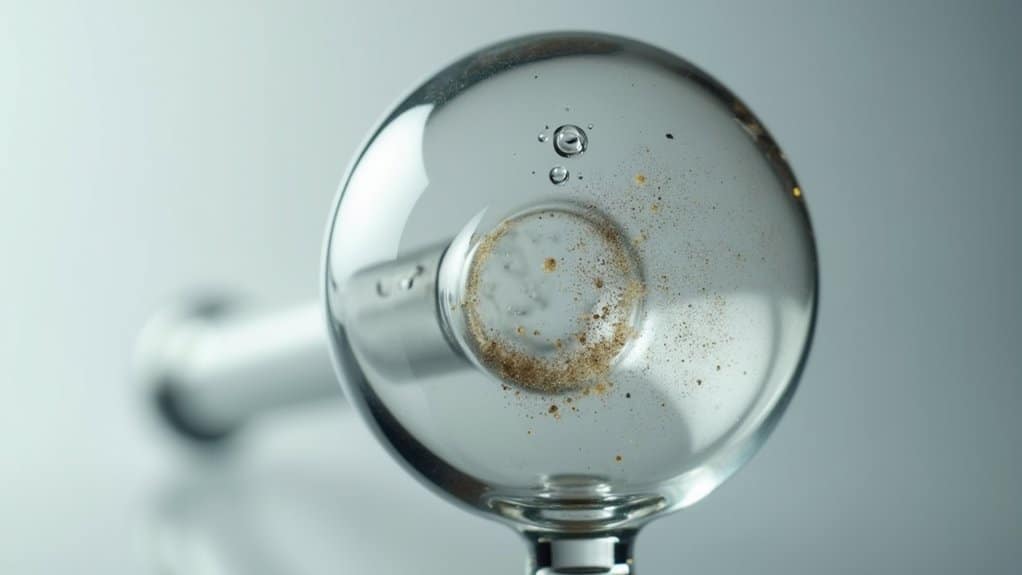
When you’re trying to identify drug paraphernalia, the glass bubble pipe stands out as the most recognizable type of meth pipe. This bulbous pipe features a thin cylindrical stem with a round sphere at one end containing a small opening. You’ll notice it’s only a few inches long, designed for easy concealment.
If you’re searching for a meth pipe image or glass meth pipe pictures online, you’ll see this distinctive shape repeatedly. The glass pipe concentrates vapor efficiently, which explains its widespread use. Crystal meth pipe pictures typically show clear glass, though blue and green variations exist. The glass material is specifically chosen because it can withstand high temperatures required to vaporize the methamphetamine crystals. When examining meth pipe pictures, look for the characteristic bubble-and-stem design that distinguishes these devices from other smoking paraphernalia. Used pipes often display yellowish and waxy residue along with visible burn marks from repeated heating.
Meth Pipes by Material: Glass, Metal, and Ceramic
Beyond the familiar glass bubble pipe, meth pipes come in several other materials that you might encounter. Beyond the familiar glass bubble pipe, meth pipes come in several other materials that you might encounter, and understanding the differences between meth and crack pipes can help clarify why these variations exist.
Metal meth pipes offer greater durability and portability than glass. You’ll find them in several designs: tobacco-style design with a bowl and stem, straight tube with bowl configurations, segmented or screw-together pipes, and compact “one-hitter” style versions. Their color and finish typically appears silver, gray, or black. Surface clues include scorch marks and dark residue. However, metal’s heat transfer can cause burns, and toxic metals in cheaper pipes pose serious health concerns. Metal pipes withstand higher temperatures than other materials, which contributes to their durability during use. Their smaller size makes them easier to hide and transport compared to glass alternatives. Residue appearance shows as yellow-brown buildup, often accompanied by chemical odor.
Ceramic pipes provide heat resistance similar to glass but with increased durability. These materials often feature artistic glazes and opaque finishes that distinguish them from transparent glass versions.
Meth Pipes Disguised as Oil Burners and Novelty Glass
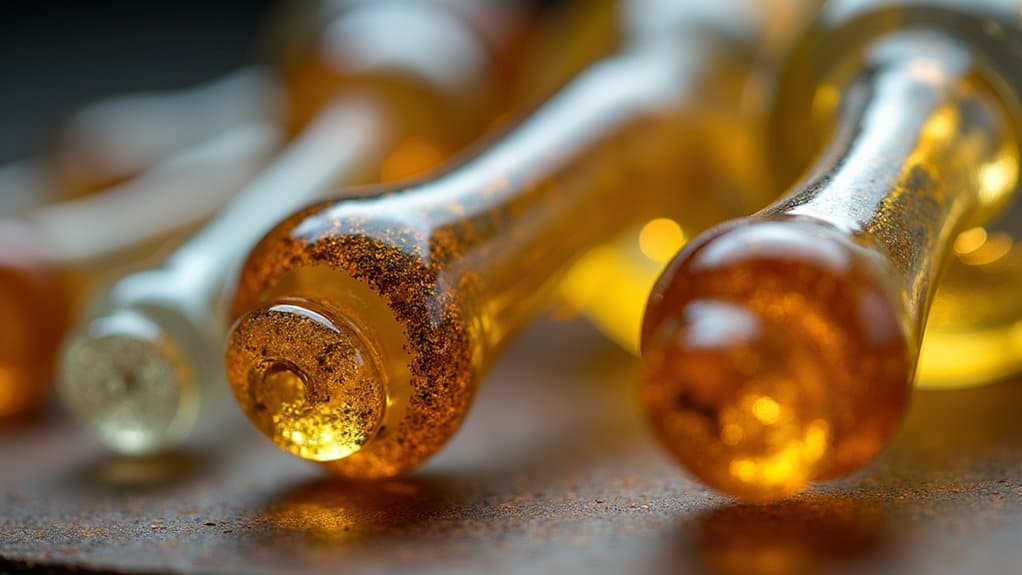
You’ve likely seen glass pipes sold as “oil burners,” “incense burners,” or even decorative “glass roses” in convenience stores and online marketplaces, these innocent-sounding labels often disguise paraphernalia designed for smoking meth. Retailers use disclaimers like “for tobacco use only” or “legal use only” to maintain plausible deniability while selling pipes with the telltale bulb-and-stem design. These pipes are constructed from glass specifically because the material can withstand high temperatures required to vaporize crystal meth. Understanding these marketing tactics and the physical features that distinguish actual drug paraphernalia from legitimate products can help you recognize what you’re really looking at. A key indicator that a pipe has been used for meth is the presence of yellowish, waxy residue inside the glass bulb.
Legal Retail Marketing Tactics
Despite laws against drug paraphernalia, meth pipes remain widely available in convenience stores, gas stations, and mini-marts across the country, they’re just sold under different names. You’ll often notice placement behind counters or in glass cases, positioned alongside lighters and novelty items rather than traditional tobacco products.
Retailers use several tactics to maintain legal cover. They display as decor or “glass roses,” bundling with accessories like butane torches to imply use without stating it directly. Generic category labels such as “gift items” or “glassware” appear on receipts and inventory systems, avoiding explicit paraphernalia terminology. This vague and ambiguous labeling deliberately conceals the true intended purpose of these products from regulators and law enforcement.
Strategic pricing and sizing make these items cheap and easy to purchase impulsively. Understanding these marketing patterns can help you recognize what’s actually being sold, regardless of how it’s labeled. The pipes themselves are identifiable as thin, cylindrical glass tubes with a round, bulbous end designed for vaporization.
Common Disguise Terminology
Common disguise terms you might encounter include:
- Glass pipe or bubble marketed in aromatherapy or home décor sections
- Pookie used in online communities as casual slang for the same device
- Product listings combining multiple terms like “oil burner glass pipe”
Understanding this terminology isn’t about judgment, it’s about recognizing what you’re actually seeing when these items appear in someone’s life. These devices are sometimes referred to as “oil burners” and sold as harmless novelty items, making them easy to overlook as drug paraphernalia. Their small size of just a few inches allows users to quickly hide them from view, adding to the challenge of identification.
Identifying Hidden Paraphernalia Features
Because meth pipes are often sold under misleading labels, knowing what to look for can help you identify them regardless of how they’re marketed. A typical disguised pipe features a thin glass tube with a sealed round bulb and a single small hole on top. The glass stem usually measures four to six inches long.
Look for physical signs that contradict claimed purposes. Burn marks on the bulb’s underside indicate direct flame contact inconsistent with aromatherapy use. Heat damage like spiderweb cracks or cloudy spots suggests torch or lighter exposure. Yellow, brown, or white crystalline residue inside the bulb forms distinctive streaks where substances melted and cooled.
“Glass rose” tubes serve as another common disguise, they’re dimensionally identical to meth stems once you remove the decorative insert.
Homemade Meth Pipes: Light Bulbs, Foil, and Cans
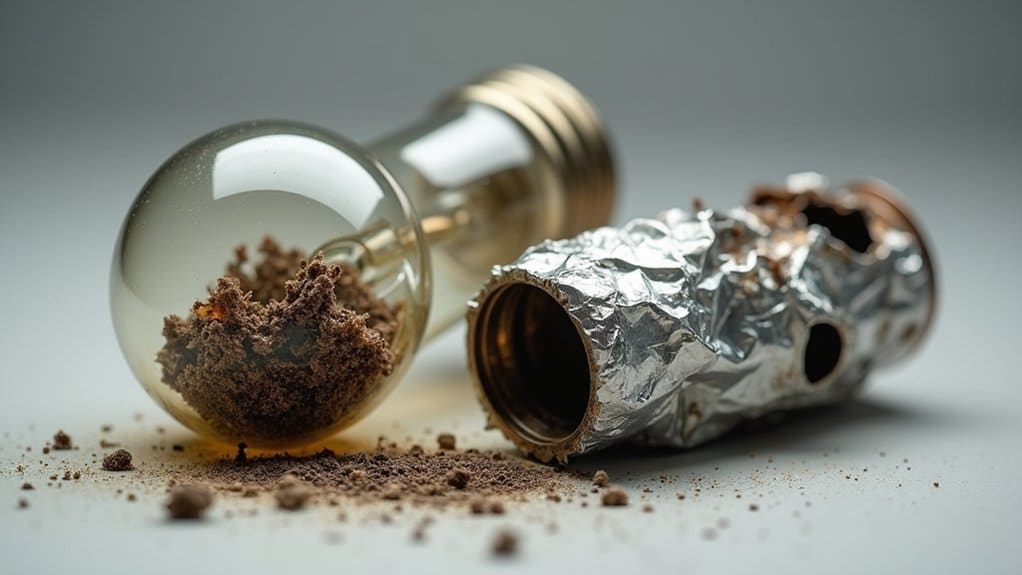
When commercial glass pipes aren’t available or carry too much legal risk to purchase, some people turn to everyday household items to create improvised smoking devices. Understanding what does a meth pipe look like in homemade form helps you recognize potential paraphernalia that might otherwise seem ordinary.
Common improvised meth pipes include:
- Light bulbs, Hollowed incandescent bulbs with removed filaments showing meth residue in pipe as cloudy streaks or crystalline film inside the glass. The hollowing process involves removing the black glass cone and breaking the internal filament structure to create an empty chamber.
- Aluminum foil, Small squares with dark burn tracks and soot lines where heated meth has liquified
- Soda cans, Dented surfaces with burn marks and small puncture holes
What does a used meth pipe look like when homemade? You’ll typically notice burnt meth pipe discoloration, scorch marks, and powdery residue on these everyday items. Using these improvised devices can be particularly dangerous because they may release toxic fumes when heated, creating additional health risks beyond those of meth use itself. What does a used meth pipe look like when homemade? You’ll typically notice burnt meth pipe discoloration, scorch marks, and powdery residue on these everyday items. When looking at these signs, having meth pipe street terminology explained can help you better understand what you’re seeing. Using these improvised devices can be particularly dangerous because they may release toxic fumes when heated, creating additional health risks beyond those of meth use itself.
How Meth Pipes Differ From Marijuana and Crack Pipes
How Meth Pipes Differ From Marijuana and Crack Pipes
Although meth pipes, marijuana pipes, and crack pipes all serve as smoking devices, they differ noticeably in shape, material, and design, differences that reflect how each drug is consumed.
A meth pipe features a sealed glass bulb with a small top hole, designed to vaporize crystals when you roll it over heat. Marijuana pipes have open bowls for burning plant material and often include a carb hole for airflow control. Crack pipes are straight glass stems without bulbs, using screens to hold rock that’s burned directly. Love roses, which are glass tubes containing decorative flowers, are commonly repurposed as crack pipes and sold at convenience stores throughout the U.S.
You can also distinguish them by residue patterns. Methamphetamine residue appears as white, gray, or yellowish waxy buildup inside the bulb. Crack pipes show heavy black carbon deposits, while marijuana pipes accumulate darker, tar-like resin from combusted plant matter. Meth pipes often display dark burn marks or soot near the heated end from repeated exposure to intense flame.
Signs a Meth Pipe Has Been Used: Burn Marks and Residue
Identifying whether a meth pipe has been used involves looking for specific visual and physical signs that develop through repeated heating. When crystal methamphetamine is vaporized, it leaves behind distinct traces that you can recognize with careful observation.
Common signs of use include:
- Burn marks and scorch patterns, Black or brown discoloration appears around the bulb where flames have made repeated contact
- Interior residue buildup, A whitish, cloudy film or yellowish, waxy coating forms inside the glass after vaporization
- Heat damage to the glass, Yellowing, hazing, or rainbow-tinted spots develop near the heating area from high-temperature exposure
You might also notice a strong chemical odor lingering on the pipe itself, often described as a burnt plastic smell. These visual cues help distinguish a used pipe from an unused one without requiring any specialized knowledge.
Torches, Lighters, and Other Meth Paraphernalia
Heat sources play a central role in meth use, and recognizing them can help you identify signs of drug activity. Mini butane torches are commonly found alongside glass pipes because they produce intense, precise flames that heat glass quickly. You might notice these small handheld torches stored with refill canisters, often in bedrooms or vehicles rather than kitchens.
Disposable lighters with blackened tops or warped plastic bodies suggest extended burn times beyond normal use. When you find multiple lighters alongside foil pieces, cut straws, or hollow pens, this combination of drug paraphernalia indicates smoking activity.
Other heat sources include kitchen stove burners, tea-light candles, or portable hot plates. Look for soot marks on non-cookware surfaces or fuel canisters stored away from camping gear as potential warning signs.
Where Meth Pipes Are Typically Hidden
Beyond torches and lighters, the pipes themselves often stay out of sight. If you’re concerned about a loved one, knowing common hiding spots can help you understand what you might encounter. People typically conceal paraphernalia in places they believe won’t draw attention.
Recognizing where paraphernalia might be hidden is often the first step toward understanding the full picture of a loved one’s struggle.
Common hiding locations include:
- Personal spaces: Under mattresses, inside hollowed-out books, behind picture frames, or tucked into clothing pockets and bag linings
- Bathrooms: Inside toilet tanks, within hygiene product containers, or behind removable vent covers
- Everyday objects: Modified items like fake soda cans, empty battery compartments, or disguised containers designed to look ordinary
Finding these items can feel overwhelming. Remember, discovering paraphernalia is often the first step toward having an honest conversation about getting help.
What to Do If You Find a Meth Pipe
When you discover a meth pipe in your home or around someone you care about, it’s natural to feel a rush of emotions, fear, confusion, anger, or sadness. Before reacting, prioritize safety. Treat the pipe as contaminated and avoid touching it directly.
Use gloves or tongs to handle the pipe, and don’t attempt to heat, clean, or break it. Place it in a puncture-resistant container with a secure lid. Avoid disposing of it in regular household trash where others might be exposed.
Contact your local harm reduction program or public health department for proper disposal options. Many communities offer paraphernalia drop-off services. If you’re concerned about someone’s substance use, these organizations can also connect you with resources for support and next steps.
Frequently Asked Questions
Are Meth Pipes Legal to Buy or Possess in Most States?
You can legally buy glass pipes in most states when they’re sold as “tobacco” or “novelty” items. However, possession becomes illegal once there’s evidence you’re using the pipe for meth, like residue, burn marks, or having drugs nearby. Stores use disclaimers to stay legal, but you’ll face paraphernalia charges if police find signs of drug use. Laws vary by state, so penalties range from fines to misdemeanors.
How Much Does a Typical Meth Pipe Cost at Smoke Shops?
At most smoke shops, you’ll find basic glass meth pipes (often labeled “oil burners”) priced between $3, $15. Thinner glass versions typically cost $3, $7, while thicker, more durable borosilicate or Pyrex-style pipes run $10, $20. Factors like material quality, wall thickness, and decorative features influence the price. Some harm-reduction programs also distribute safer pipes at no cost if you’re looking for resources in your area.
Can Meth Residue on a Pipe Be Dangerous to Touch or Inhale?
Yes, meth residue can be dangerous. When you touch a contaminated pipe and then touch your eyes, nose, or mouth, you can absorb active methamphetamine through your mucous membranes. Heating residue re-vaporizes the drug, creating inhalation risks for anyone nearby. The residue often contains harmful impurities from manufacturing that can irritate your skin and airways. If you’re handling used pipes, washing your hands thoroughly afterward helps reduce exposure.
How Long Does Meth Residue Remain Detectable on a Used Pipe?
Meth residue on a used pipe can remain detectable for weeks to months if it’s not thoroughly cleaned. Because glass is nonporous, the residue stays stable and doesn’t break down on its own. Forensic testing using methods like GC-MS can easily identify traces long after the last use. This is much longer than meth stays detectable in your body, typically just days in urine or saliva.
Do Meth Pipes Have a Distinct Smell When Not in Use?
Yes, meth pipes can have a distinct smell even when not in use. If there’s residue inside, you’ll likely notice a sharp, chemical, or ammonia-like odor, sometimes described as burnt plastic or burnt sugar. The smell’s intensity depends on how much residue remains, how recently it was used, and storage conditions. A thoroughly cleaned glass pipe typically won’t have any noticeable odor to detect.